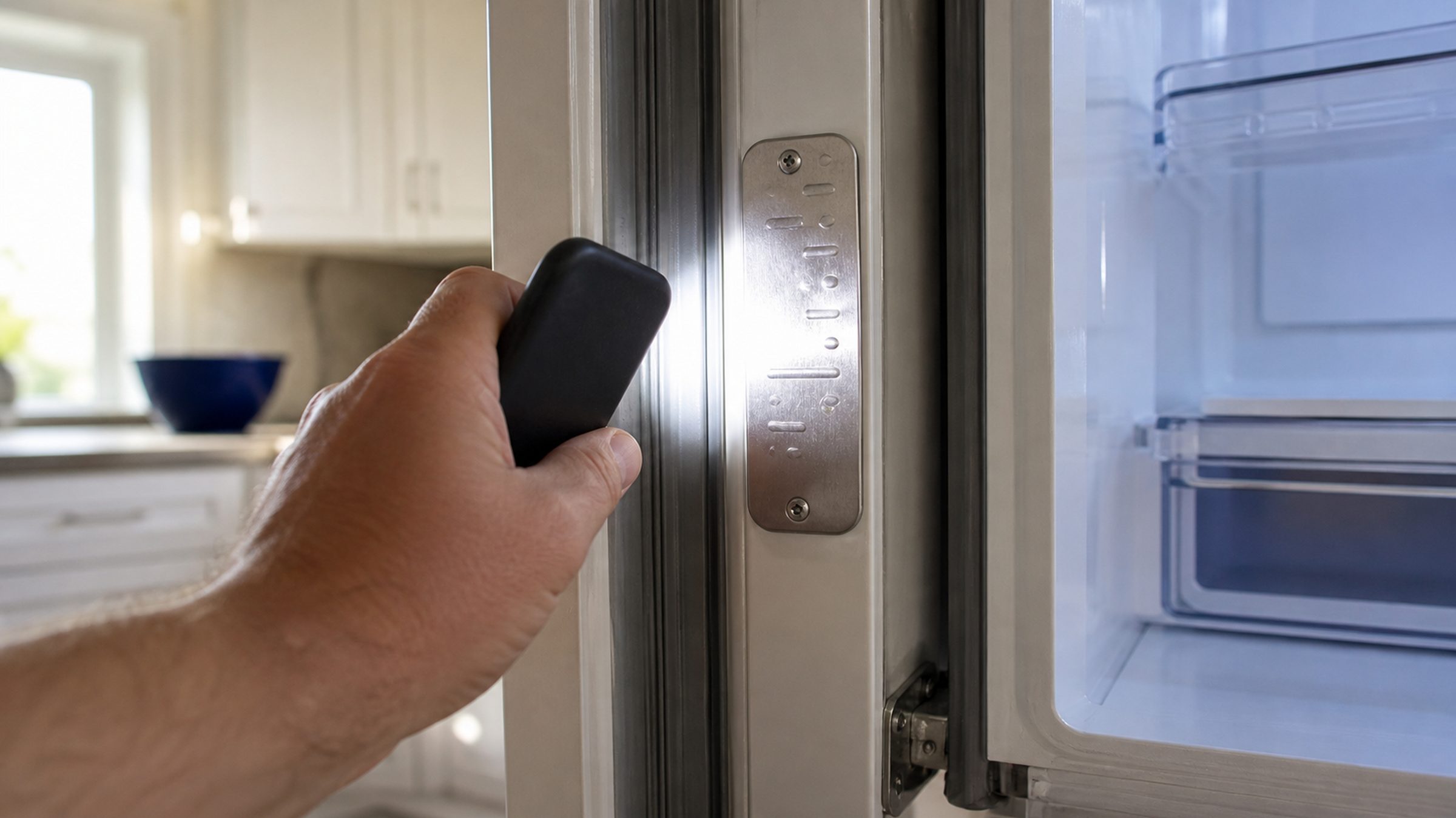
Cost Expectations
How Old Is My GE Appliance? Reading the Two-Letter Date Code
GE serial numbers begin with two letters that encode the month and the year the appliance was built, so the age can be read off the plate in seconds without any paperwork. Find the rating plate — inside the refrigerator on the wall or ceiling of the fresh food compartment, on the door frame of a dishwasher, behind the kick panel or on the frame of a washer or dryer, on the oven door frame — and read the first two characters of the serial. That number matters because it decides repair-or-replace more reliably than the symptom does: the same failed control board is a sensible repair on a four-year-old appliance and a poor one on a fourteen-year-old. On this make the line falls later than most, because four badges share their engineering and keep parts available.
The full guide
Ge refrigerator how old: the answer is on the plate
Most makers hide the age of an appliance in a serial number that means nothing without a lookup table. GE puts it in the first two characters — a letter for the month, a letter for the year — which makes this one of the genuinely useful things about the brand and something almost no owner knows.
It takes ten seconds and it changes every conversation about money that follows.
Finding the plate
| Appliance | Where the rating plate usually is |
|---|---|
| Refrigerator | Inside the fresh food compartment — side wall, ceiling, or behind the crisper |
| Dishwasher | On the door frame, visible with the door open |
| Washer / dryer | Behind the kick panel, on the door opening, or on the back |
| Range | On the frame behind the storage drawer, or the oven door frame |
| Wall oven | On the door frame, or the side of the cabinet opening |
| Microwave | Inside the door opening, or on the back |
Photograph it. The model number and the serial together are the two things we ask for on every call, and having both means we can often name the likely part before the visit.
Why the number matters more than the symptom
The same failure is a different decision at different ages.
Under five years. Almost everything is worth repairing. Parts are current, the appliance has most of its life ahead, and even a control board is defensible.
Five to ten. The ordinary repairs are clearly worth it — seals, elements, pumps, igniters, switches, sensors. The big-ticket ones start to need a conversation.
Ten to fifteen. This is where the arithmetic gets interesting, and where GE differs from most makes. A sealed system or a control board approaches what the appliance is worth. But a seal, an element or a pump is still obviously worth doing, and the parts are usually still available — because GE, GE Profile, Café and Hotpoint share their engineering, and a component discontinued under one badge is frequently current under another.
Over fifteen. Repair the cheap things if you want the appliance to last another season. Do not spend serious money on it. We will say so.
What the age does not decide
Age alone is not the answer, and anybody who quotes from it without asking what failed is guessing.
A twelve-year-old refrigerator with a bad door seal should have the seal replaced — it is inexpensive and it is costing run time every day. The same refrigerator with a failed compressor is a different conversation entirely.
That is the whole point of reading the plate: it turns a vague worry about an old appliance into a specific decision about a specific part.
What we do with it
Every quote on this site is shaped by two things — which part it turns out to be, and what the date code says. When the two point in different directions, you get told both figures: what the repair costs, and what replacing the appliance would involve.
On this make that conversation comes later than on most, and we would rather have it before the work than after it.
Questions people ask about this
Where is the plate on my refrigerator?
Usually inside the fresh food compartment — on a side wall, the ceiling, or behind the crisper drawers. On some models it is behind the base grille.
Does the date code tell me the model year?
It tells you when the unit was built, which is what matters for a repair. A machine built in one year is often sold in the next.
My serial has no letters at the front.
Send us the whole serial. Formats have changed over the decades and older or commercial units follow different conventions.
Is an old appliance always worth replacing?
No. What decides it is the part, not the age alone — a seal or an element on a twelve-year-old machine is usually worth doing, and a control board on the same machine usually is not.
Cost Expectations
More guides like this one
-
What GE Repairs Cost in Miami, and Why Some Are Cheaper Than You Expect
Volume parts that are stocked rather than ordered, four badges sharing engineering, and a catalog that is mostly freestanding. All three show up in the figure.
Read more -
The Cheapest GE Jobs, and the Expensive Ones They Prevent
A condenser clean and a dryer vent are the two lowest figures we publish. Both are the maker's own first answer, and both prevent repairs several times their cost.
Read more -
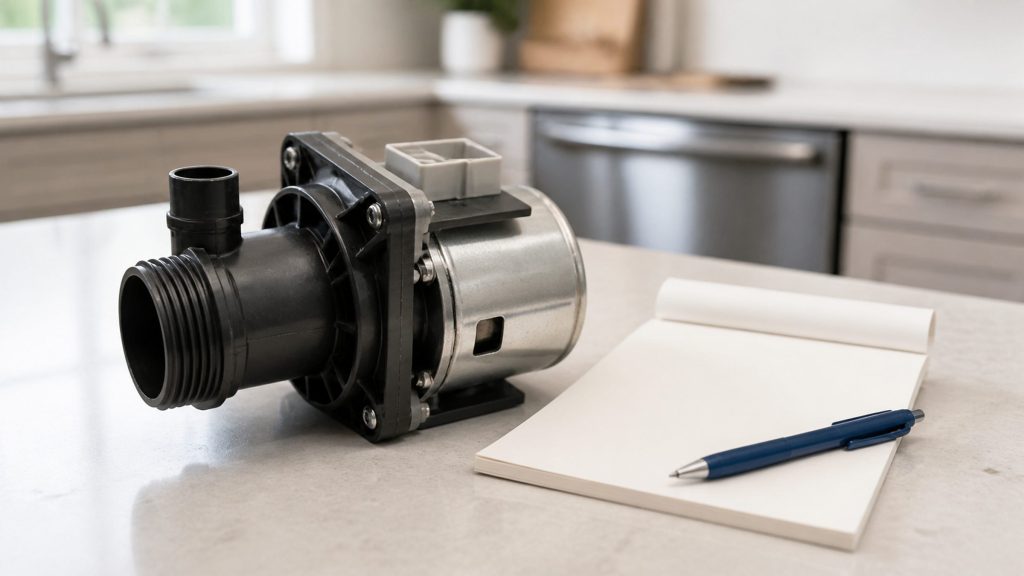
Is It Worth Repairing a GE Appliance? The Arithmetic, Said Out Loud
Three things decide it: the age from the date code, which part failed, and whether four badges sharing parts keep it available. On this make they usually do.
Read more
Tell us the model number and what it is doing.
This article is based on:
- Official manufacturer documentation
- Internal repair procedures
- Technician repair history
- Company quality standards