Appliance
GE washers
Top-load and front-load washers, including the HydroWave machines whose ordinary running noises GE documents specifically because they alarm people. The three calls that dominate are will not drain, will not spin and leaking — and on a front loader, a fourth that is not a repair at all: a door seal that has been holding water and growing something.
- 3 symptoms we are called out to
- From $95 diagnostic, credited to the repair
- 59 cities and neighborhoods covered
- OEM parts available on order
The short version
What this equipment is, for a repair
Configurations
Top load and front load · including HydroWave
Access
Planned before the visit, not discovered on arrival
Parts
OEM, available on order
Diagnostic
From $95, credited to the repair
What goes wrong with it
Symptoms we are called out to on GE washers
Each one covers the likely causes in the order they are worth checking, and what to do in five minutes before booking anything.
-
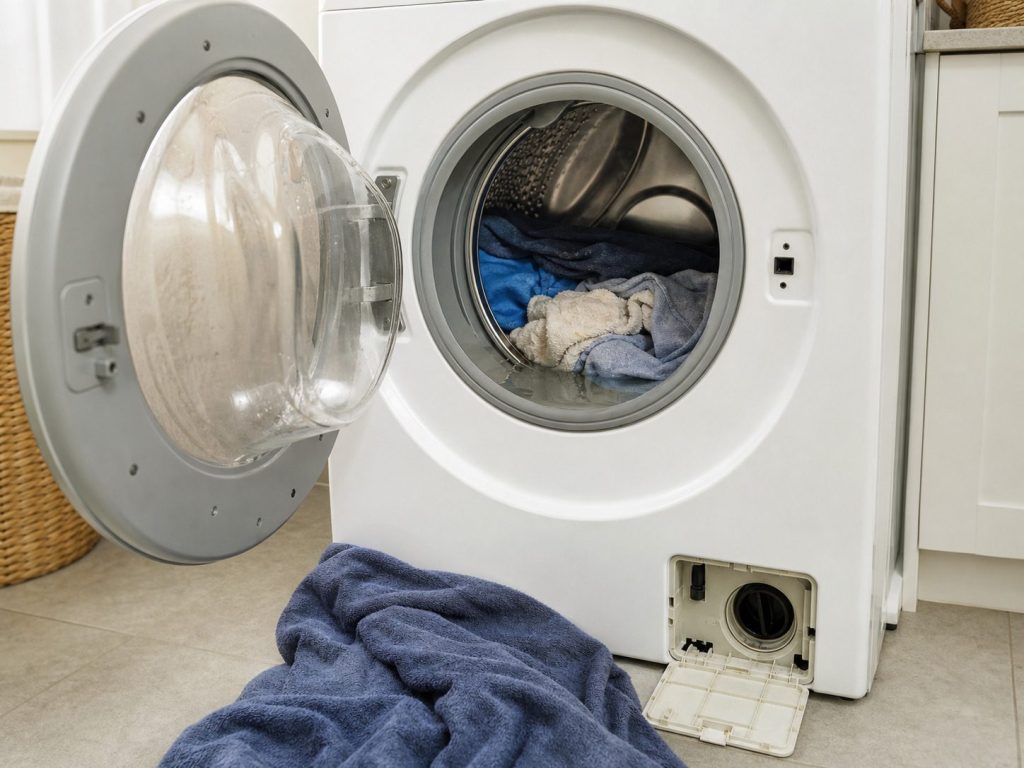
The cycle ends with the drum full of water Washer will not drain
The filter in front of the pump is where this usually ends, and what comes out of it explains the symptom better than any test does. A machine that drains slowly rather than not at all is far more often restricted than failed, and restrictions are cheaper than pumps.
- Water left in the drum at the end
- It drains slowly, or only sometimes
- Clothes come out soaking rather than damp
-
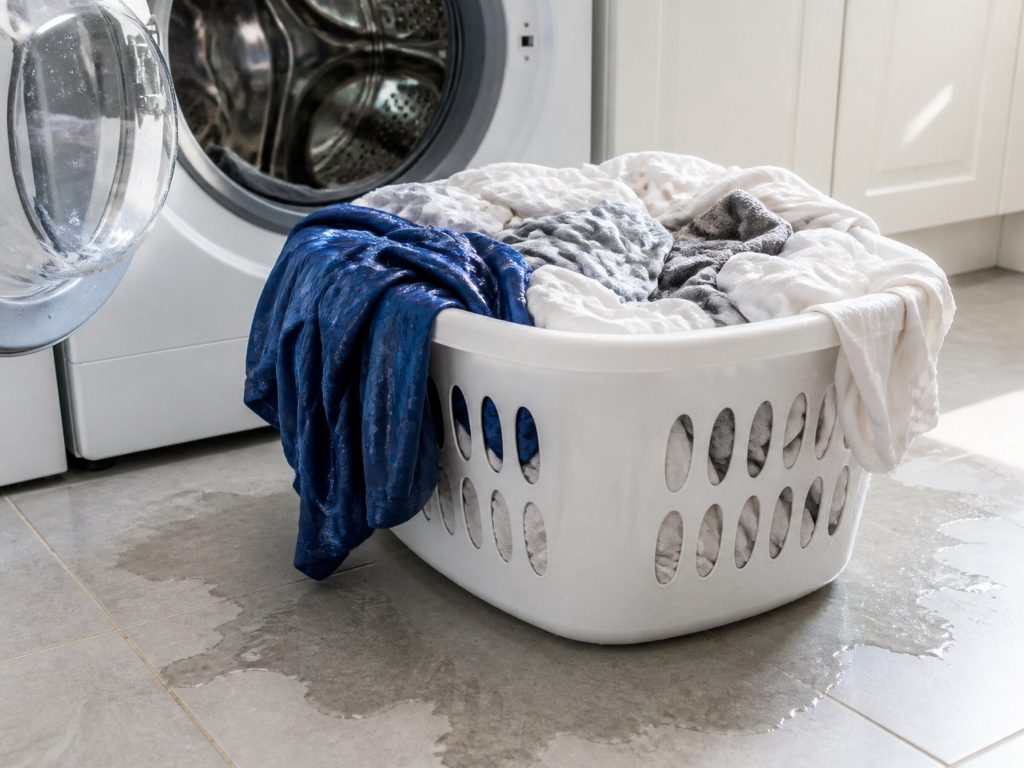
It drains, but the clothes come out soaking Washer will not spin
Balance first, then the interlock, then the drive — and the first of those is not a repair. A washer that refuses to spin an unbalanced load is protecting itself and behaving exactly as designed, which is why the useful question is whether it happens on every load or only the heavy ones.
- Clothes soaking wet at the end of the cycle
- It tries to spin, then stops or slows
- A single heavy item is involved
-
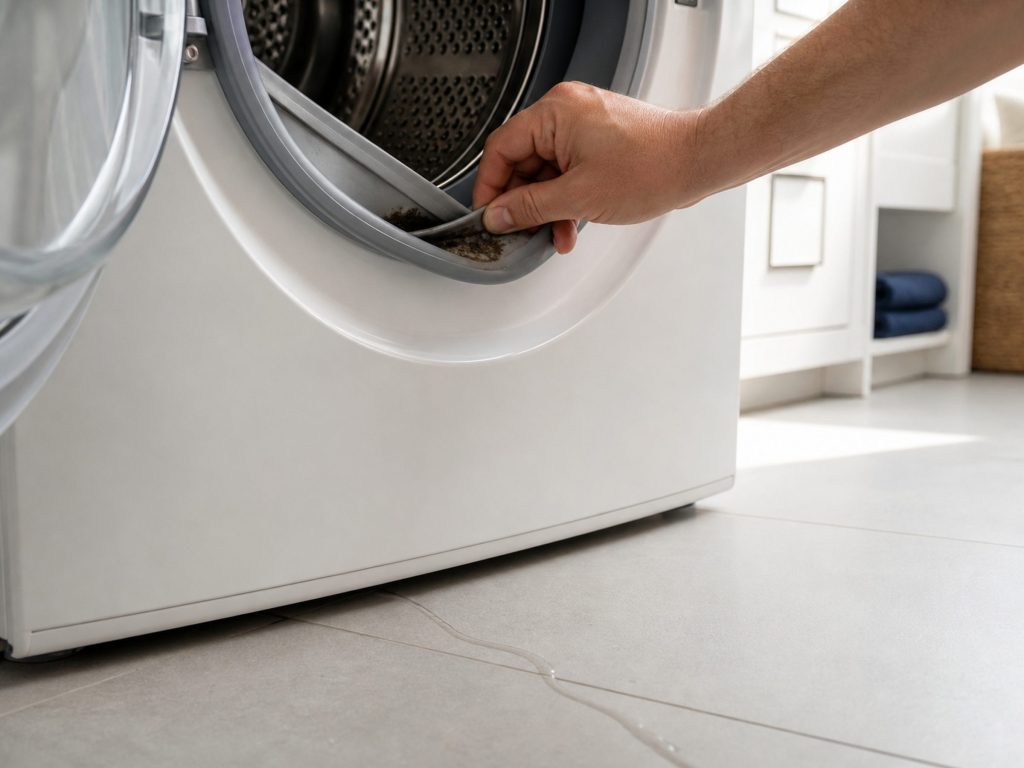
Water on the floor, sometimes Washer leaking
Intermittent leaks are the hard ones and they are nearly always one of three things: the door seal on a front loader, a hose connection that weeps under pressure, or an overfill that only happens on certain cycles. Which cycle it leaks on narrows it more than anything we can see on arrival.
- Water on the floor after some cycles
- A front loader with a marked or torn door seal
- Worse on certain programs than others
What we do on it
Repairs we carry out on GE washers
Starting figures for this equipment in South Florida. The exact cost is confirmed after an on-site diagnostic — and this is not the whole list of what can go wrong, so call if your problem is not here.
-
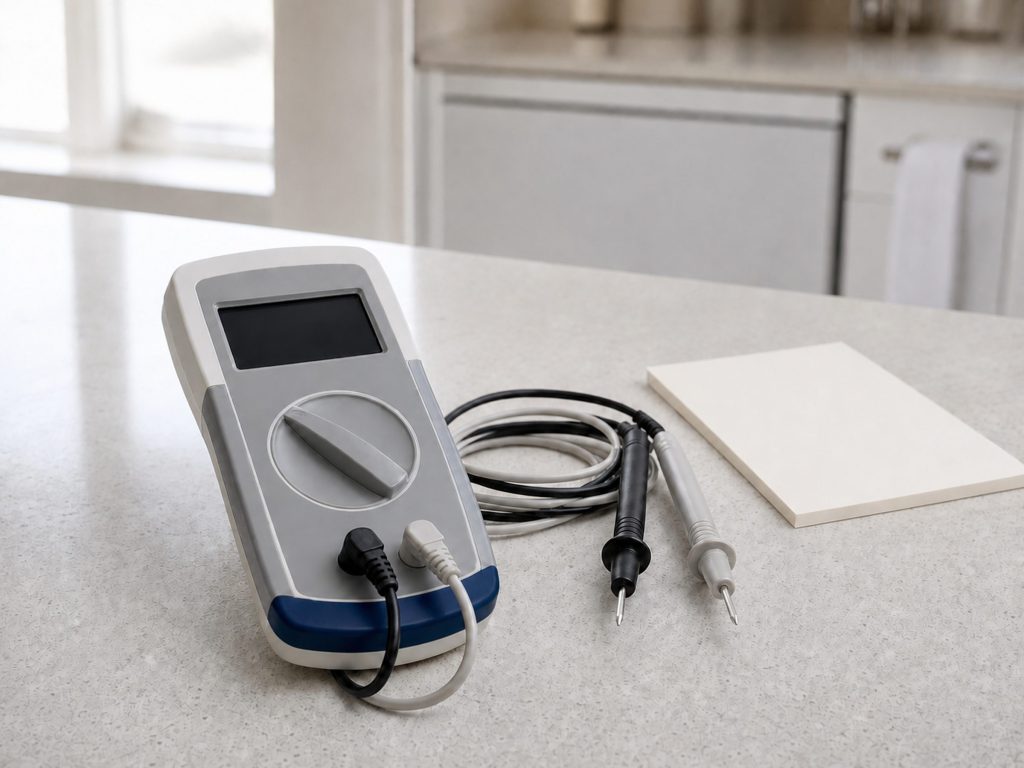
from $95 Diagnostic visit
We find out what is actually wrong before anybody quotes a part. On a GE that starts with the two things their own support pages start with — what the appliance is reporting, and whether anything outside it is the cause — because a dryer that will not dry is usually a vent and a dishwasher that will not drain is often a disposer. The fee is credited toward the work when you go ahead.
- What the appliance reports, read rather than guessed
- The causes outside the appliance ruled out first
- Credited toward the repair
-
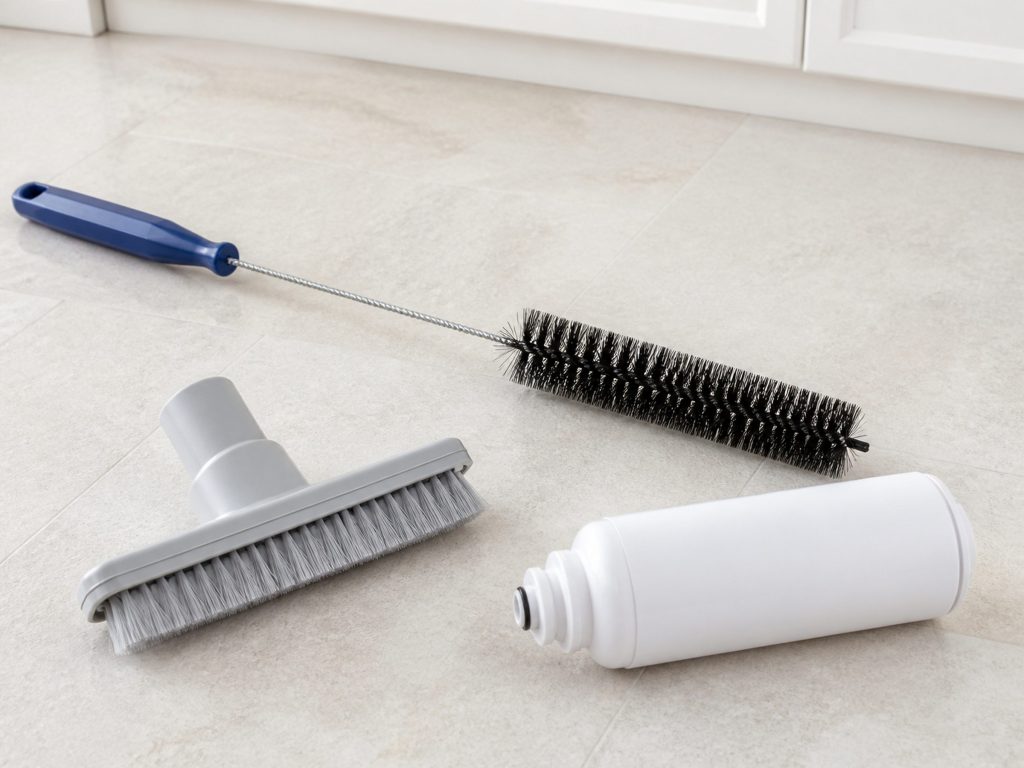
from $129 Appliance maintenance
The visit that prevents the expensive one. Condenser coils in a city where floors carry dust and hair, a dryer vent that has been quietly filling for three years, an ice machine scaling on hard water, filters that are past their interval. None of it is glamorous and all of it is cheaper than what it prevents.
- Condensers, vents, filters and seals in one visit
- Priced per appliance, cheaper together
- The findings written down, not just the work
-
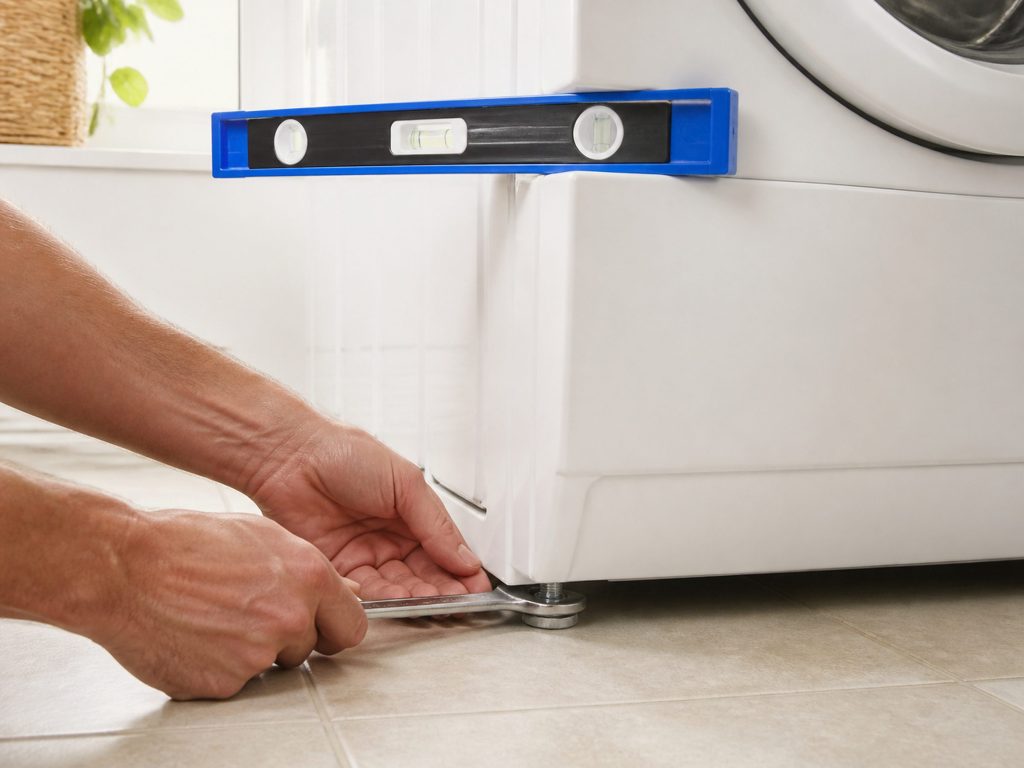
from $149 Appliance installation
Installation done so the appliance can be serviced later, and so it performs the way its specification says. A built-in that has no clearance loses cooling every August, a dryer vented into a long horizontal run never dries in one cycle, and a dishwasher connected to a new disposer with the plug still in it will hold water from the first cycle.
- Clearances the specification asks for, not the ones the cabinet allows
- The disposer plug, the high loop, the vent run
- Leveled, aligned and tested before we leave
-
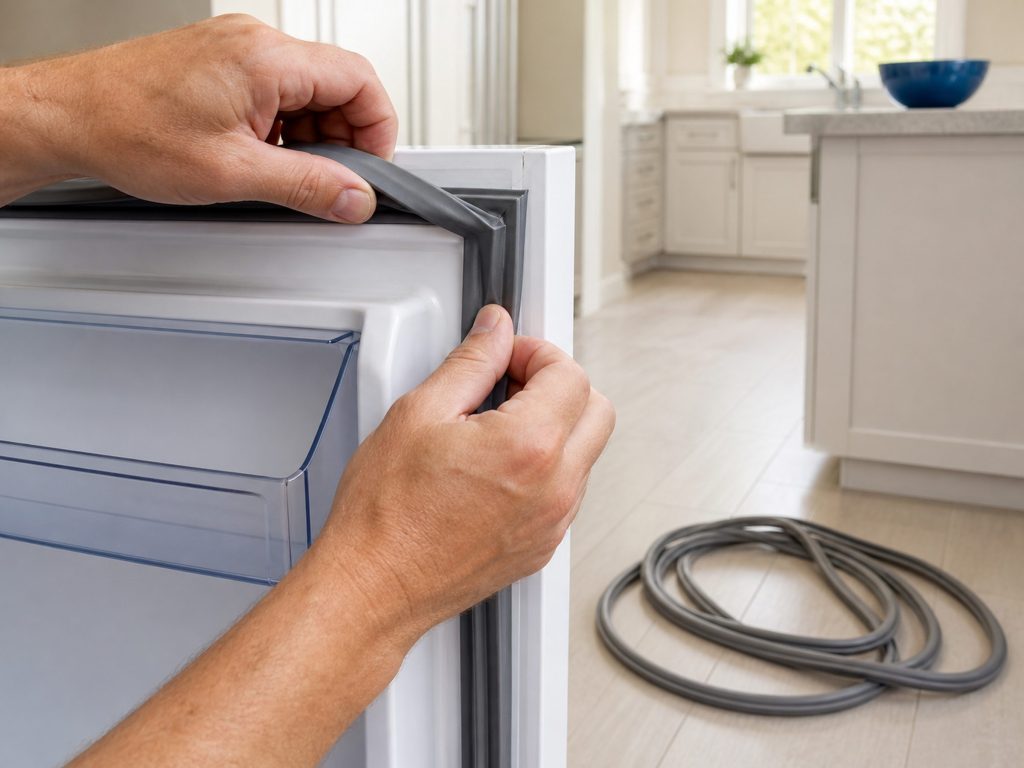
from $155 Door seal replacement
The cheapest repair on a cold appliance and the one that costs the most when it is ignored. In a climate this wet, a seal that has lost its grip lets humid air in all day; the defrost system then spends its life clearing ice it should never have had to make, and the power bill climbs before anybody looks at the door.
- Hinge-side failure first — that is where seals go
- Frost, run time and the power bill are the symptoms
- Alignment checked at the same time, always
-
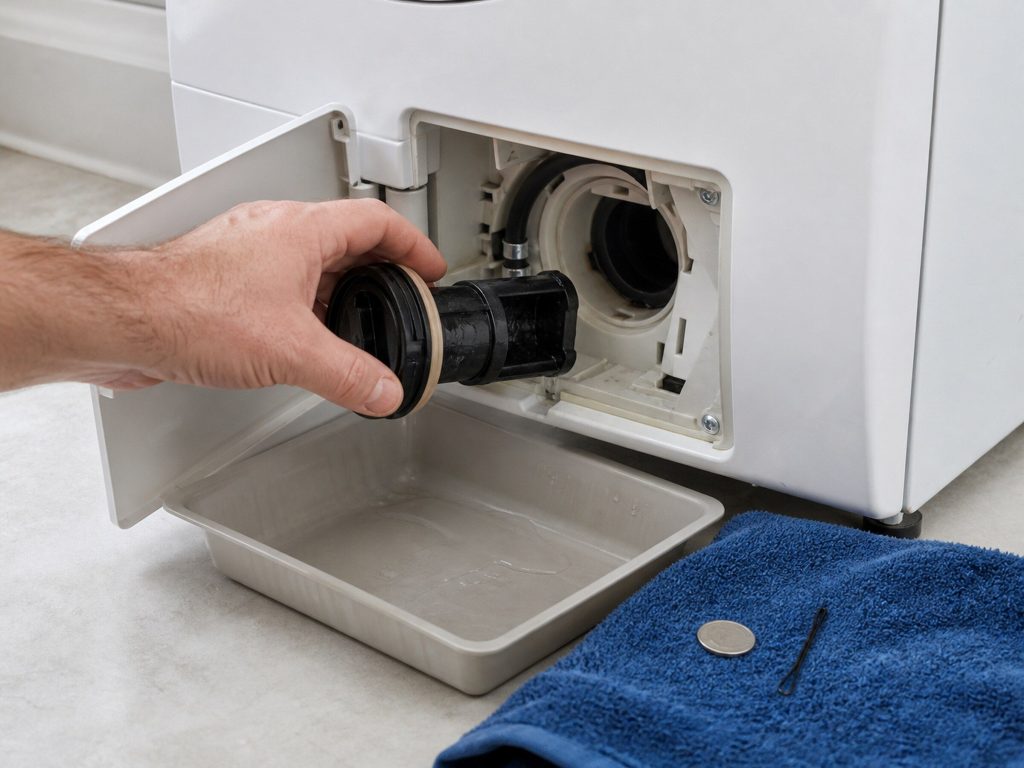
from $185 Washer drain pump repair
GE washer pump replacement comes after the filter, the hose and the standpipe have been cleared, because a pump straining against a blockage is not a failed pump. It fills and washes but will not drain. The filter in front of the pump is where the story usually ends — coins, drawstrings, an underwire — and a machine that drains slowly rather than not at all is far more often restricted than failed.
- The filter before the pump, every time
- Slow draining is restriction, not failure
- The hose and the standpipe count as the drain
-
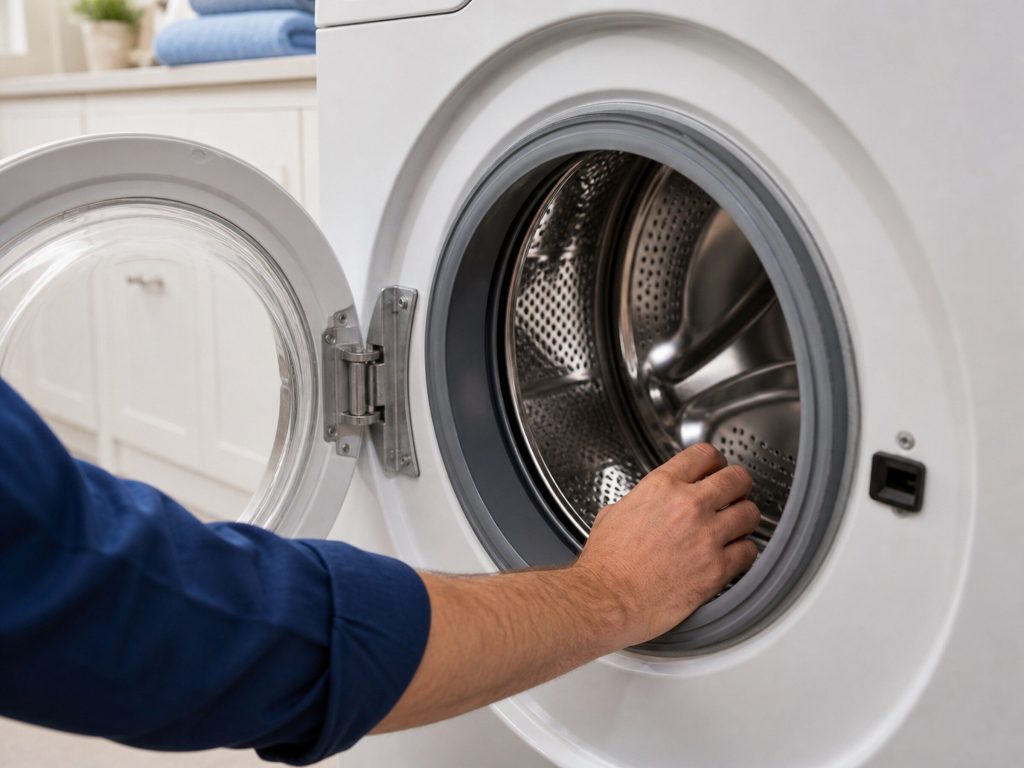
from $195 Washer will not spin repair
It drains but will not spin. The order is balance, then the lid switch or door lock, then the drive — and a washer that refuses to spin an unbalanced load is working correctly and protecting itself, which is why the first question is whether it happens on every load or only the big ones.
- Balance first — the machine may be right
- Lid switch and door lock are safety interlocks
- Belt, coupler or bearing, tested in that order
-
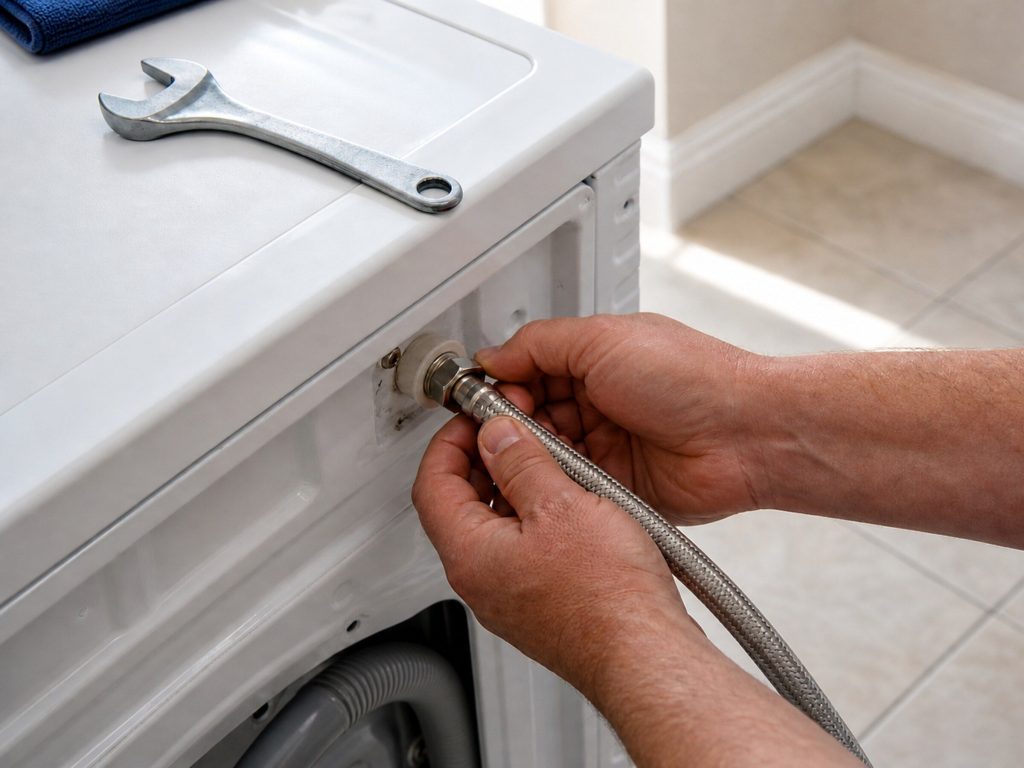
from $165 Washer leak repair
Leaks that only happen sometimes are the hard ones, and they are usually the door seal on a front loader, a hose connection that weeps under pressure, or an overfill that happens on certain cycles only. Which cycle it leaks on narrows it down considerably, so it is worth noting before the visit.
- Which cycle it leaks on is the diagnosis
- Front-load seals are the usual answer
- Hoses and their washers are checked as a matter of course
-
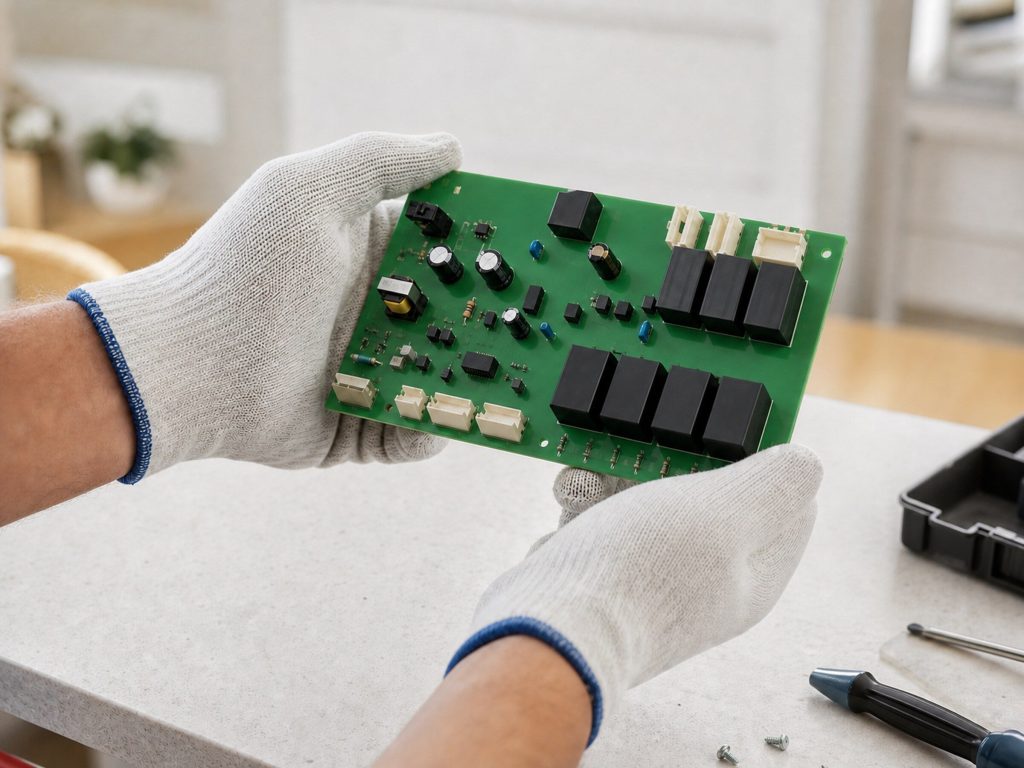
from $285 Control board replacement
The part most often blamed and least often measured. A control board is real and it does fail, but a sensor, a relay, a connector or a supply problem produces the same behavior for a tenth of the money — so this page exists as much to say when the board is not the answer as to price it when it is.
- Ruled in by measurement, not by elimination-by-guess
- Sensors and relays imitate a failed board
- We say when the arithmetic favors replacement
In more detail
About GE washers
The noises that are supposed to be there
GE publishes a document on HydroWave washers explaining which sounds are normal, and it exists because those machines genuinely sound different from what people expect. A washer that has always made a noise is a different conversation from one that started last week, and we ask which it is.
Front load and top load are different appliances
A front loader seals against a gasket and spins fast; its problems are the seal, the bearings and balance. A top loader fills a tub and agitates; its problems are the drive, the lid switch and the pump. Almost nothing about diagnosing one transfers to the other.
The maintenance nobody is told about
A front loader's door seal holds water by design, and in this climate that becomes a smell and then a stain within months if the door is kept shut. Wiping the seal and leaving the door ajar is the whole of it, and it prevents one of the most common calls we get.
Front load and top load are priced differently, and honestly
A top loader's usual repairs — lid switch, pump, drive coupler — are inexpensive and quick. A front loader's door seal and bearings are not, and a bearing on an older machine is the one laundry repair where replacement genuinely competes. We read the date code before quoting either.
The maintenance nobody is told about
A front loader's door seal holds water by design, and in this climate a door kept shut turns that into a smell and then a stain within months. Wiping the seal and leaving the door ajar prevents it entirely. It is the cheapest advice on this page and the one people are most surprised to hear from a repair company.
This article is based on:
- Official manufacturer documentation
- Internal repair procedures
- Technician repair history
- Company quality standards

Before you book
Questions about GE washers
It fills and washes but will not drain.
The drain pump filter first, and on a machine that has washed anything with a drawstring or a coin, that is where the story usually ends. Then the pump itself, then the hose. A machine that drains slowly rather than not at all is more often restricted than failed.
It drains but will not spin.
Load balance, the lid switch or door lock, and then the drive. A washer that refuses to spin an unbalanced load is working correctly and protecting itself, which is why the first question is whether it happens on every load or only the big ones.
It bangs when it is filling with water.
GE's own answer for that one is not the appliance: it is the plumbing. Water hammer in the house pipes when the fill valve closes sounds exactly like something breaking inside the machine. Their article says to call a plumber, and we would rather tell you that before a visit than during one.
It is leaking, but only sometimes.
Intermittent leaks are usually the door seal on a front loader, a hose connection that weeps under pressure, or an overfill that only happens on certain cycles. Which cycle it happens on narrows it down considerably, so it is worth noting before you call.
Where we do it
Across Miami-Dade, Broward, and Palm Beach
Same terms everywhere we go: an on-site diagnostic first, the price agreed in writing, and the exact figure confirmed once we have seen the unit.
Neighborhoods people ask for by name