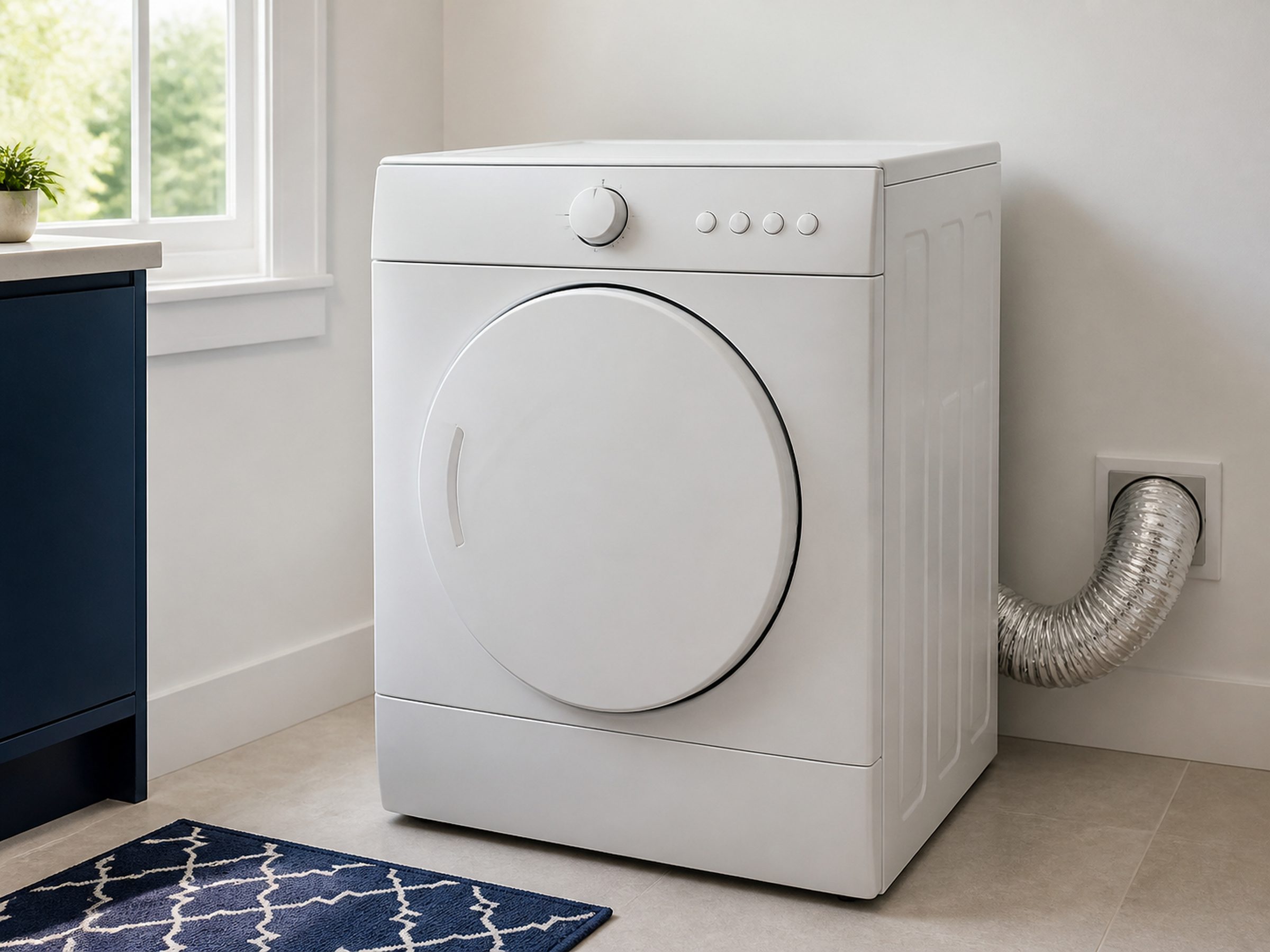
Appliance
GE dryers
Electric and gas dryers, vented and condensation. The single most common call — it runs but the clothes are still wet — is usually not the dryer: it is the vent. In this county that duct runs through humid air and often through a long horizontal path, and a restricted one costs drying time, electricity and eventually the heating element it overheats.
- 2 symptoms we are called out to
- From $95 diagnostic, credited to the repair
- 59 cities and neighborhoods covered
- OEM parts available on order
The short version
What this equipment is, for a repair
Configurations
Electric and gas · vented and condensation
Access
Planned before the visit, not discovered on arrival
Parts
OEM, available on order
Diagnostic
From $95, credited to the repair
What goes wrong with it
Symptoms we are called out to on GE dryers
Each one covers the likely causes in the order they are worth checking, and what to do in five minutes before booking anything.
-
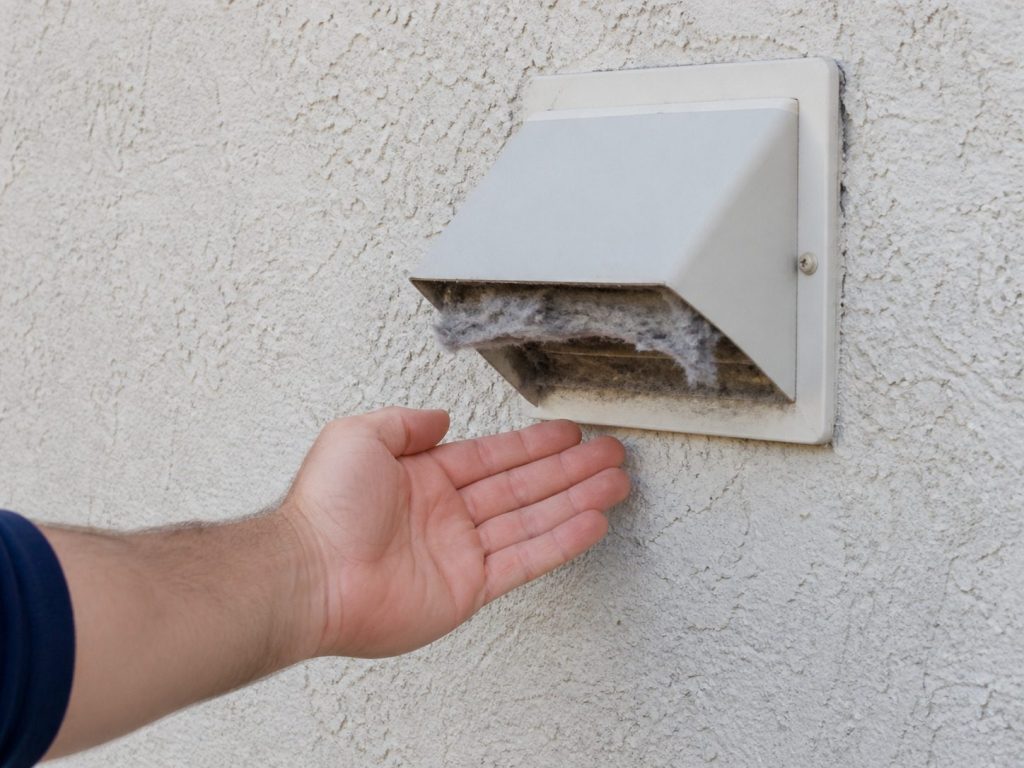
It runs a full cycle and the clothes are still damp Dryer takes too long or will not dry
The vent, until proven otherwise — and GE's own troubleshooting says the same. A duct packed with lint, crushed behind the machine, or running too far horizontally will pass air but not enough of it, and the machine runs cycle after cycle doing very little. In this county the run is usually long and it carries humid air, which makes it fill faster than anywhere dry.
- Two cycles to dry what used to take one
- The load is hot but still damp
- The laundry room gets warm and humid
-
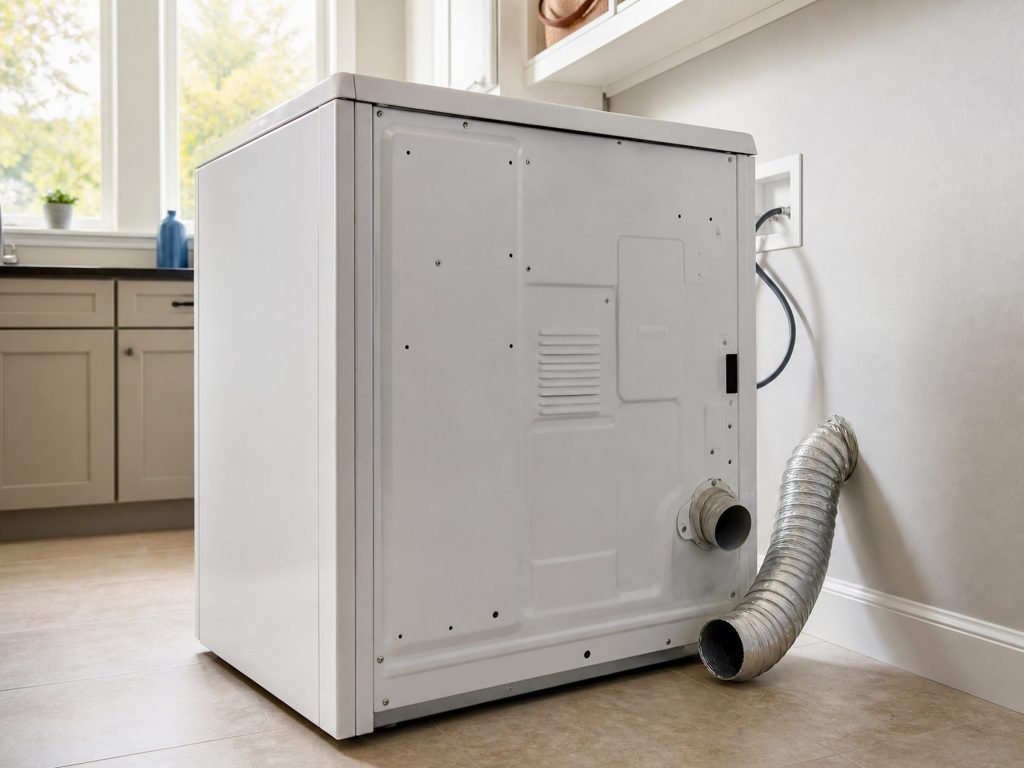
The drum turns and the air stays cold Dryer runs but does not heat
On an electric dryer this is the element or a thermal cut-out — and the cut-out is very often a symptom of the vent rather than a part that simply aged. On gas it is the igniter, the flame sensor or the valve coils, diagnosable by watching one ignition cycle. Before either, there is a supply check that costs nothing.
- Tumbles normally, no heat at all
- Clothes come out cold and damp
- It happened suddenly rather than gradually
What we do on it
Repairs we carry out on GE dryers
Starting figures for this equipment in South Florida. The exact cost is confirmed after an on-site diagnostic — and this is not the whole list of what can go wrong, so call if your problem is not here.
-

from $95 Diagnostic visit
We find out what is actually wrong before anybody quotes a part. On a GE that starts with the two things their own support pages start with — what the appliance is reporting, and whether anything outside it is the cause — because a dryer that will not dry is usually a vent and a dishwasher that will not drain is often a disposer. The fee is credited toward the work when you go ahead.
- What the appliance reports, read rather than guessed
- The causes outside the appliance ruled out first
- Credited toward the repair
-

from $129 Appliance maintenance
The visit that prevents the expensive one. Condenser coils in a city where floors carry dust and hair, a dryer vent that has been quietly filling for three years, an ice machine scaling on hard water, filters that are past their interval. None of it is glamorous and all of it is cheaper than what it prevents.
- Condensers, vents, filters and seals in one visit
- Priced per appliance, cheaper together
- The findings written down, not just the work
-
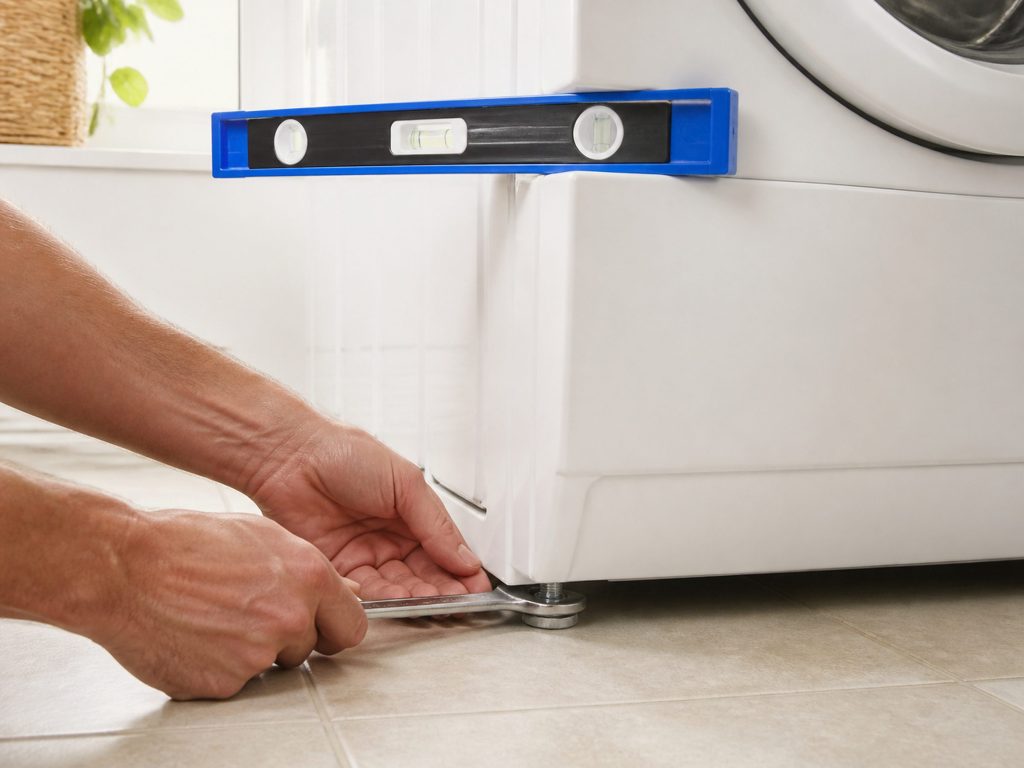
from $149 Appliance installation
Installation done so the appliance can be serviced later, and so it performs the way its specification says. A built-in that has no clearance loses cooling every August, a dryer vented into a long horizontal run never dries in one cycle, and a dishwasher connected to a new disposer with the plug still in it will hold water from the first cycle.
- Clearances the specification asks for, not the ones the cabinet allows
- The disposer plug, the high loop, the vent run
- Leveled, aligned and tested before we leave
-

from $125 Dryer vent cleaning
The most valuable job on this list and the least glamorous. A dryer is a fan and a heater, and both depend on air leaving the building. In this county the duct is more often long and horizontal than short and vertical, it carries humid air, and it fills faster than anybody expects — which costs drying time, electricity, and eventually the heating element.
- The duct, end to end, not the lint trap
- Restricted venting is the recognized fire risk
- Usually restores drying in one cycle
-
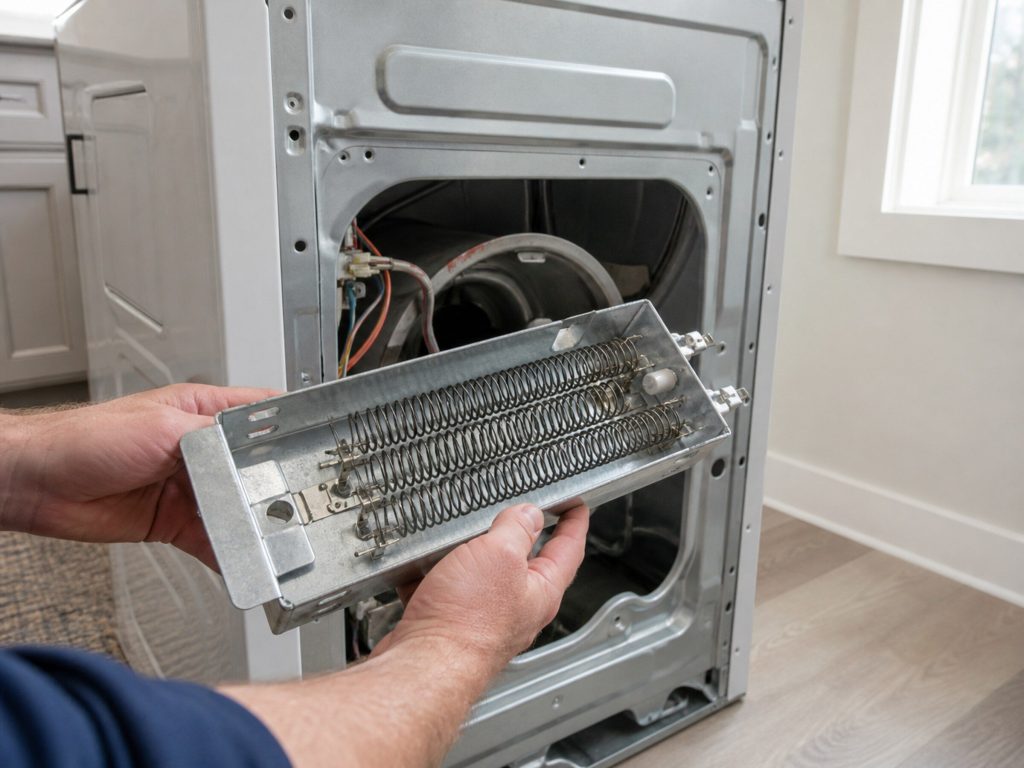
from $185 Dryer heating element replacement
It runs and never gets warm. On an electric dryer that is the element or a thermal cut-out, and the cut-out is very often a symptom of the vent rather than a part that simply aged — which is why this repair and the vent are usually the same visit.
- Element and cut-outs tested as a circuit
- A blown cut-out usually accuses the vent
- Vent checked in the same visit, always
-
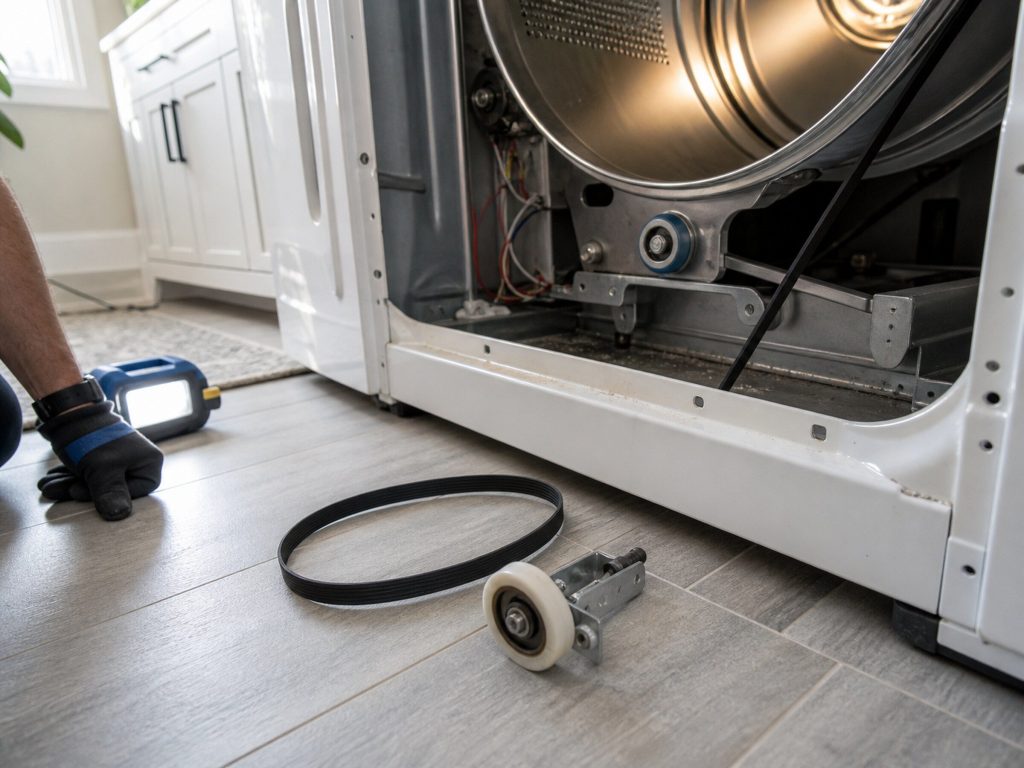
from $175 Dryer drum roller and belt repair
GE dryer drum roller and belt repair is done as a set, because rollers, idler and glides wear together and replacing one of a worn group is how a repair repeats itself in six months. Squealing, rumbling or a drum that will not turn. GE distinguishes dryer noises in their own support article for good reason: a roller or an idler pulley caught early is a cheap repair, and a seized one takes the belt and sometimes the motor with it.
- Cheap now, expensive later
- The noise names the part, if you catch it
- Belt, rollers, idler and glides done together
-
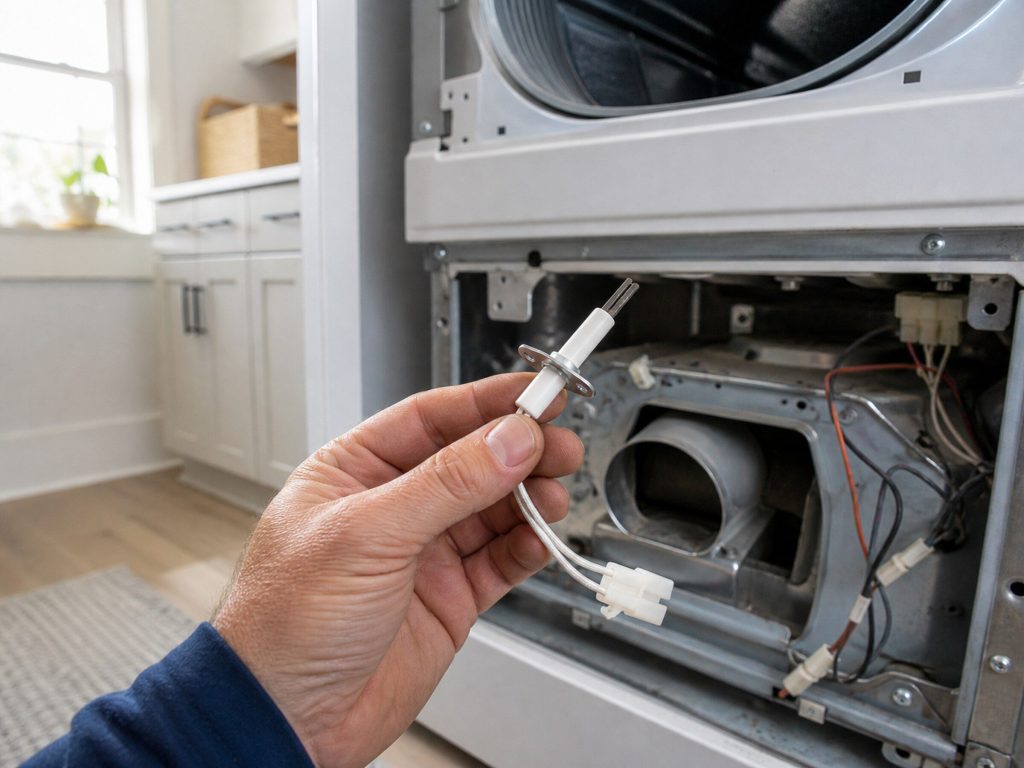
from $195 Gas dryer igniter and valve repair
A gas dryer that tumbles without heat is usually the igniter, the flame sensor or the valve coils, and the three fail in a sequence that is diagnosable by watching one cycle: whether the igniter glows, how long it glows, and whether the flame lights and then goes out.
- Diagnosed by watching one ignition cycle
- Igniter, sensor and coils, in that order of likelihood
- Gas work, done with the meter on it
-
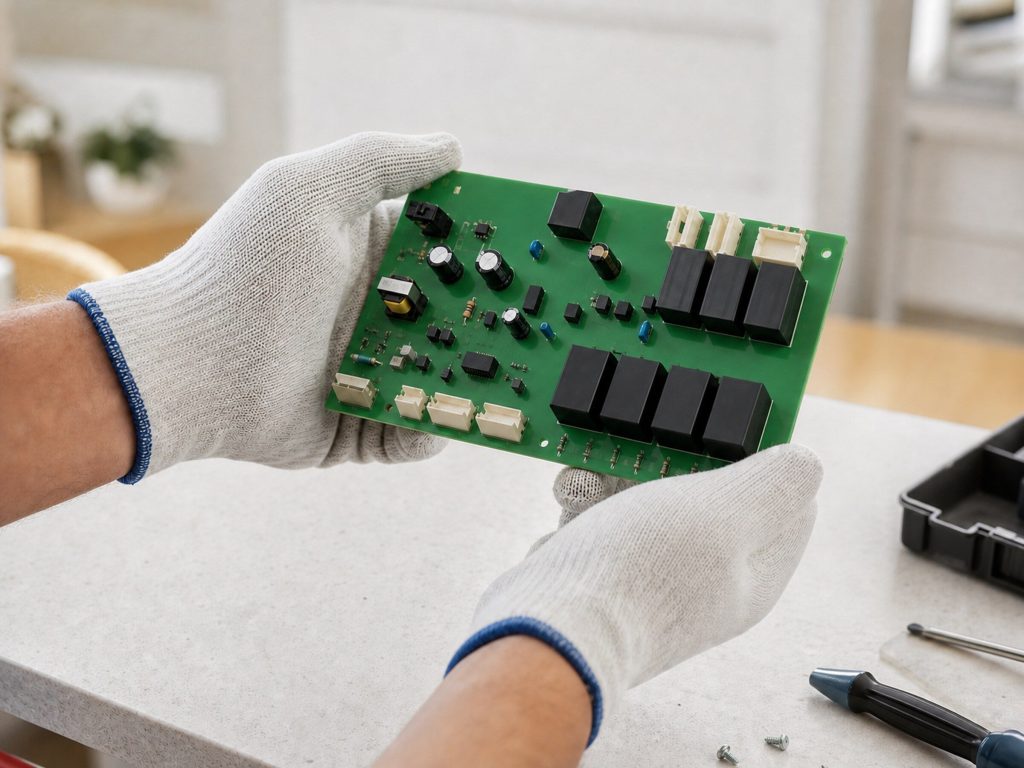
from $285 Control board replacement
The part most often blamed and least often measured. A control board is real and it does fail, but a sensor, a relay, a connector or a supply problem produces the same behavior for a tenth of the money — so this page exists as much to say when the board is not the answer as to price it when it is.
- Ruled in by measurement, not by elimination-by-guess
- Sensors and relays imitate a failed board
- We say when the arithmetic favors replacement
In more detail
About GE dryers
Most dryer calls are about the duct
Not the appliance. A dryer is a fan and a heater, and both depend entirely on air leaving the building. In South Florida a vent run carries humid air, collects lint faster and is more often long and horizontal than short and vertical. Cleaning it is maintenance, and skipping it is the most expensive habit in laundry.
Gas and electric fail differently
An electric dryer that will not heat is an element or a cut-out. A gas dryer that will not heat is an igniter, a flame sensor or the valve coils. The symptom is identical from the outside, which is why the make and fuel matter on the first phone call.
The safety part, said plainly
A restricted vent is the recognized fire risk in a laundry room, and a dryer that has begun taking two cycles is telling you about it. That is the honest reason we push vent work rather than sell parts.
Electric and gas are different visits
An electric dryer that will not heat is an element or a thermal cut-out, and often a supply problem — a dryer running on one leg of its 240V feed tumbles perfectly and never heats, which is a breaker rather than an appliance. A gas dryer is an igniter, a flame sensor or valve coils, diagnosed by watching a single ignition cycle. The fuel decides what travels on the van.
Why the vent is on the invoice
Because a thermal cut-out does not fail of old age — it opens because the housing overheated, and the housing overheated because air was not leaving. Replacing the cut-out without clearing the duct is selling the same repair twice, and we would rather explain that than do it.
This article is based on:
- Official manufacturer documentation
- Internal repair procedures
- Technician repair history
- Company quality standards
Before you book
Questions about GE dryers
It runs but the clothes are still damp.
The vent, until proven otherwise. GE's own troubleshooting says the same. A duct packed with lint, crushed behind the machine or running too far horizontally will pass air but not enough of it, and the machine will run cycle after cycle doing very little. It is also how heating elements die, so this is the repair that prevents the next one.
It runs and never gets warm at all.
On an electric dryer, that is usually the heating element or a thermal cut-out, and the cut-out is often a symptom of the vent rather than a component that simply aged. On gas, it is the igniter or the gas valve coils. Both are ordinary repairs at ordinary prices.
It will not start at all.
The door switch, the thermal fuse, or the start switch. On an electric dryer a blown thermal fuse also usually points back at airflow, which is why we check the vent even on a machine that will not run.
Is a squealing noise serious?
It is a drum roller, a glide or an idler pulley, and it is cheap now and expensive later — a seized roller will eventually take the belt with it. GE has an article distinguishing dryer noises for exactly this reason.
Where we do it
Across Miami-Dade, Broward, and Palm Beach
Same terms everywhere we go: an on-site diagnostic first, the price agreed in writing, and the exact figure confirmed once we have seen the unit.
Neighborhoods people ask for by name