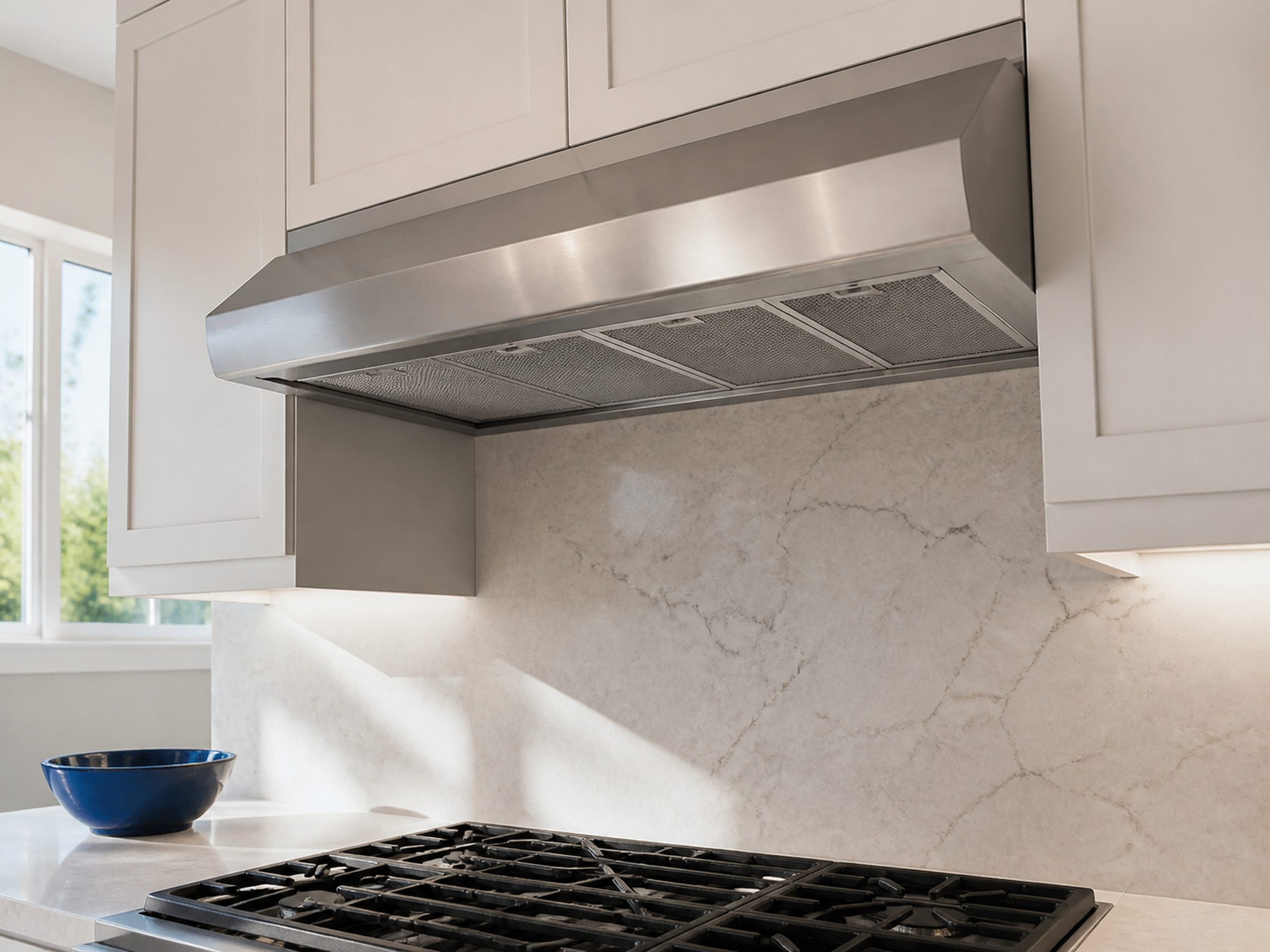
Appliance
GE range hoods
Under-cabinet, wall-mounted, island, custom insert and downdraft ventilation. A simple appliance with an unglamorous job, and the one most often ignored until the kitchen tells on it — because a hood that has lost its extraction takes months to notice and takes the grease somewhere.
- 1 symptoms we are called out to
- From $95 diagnostic, credited to the repair
- 59 cities and neighborhoods covered
- OEM parts available on order
The short version
What this equipment is, for a repair
Configurations
Under-cabinet · wall-mounted · island · insert · downdraft
Access
Planned before the visit, not discovered on arrival
Parts
OEM, available on order
Diagnostic
From $95, credited to the repair
What goes wrong with it
Symptoms we are called out to on GE range hoods
Each one covers the likely causes in the order they are worth checking, and what to do in five minutes before booking anything.
-
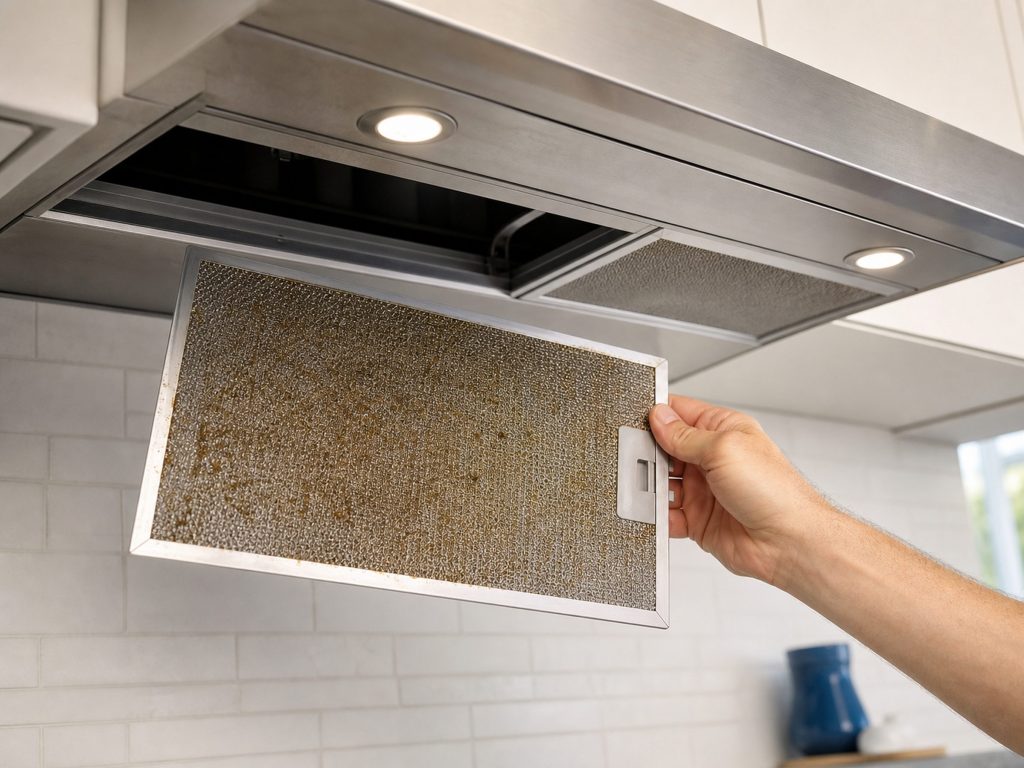
The fan runs and the kitchen still smells Range hood not pulling air
GE publishes no error codes for range hoods, so there is nothing to look up and this is diagnosed by what still works. A great many of these calls end at a filter that nobody knew was a consumable — on a recirculating hood the charcoal filter has a service life and is usually years past it.
- Fan audible but nothing gets pulled up
- Cooking smells and grease linger
- Lights work, fan does not — or the reverse
What we do on it
Repairs we carry out on GE range hoods
Starting figures for this equipment in South Florida. The exact cost is confirmed after an on-site diagnostic — and this is not the whole list of what can go wrong, so call if your problem is not here.
-
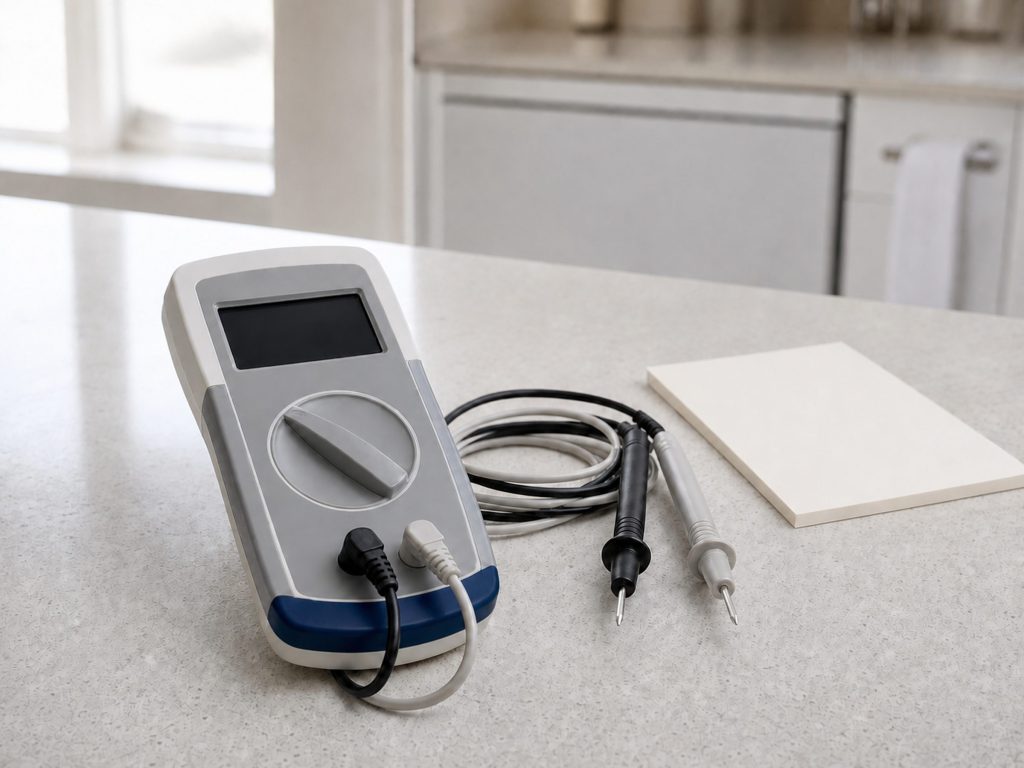
from $95 Diagnostic visit
We find out what is actually wrong before anybody quotes a part. On a GE that starts with the two things their own support pages start with — what the appliance is reporting, and whether anything outside it is the cause — because a dryer that will not dry is usually a vent and a dishwasher that will not drain is often a disposer. The fee is credited toward the work when you go ahead.
- What the appliance reports, read rather than guessed
- The causes outside the appliance ruled out first
- Credited toward the repair
-
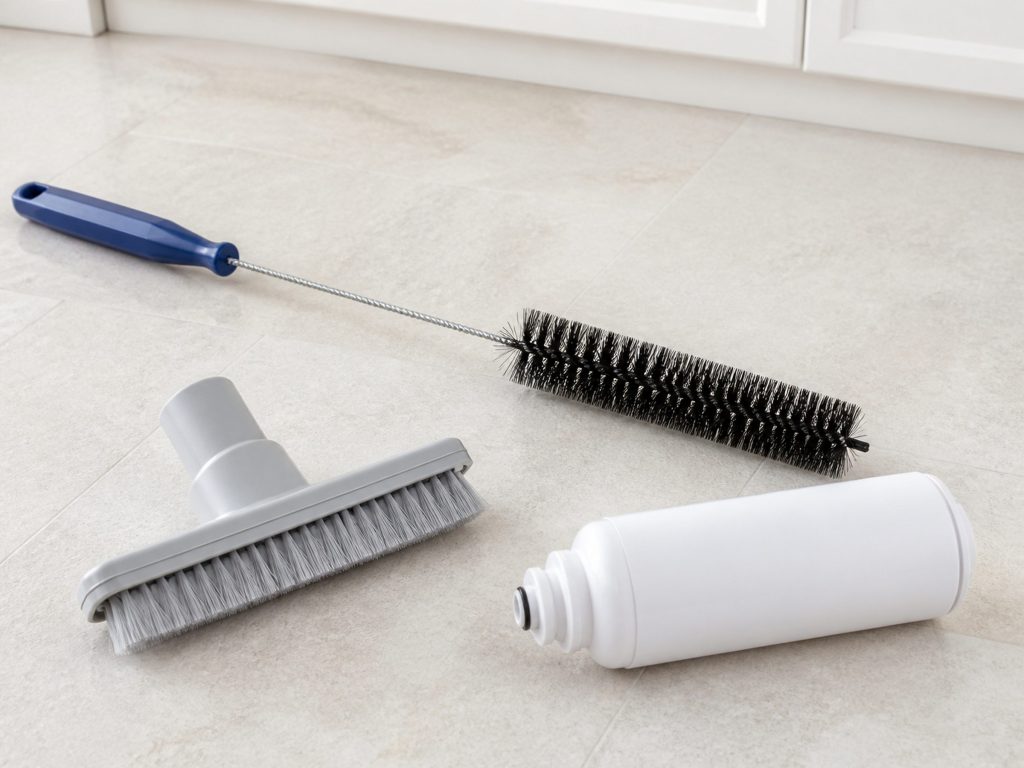
from $129 Appliance maintenance
The visit that prevents the expensive one. Condenser coils in a city where floors carry dust and hair, a dryer vent that has been quietly filling for three years, an ice machine scaling on hard water, filters that are past their interval. None of it is glamorous and all of it is cheaper than what it prevents.
- Condensers, vents, filters and seals in one visit
- Priced per appliance, cheaper together
- The findings written down, not just the work
-
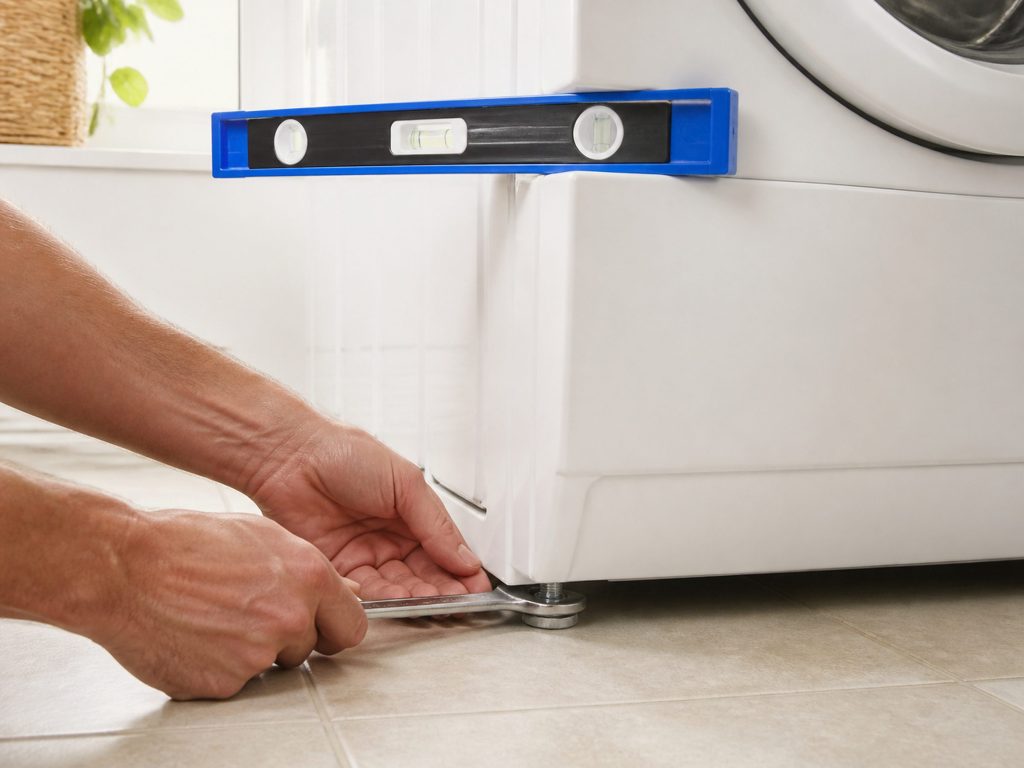
from $149 Appliance installation
Installation done so the appliance can be serviced later, and so it performs the way its specification says. A built-in that has no clearance loses cooling every August, a dryer vented into a long horizontal run never dries in one cycle, and a dishwasher connected to a new disposer with the plug still in it will hold water from the first cycle.
- Clearances the specification asks for, not the ones the cabinet allows
- The disposer plug, the high loop, the vent run
- Leveled, aligned and tested before we leave
-
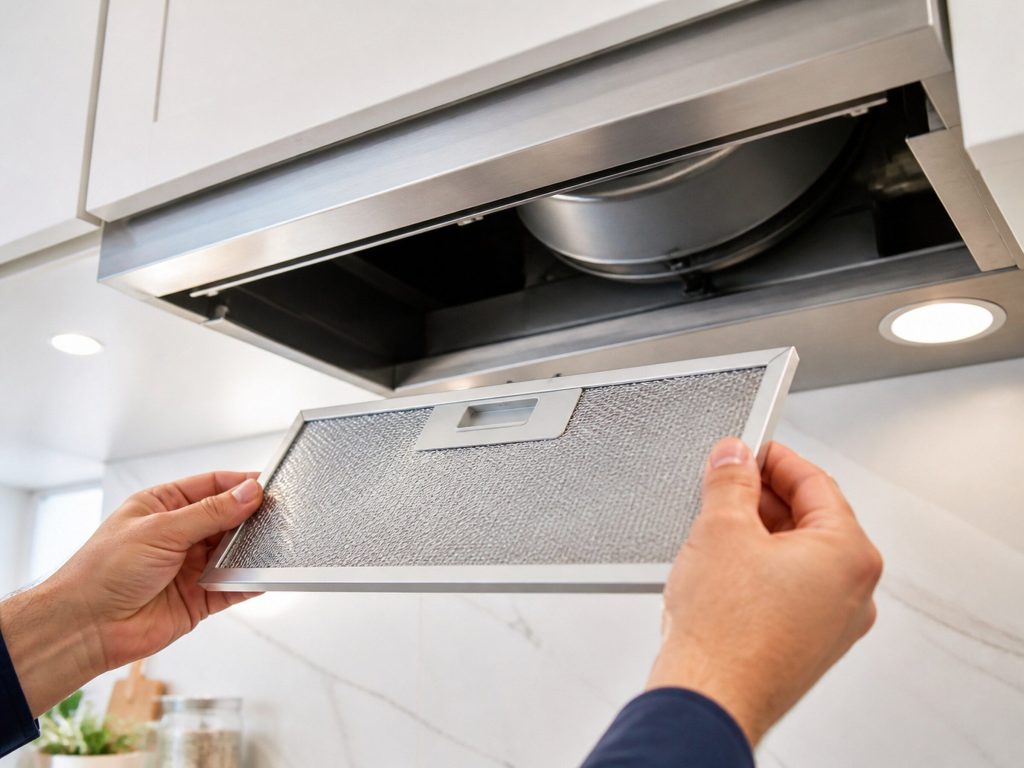
from $145 Range hood repair
Under-cabinet, wall-mounted, island, insert and downdraft. GE publishes no error codes for hoods, so this is diagnosed by what runs and what does not — lights, each fan speed, the damper — and a great many calls end at a filter that nobody knew was a consumable.
- No codes published — diagnosed by what still works
- Charcoal filters are consumables, not parts
- Downdrafts fail mechanically, not electrically
In more detail
About GE range hoods
The appliance nobody thinks about
A hood is a fan, a light, a switch and a path for air. There is very little to go wrong, which is exactly why it is neglected: filters go years past their service life, ducting collects grease, and the first symptom is a kitchen that smells of last night.
Ducted and recirculating are different repairs
A ducted hood sends air outside and its problems are the blower and the duct. A recirculating hood filters and returns it, and its performance depends entirely on a charcoal filter that is a consumable. Half the 'my hood stopped working' calls on recirculating units are a filter nobody knew about.
Grease is the reason to care
Extraction that has quietly halved puts cooking grease on cabinets, ceilings and inside the duct itself. It is a cleaning problem that becomes a fire risk, and it is entirely preventable with filters and a service.
GE range hood repair, and the filter nobody was told about
Most of these calls end at a filter rather than a part. Metal mesh filters wash; charcoal filters on recirculating hoods are consumables with a service life of months, and a great many hoods that have stopped pulling air have simply never had one changed.
Downdrafts are the mechanical ones
A downdraft has to rise out of the counter before it can do anything, so its failures are a motor, a belt or a gear rack rather than an air path. They are the most mechanical hoods GE makes, and the moving part is usually the problem rather than the ventilation.
This article is based on:
- Official manufacturer documentation
- Internal repair procedures
- Technician repair history
- Company quality standards
Before you book
Questions about GE range hoods
The fan runs but it does not seem to pull anything.
Filters first — a mesh filter saturated with grease passes very little air and looks almost normal — then the ducting, then the blower itself. On a recirculating hood, the charcoal filter is consumable and is very often years past its life, which produces exactly this complaint with nothing broken at all.
The lights work but the fan does nothing.
That separates the appliance neatly: power is arriving and the control is alive, so it is the blower motor, its capacitor or the speed switch. All three are ordinary parts.
Does a hood show an error code?
No. GE publishes no code table for range hoods, and we would rather say so than invent one. Diagnosis is done by what runs and what does not — lights, each fan speed, the damper — which is why we ask you to try all of them before the visit.
My downdraft will not rise.
That is the lift mechanism rather than the ventilation: a motor, a belt or a gear rack depending on the model. Downdrafts are the most mechanical hoods GE makes and the one kind where the moving part, not the air path, is the usual problem.
Where we do it
Across Miami-Dade, Broward, and Palm Beach
Same terms everywhere we go: an on-site diagnostic first, the price agreed in writing, and the exact figure confirmed once we have seen the unit.
Neighborhoods people ask for by name