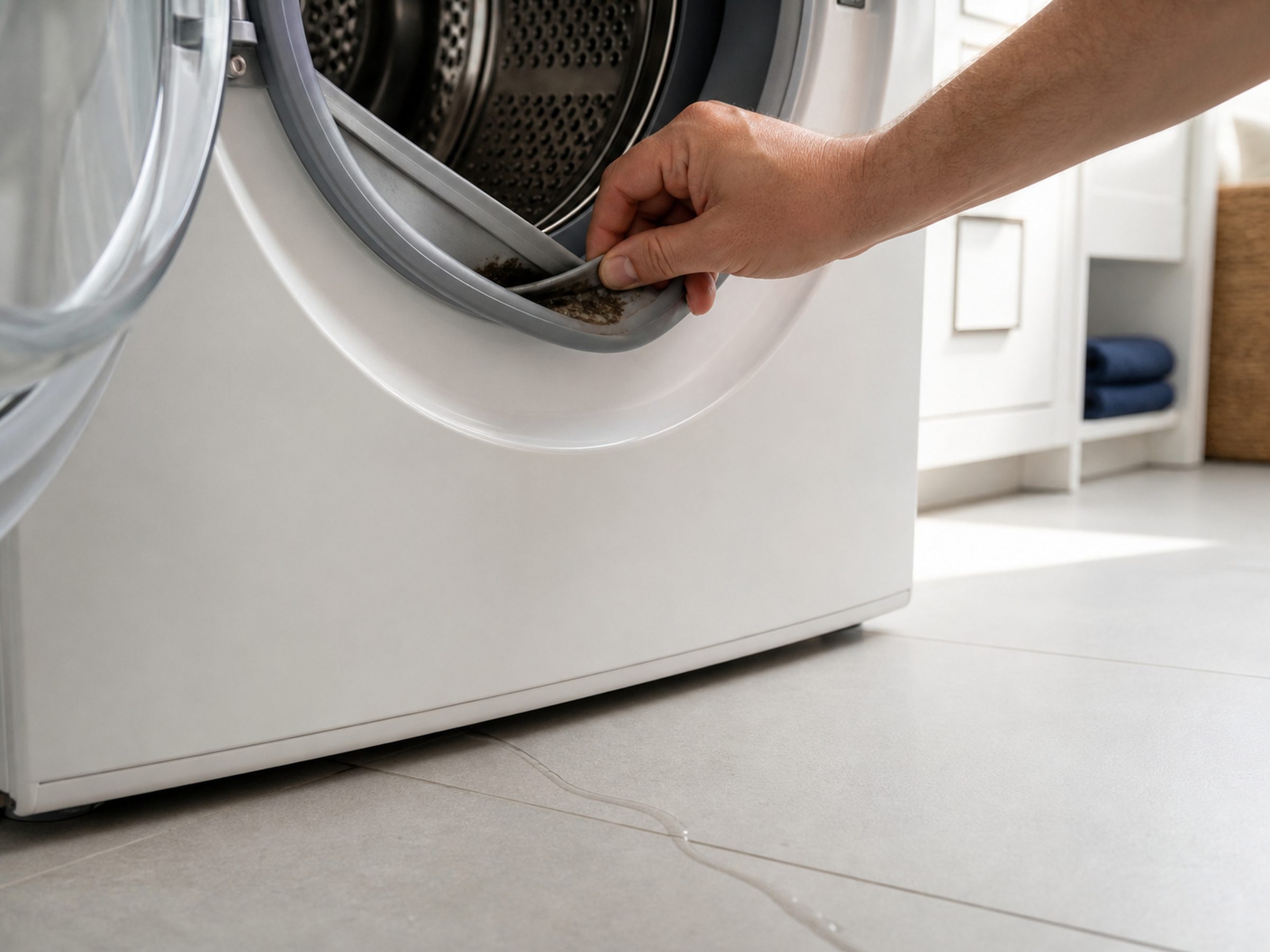
- “Water on the floor after some cycles”
- “A front loader with a marked or torn door seal”
- “Worse on certain programs than others”
Symptom
GE washer leaking
Intermittent leaks are the hard ones and they are nearly always one of three things: the door seal on a front loader, a hose connection that weeps under pressure, or an overfill that only happens on certain cycles. Which cycle it leaks on narrows it more than anything we can see on arrival.
- From $95 diagnostic, credited to the repair
- 59 cities and neighborhoods covered
- OEM parts available on order
- In writing the price, before anything is opened
Four ordinary causes
What this usually turns out to be
Cheapest and commonest first, which is also the order we check them in. They sit hundreds of dollars apart, and only the unit settles which one is yours.
-
The door boot seal, on a front loader
The usual answer. Debris trapped in the fold wears a hole at the bottom, and in this climate the seal holds water and grows things as well.
Washer leak repair from $165 -
A hose connection weeping under pressure
Including the rubber washers, which harden and seep long before they burst.
Washer leak repair from $165 -
An overfill on particular cycles
A pressure switch or a blocked air dome fills past the seal on some programs only, which is exactly the intermittent case.
Washer leak repair from $165 -
The drain pump housing or filter cap
A filter cap not tightened after cleaning is a real and slightly embarrassing cause.
Washer drain pump repair from $185
In five minutes
Before you call anybody
None of it needs tools, and all of it makes the visit shorter.
-
01
Turn the door seal out and look inside the fold
On a front loader. Grit, hair and coins live there and that is where seals fail.
-
02
Run a cycle with a torch and a dry floor
Watching, rather than finding the puddle afterward.
-
03
Check both fill hose connections
At the machine and at the tap, including the washers.
-
04
Check the filter cap is tight
If anybody has cleaned the pump filter recently.
How it shows up
What people describe when they call
A shortcut
Narrow it down before anybody arrives
A description of the behaviour leaves a few possible causes. A code names the subsystem before anybody opens anything, which is why it is worth photographing before it clears.
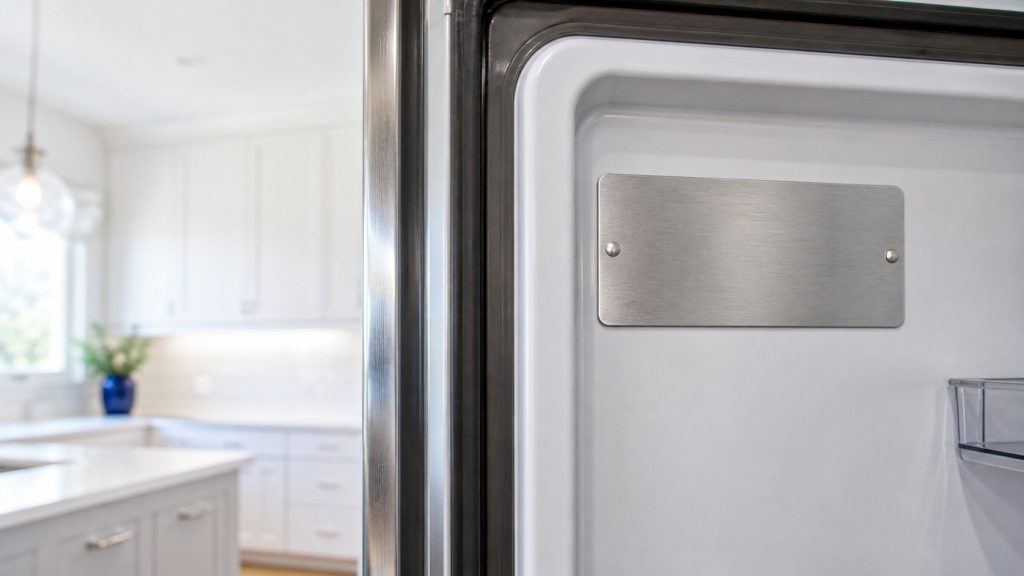
If there is no code at all
On a washer or dryer, the data plate is inside the door opening. All models
In more detail
About GE washer leaking
Note which part of the cycle the water appears in
Fill, wash, drain and spin each point somewhere different, and water travels along the base of the machine before it shows itself — so where you see it is rarely where it starts. A leak that only happens on spin is usually the door seal or a drain connection; one that happens on fill is a valve or a hose.
Where it shows is not where it starts
Water runs along the base frame and emerges at the front, whatever part of the machine it came from. That is why tracing is most of this repair and why the cycle it happens on is the single most useful thing you can tell us.
The seal is also a maintenance item
A front loader's door seal holds water by design. In this climate, left shut, it becomes a smell and then a stain within months. Wiping it and leaving the door ajar is the whole of the prevention.
This article is based on:
- Official manufacturer documentation
- Internal repair procedures
- Technician repair history
- Company quality standards
Before you book
Questions about GE washer leaking
It only leaks on big loads.
That points at overfill or at the seal being pushed by a full drum. Both are ordinary repairs.
There is a smell as well as a leak.
Then start at the seal. A torn seal and a smelly seal are usually the same seal.
Where we do it
Across Miami-Dade, Broward, and Palm Beach
Same terms everywhere we go: an on-site diagnostic first, the price agreed in writing, and the exact figure confirmed once we have seen the unit.
Neighborhoods people ask for by name