Cost Expectations
Is It Worth Repairing a GE Appliance? The Arithmetic, Said Out Loud
Three things decide it and the symptom is not one of them. First, the age, which GE makes easy — the serial carries a two-letter date code. Second, which part failed: seals, elements, pumps, igniters, switches and sensors are almost always worth replacing, while a sealed system on an older basic refrigerator or the high-voltage side of a countertop microwave usually is not. Third, whether the part is still available, and on this make it usually is, because GE, GE Profile, Café and Hotpoint share their engineering and a component discontinued under one badge is often current under another. That is why the repair-or-replace line falls later on GE than on most makes.
The full guide
Is it worth repairing a ge refrigerator? Start with three questions
Not with the symptom. The symptom tells you what is happening; these three tell you what to do about it.
1. How old is it? GE's serial carries a two-letter date code — a letter for the month, a letter for the year — so this is a ten-second question rather than a research project.
2. Which part failed? The spread on this is enormous. A door seal and a sealed system are both refrigerator repairs and they are not in the same universe of money.
3. Is the part still available? On GE, usually. This is the underrated one, and it is why this make behaves differently from most.
The repairs that are almost always worth doing
Whatever the age, within reason:
- Door seals. Inexpensive, and they are costing you run time and electricity every day they are left.
- Heating elements, on ovens and dryers.
- Igniters, on gas ranges and dryers.
- Thermostats, sensors and thermistors. Cheap parts, diagnosis-heavy jobs, and the most over-diagnosed category there is — they are frequently blamed on a control board instead.
- Pumps and valves, on dishwashers and washers, on anything under about ten years.
- Rollers, belts and idlers on a dryer, and they are cheapest caught early.
- Anything that is actually a vent, a filter, a hose or a disposer plug, which is a large share of calls and barely a repair at all.
The ones that need the conversation
A sealed system on a refrigerator. Licensed work with recovery equipment, and the highest figure on our list. On a newer or built-in unit it is defensible. On an older basic model the arithmetic usually favors replacement, and we will say so before the work rather than after it.
A control board. The part most often blamed and least often measured. Before accepting it, the inputs get checked — sensors, relays, connectors, supply — because a board acting on a bad reading is behaving correctly. If the board genuinely is the answer on a twelve-year-old machine, it may approach what the appliance is worth.
The high-voltage side of a countertop microwave. Magnetron, diode, capacitor. On a built-in, a drawer or an over-the-range unit, usually worth it, because replacing those is joinery as well as shopping. On a countertop unit, rarely.
A drum bearing on a washer. The one laundry repair where replacement genuinely competes on an older machine.
Why the line falls later on GE
This is the part that surprises people.
GE, GE Profile, Café and Hotpoint differ mostly in door, finish and control. The engineering underneath is largely shared. For a repair that means two things: a diagnosis on one badge usually transfers to the others, and a part that has been discontinued under one name is frequently still current under another.
Add to that the sheer number of GE appliances in service in the United States — the parts are stocked rather than ordered from a distributor — and older machines stay viable years longer than a model year suggests.
So the honest answer to "it is nine years old, is it finished?" is usually no, and on some other makes it would be yes.
What we do
Read the date code before quoting. Name the part rather than the assembly. Put the repair figure and the replacement alternative next to each other in writing when they are close.
And when the answer is that it is not worth doing, say it — which costs us the job and is the only version of this advice worth having.
Questions people ask about this
What is the rule of thumb?
The common one — do not spend more than half the replacement cost — is a starting point rather than an answer, because it ignores how much life is left. The date code is what supplies the missing half.
Is it worth repairing a 15-year-old refrigerator?
For a seal, a thermostat, a fan or a defrost heater, usually yes. For a compressor, usually no. Same appliance, opposite answers, and the part is what decides.
The board is the most expensive part. Is it ever worth it?
On a newer appliance, yes. And before accepting that diagnosis at all, the inputs are worth measuring — a control acting on a bad sensor reading behaves exactly like a failed control, for a tenth of the money.
Will you tell me not to repair something?
Yes, and it costs us the job. That is the point: advice you only get when it favors us is not advice.
Cost Expectations
More guides like this one
-
What GE Repairs Cost in Miami, and Why Some Are Cheaper Than You Expect
Volume parts that are stocked rather than ordered, four badges sharing engineering, and a catalog that is mostly freestanding. All three show up in the figure.
Read more -
The Cheapest GE Jobs, and the Expensive Ones They Prevent
A condenser clean and a dryer vent are the two lowest figures we publish. Both are the maker's own first answer, and both prevent repairs several times their cost.
Read more -
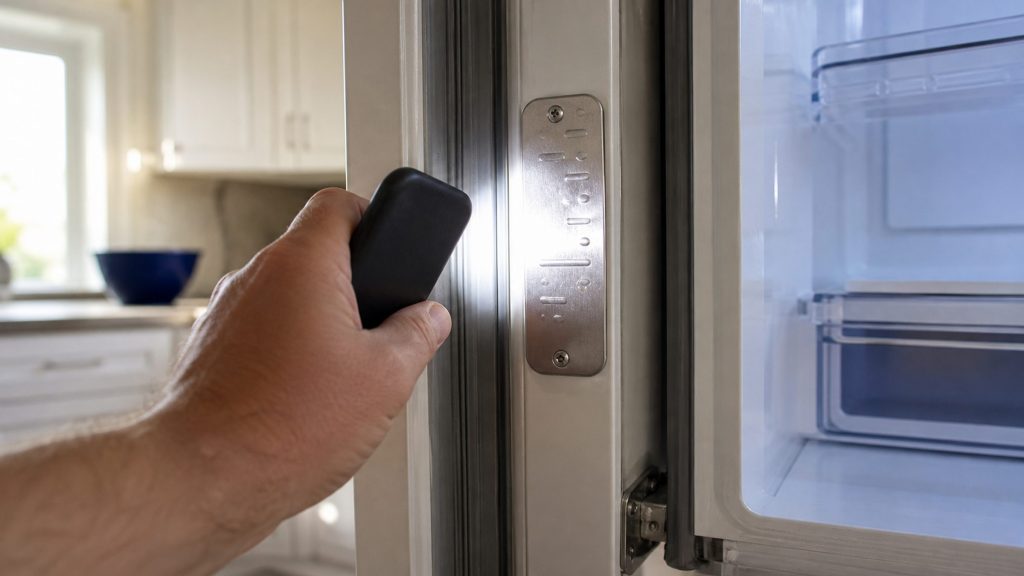
How Old Is My GE Appliance? Reading the Two-Letter Date Code
GE's serial number carries a letter for the month and a letter for the year. Age decides repair-or-replace more reliably than the symptom does.
Read more
Tell us the model number and what it is doing.
This article is based on:
- Official manufacturer documentation
- Internal repair procedures
- Technician repair history
- Company quality standards