Maintenance & Prevention
Cleaning a GE Refrigerator Condenser: The Maker’s Own First Answer
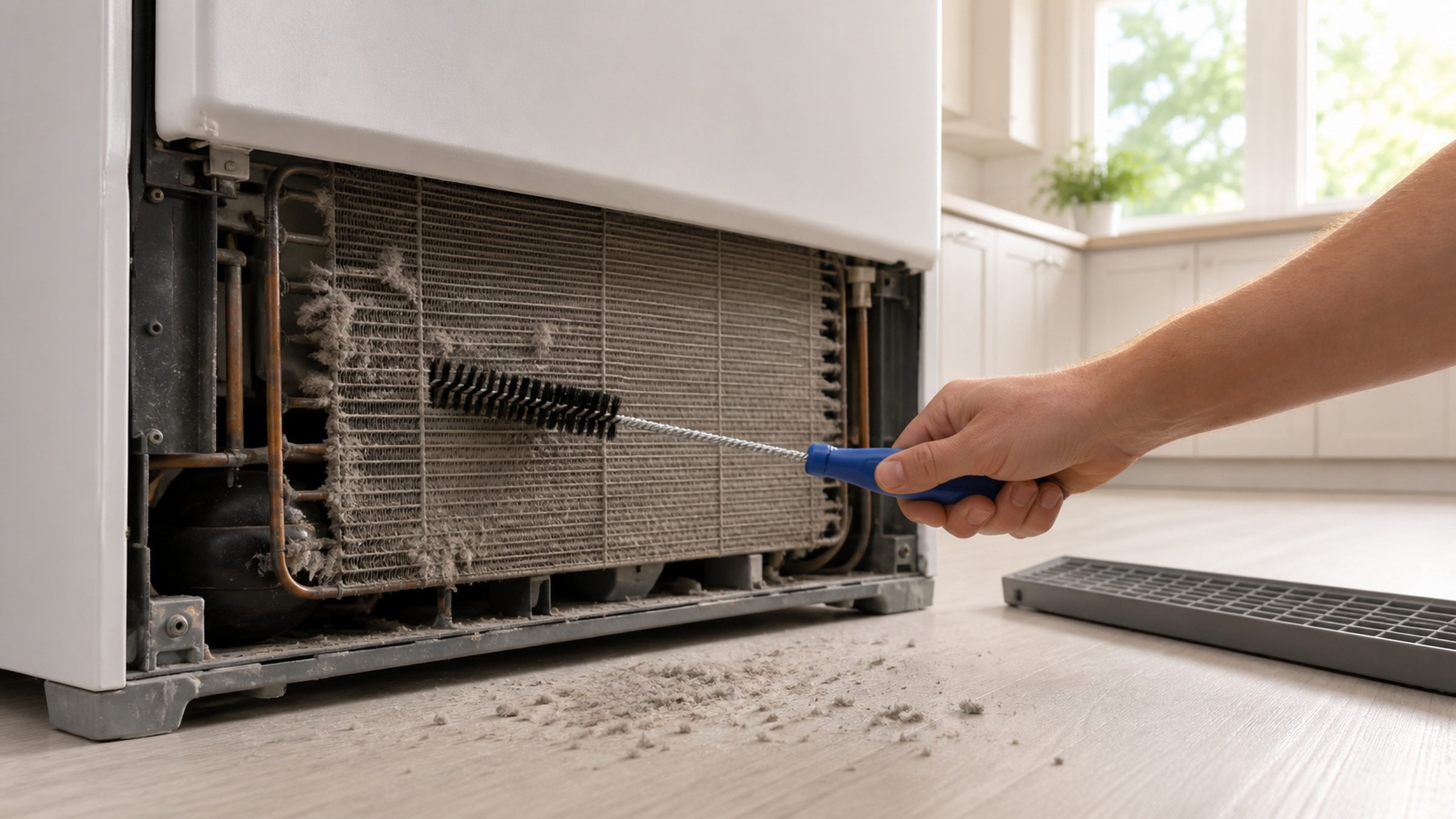
The condenser is the coil that sheds the heat the refrigerator removes from the cabinet, and when it cannot shed heat the compressor runs longer for less cold. On most modern GE refrigerators it is behind a grille at the base at the front, which means the appliance does not have to be pulled out; on older models it is at the back. Unplug the appliance, remove the grille, and clean the coil and the condenser fan with a brush and a vacuum — the fan matters as much as the coil, and a fan slowed by debris produces the same symptom. Take a temperature reading before and after so the result is a number, and do it once a year in this climate, or more often in a house with pets.
The full guide
Ge refrigerator how to clean coils, and why it is the first thing GE says
A refrigerator does not make cold. It moves heat out of the cabinet and dumps it into the room, and the condenser is where that dumping happens. When the coil is packed, the heat has nowhere to go — so the compressor runs longer, achieves less, and costs more.
That is why GE's own troubleshooting for a unit that is not cold enough starts here, before anything is opened and long before anybody says the word compressor.
Where it is on a GE
Most modern models: behind the base grille, at the front. This is good news — the appliance stays where it is. The grille clips or unscrews, and the coil is immediately behind it along with the condenser fan.
Older models: at the back, on the outside of the cabinet, which means pulling the unit out.
Built-in and column units: behind a grille at the top or the base, depending on the model, and the clearance the installation left is part of the story.
Doing it
- Unplug the appliance, or switch it off at the breaker. There is a fan in there and it starts without warning.
- Remove the grille. Clips or two screws on most GE models.
- Brush first, then vacuum. A coil brush reaches between the fins where a vacuum nozzle does not. The packed layer between the fins is the part that matters; the loose fluff in front of it is not.
- Clean the fan. This is the step people skip. A condenser fan slowed or unbalanced by debris produces exactly the same symptom as a dirty coil, and it is right there.
- Check the airflow path. On a built-in, look at whether the grille is actually clear and whether the cabinet has the clearance the model asks for.
Measure it, or you have not finished
Put a thermometer in the fresh food compartment before you start, and read it again several hours after. GE's targets are 37°F in the fresh food compartment and 0°F in the freezer.
If the temperature moved, the coil was the problem and you have saved yourself a service call. If nothing moved, that is information too — the cheapest cause is eliminated with a measurement rather than a guess, and the diagnosis goes on to airflow inside the cabinet, the door seals and the defrost circuit.
We do the same thing on a service visit, and record both numbers, for the same reason.
How often, in this climate
Once a year for most households. Twice if there are pets, or if the kitchen has a lot of foot traffic, or if the refrigerator sits where floor dust gathers.
The reason it is more often here than in the manual: a condenser at floor level in a Miami kitchen collects what floors collect, and it does it faster in a humid house where dust clumps rather than blows away. Two years is enough to build a mat between the fins that surprises people when they see it.
What it prevents
Longer run times, a higher power bill, and a compressor working against a load it was not designed to carry. None of that fails dramatically — it just shortens the life of the most expensive component in the appliance, quietly, over years.
That is the honest reason this job is priced low on our list. It is meant to be chosen.

Questions people ask about this
Will this actually fix a warm refrigerator?
Often, and that is why GE names it first. It is not a guaranteed cure, but it is the cheapest cause to eliminate and in this city it is right surprisingly often.
Do I have to pull the refrigerator out?
On most modern GE models, no — the coil is behind the base grille at the front. On older units with the coil at the back, yes.
How do I know it worked?
Measure. Take the cabinet temperature before, and again several hours after. If nothing moved, the diagnosis continues rather than stopping at a guess.
Is a coil brush necessary?
It is the right tool and it costs very little. A vacuum alone lifts the loose material and leaves the packed layer between the fins, which is the part that matters.
Maintenance & Prevention
More guides like this one
-
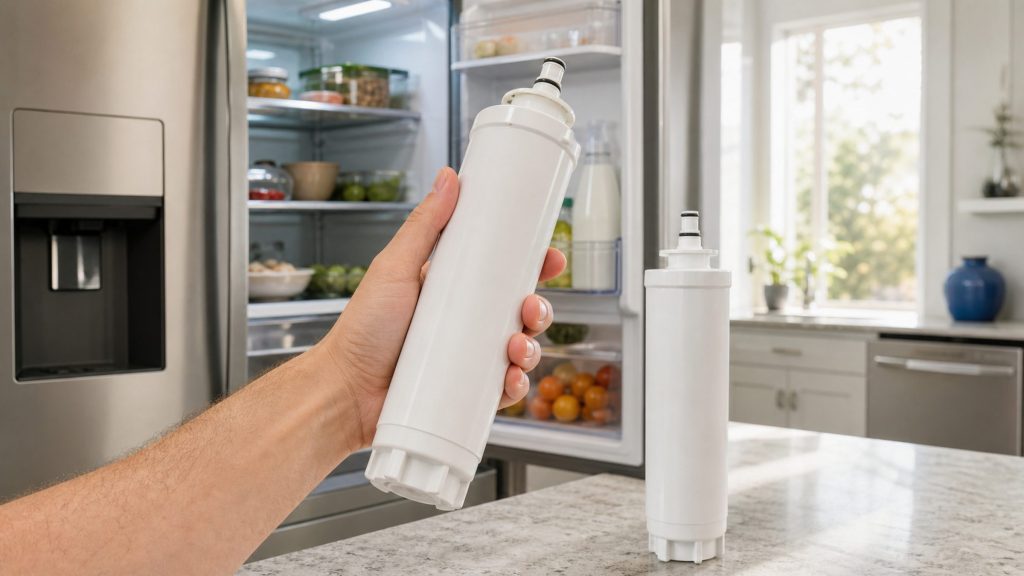
How Often a GE Water Filter Really Needs Changing in South Florida
GE's interval is six months. On this water that is optimistic, and a starved water path looks exactly like a failing icemaker.
Read more -
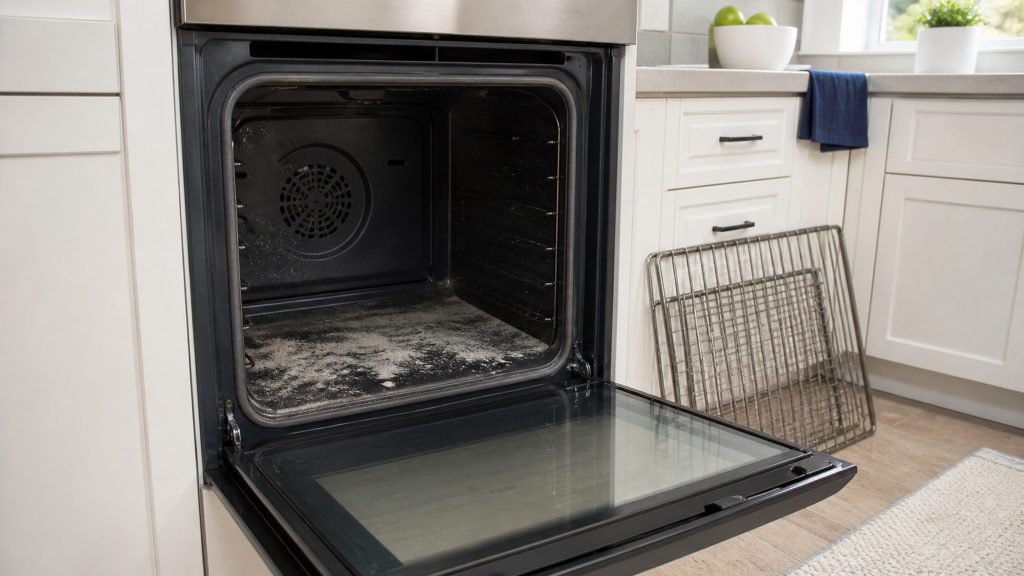
GE Self-Clean: What the Cycle Actually Does, and Why Things Break During It
The cycle runs the cavity far hotter than cooking ever does. If an oven is going to fail this year, self-clean is when.
Read more -
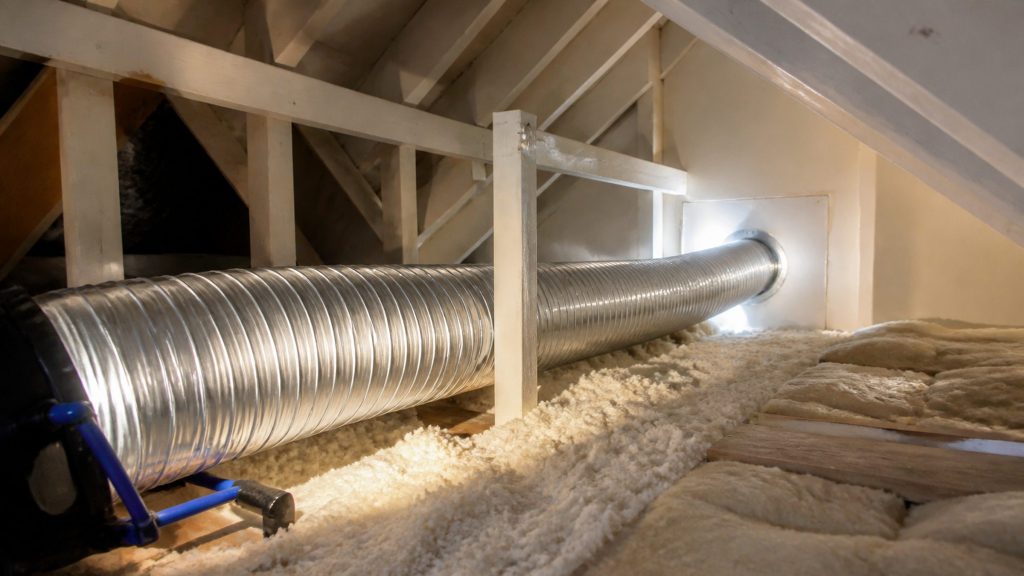
Dryer Vent Cleaning: How Often, and Why Florida Is Different
Humid air, long horizontal runs and a flap held open by lint. The interval that works in a dry climate does not work here.
Read more
Tell us the model number and what it is doing.
This article is based on:
- Official manufacturer documentation
- Internal repair procedures
- Technician repair history
- Company quality standards