Maintenance & Prevention
Dryer Vent Cleaning: How Often, and Why Florida Is Different
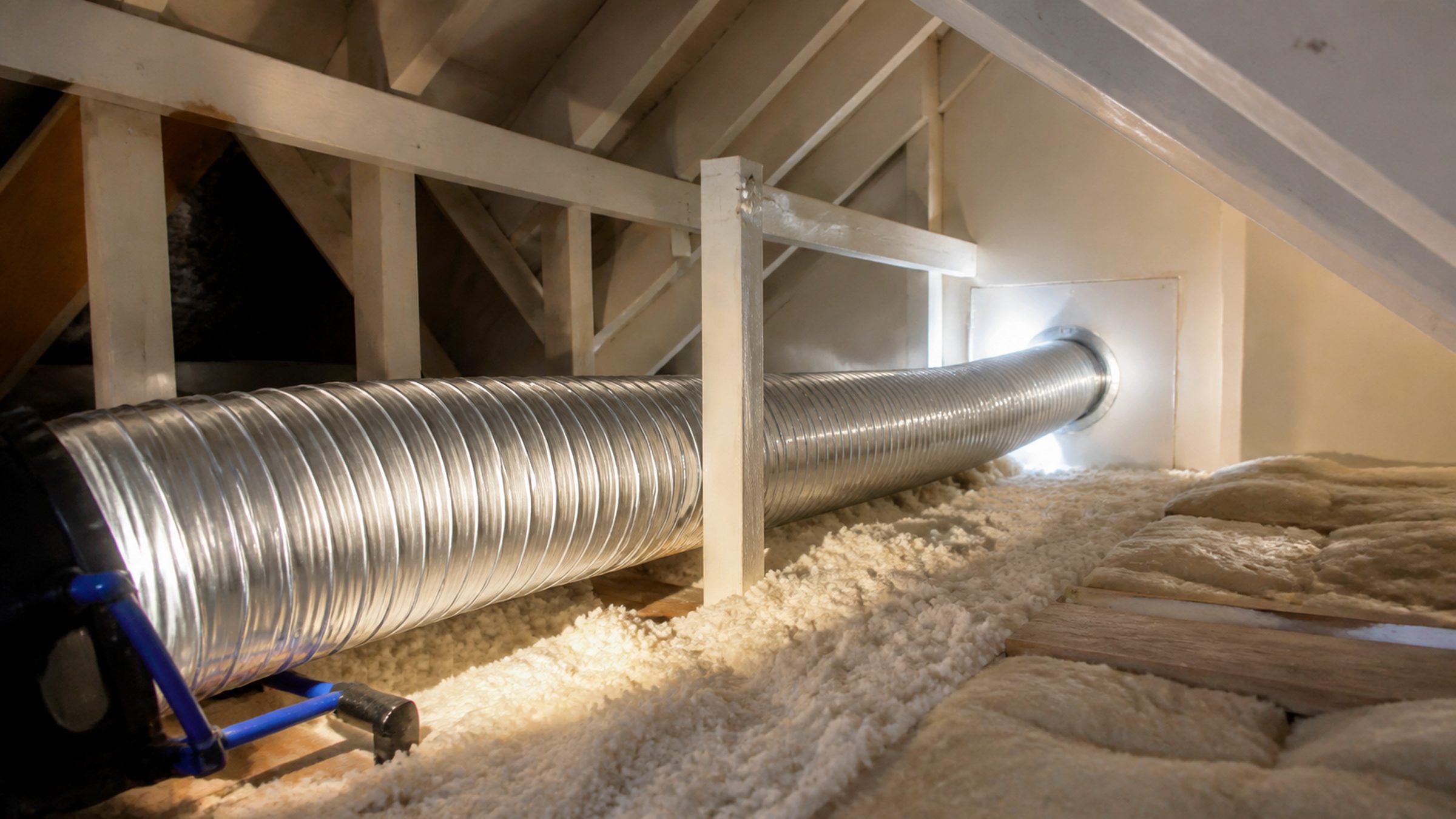
About once a year for most South Florida households, and more often with pets or a long run. The climate is the reason: ducts here are more often long and horizontal than short and vertical, they carry humid air that makes lint pack rather than blow through, and the outside flap is exposed to weather all year. The test takes a minute — run the dryer and feel the air at the outside hood; it should be strong enough to hold your hand off the flap. Cleaning the lint screen is good habit and the smallest part of the job. The packing happens in the housing under the screen, at the first elbow behind the machine, in the run itself and at the outside hood.
The full guide
Ge dryer vent: why the interval is shorter here
Every dryer manual gives a vent-cleaning interval and every one of them was written for a national average. South Florida is not the average, in three specific ways.
The runs are longer and flatter. In a single-story house with the laundry in the middle, the duct travels horizontally to an outside wall, often with two elbows. Lint settles in horizontal runs; it does not settle in a short vertical one.
The air is humid. Damp lint packs. Dry lint blows through. That difference compounds over a year.
The flap is outside, all year. Sun, rain and salt air on a plastic flap that has to close cleanly every time. When lint props it open, humid outside air comes back in — which is a Florida version of this problem that colder climates simply do not have.
The test, which takes a minute
Run the dryer on a heat cycle. Go outside. Put your hand in front of the vent hood.
Strong push, flap lifted: the duct is clear and the diagnosis moves inside the machine. Trickle, flap barely moving: that is your answer, and no part inside the dryer will change it.
Where it actually packs
The lint screen is the least of it.
| Place | What happens |
|---|---|
| Housing under the screen | Lint that got past the filter, over years |
| Transition hose | Crushed when the dryer was pushed back into place |
| First elbow | Where the airflow turns and drops what it was carrying |
| The run | Horizontal sections, gradually |
| Outside hood | Flap, screen, and whatever the run delivered |
Foil transition hoses are the commonest single failure point, and the cheapest thing to replace while somebody is behind the machine.
What it costs to leave
Time and money, first: two cycles instead of one, every load, indefinitely.
Then a part. A thermal cut-out is protection — it opens because the housing got too hot, and the housing got too hot because air was not leaving. Replacing the cut-out without clearing the duct guarantees the same call in a few months, which is why we quote the two together.
Then the part that is not about money. A restricted dryer vent is the recognized fire risk in a laundry room. That is the honest reason this job sits at the low end of our price list: it is meant to be booked before anything is wrong, not after.
The schedule that works here
- Yearly for a normal household with a short run.
- Every six to nine months with pets, a large family, or a run longer than about fifteen feet.
- Immediately if loads have started taking two cycles, or if the laundry room gets noticeably humid while the machine runs.
We measure airflow before and after, so what you get is a number rather than an assurance.
Questions people ask about this
I clean the lint filter every load. Is that enough?
No, and it is the commonest misunderstanding about dryers. The filter catches what it catches; the rest travels into the duct and settles there, especially in horizontal runs.
How do I know it needs doing?
Loads taking longer than they used to, a laundry room that gets warm and humid while the dryer runs, or weak airflow at the outside hood. Any one of those is enough.
Can I do it myself?
The transition hose behind the machine, yes. The run through the wall needs a brush kit long enough to reach, and the outside hood needs opening. Where the run is long or has elbows, it is worth having done.
Does a condensing dryer need this?
It has no external duct, so no — but it has a condenser and a filter of its own that need the same discipline for the same reason.
Maintenance & Prevention
More guides like this one
-

How Often a GE Water Filter Really Needs Changing in South Florida
GE's interval is six months. On this water that is optimistic, and a starved water path looks exactly like a failing icemaker.
Read more -
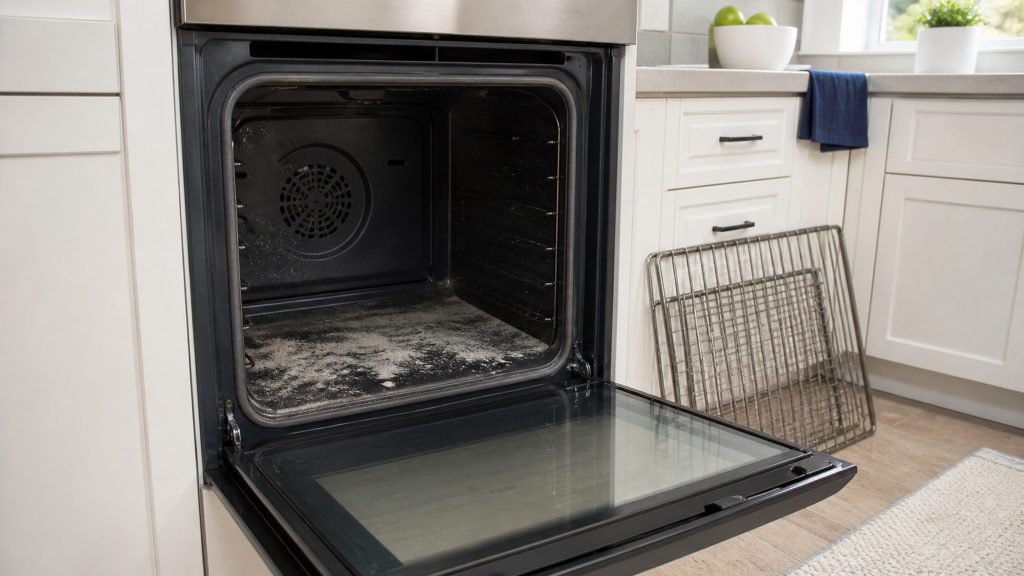
GE Self-Clean: What the Cycle Actually Does, and Why Things Break During It
The cycle runs the cavity far hotter than cooking ever does. If an oven is going to fail this year, self-clean is when.
Read more -
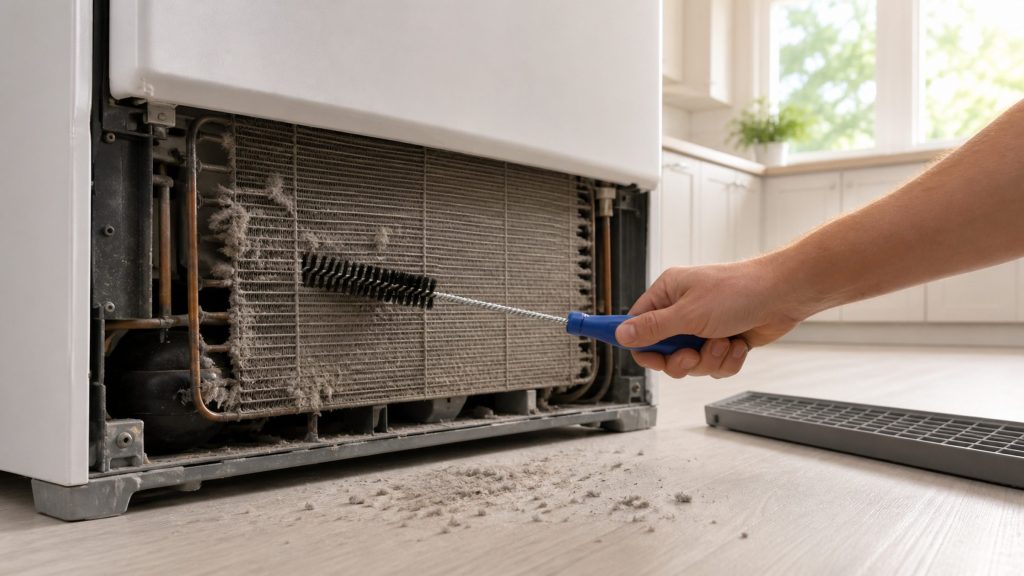
Cleaning a GE Refrigerator Condenser: The Maker’s Own First Answer
It is what GE names first for a unit that is not cold enough, and in a Miami kitchen a floor-level coil fills faster than any manual assumes.
Read more
Tell us the model number and what it is doing.
This article is based on:
- Official manufacturer documentation
- Internal repair procedures
- Technician repair history
- Company quality standards