Troubleshooting
GE Demo Mode: Why a Refrigerator Can Look Perfectly Healthy and Cool Nothing
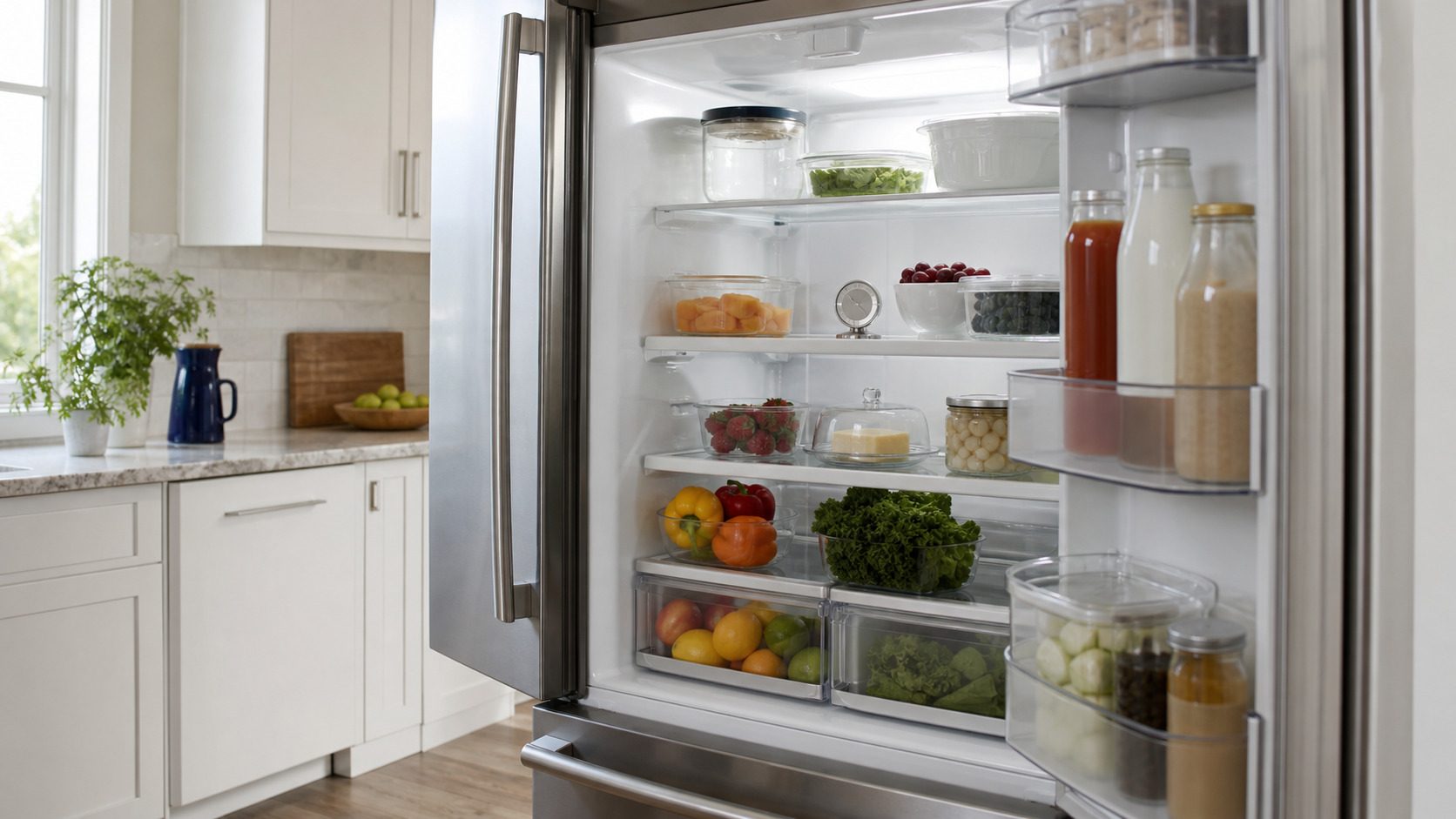
Demo mode is a showroom setting that runs the lights, the display and the controls while switching the cooling system off, and GE reports it on refrigerators as the code DE. An appliance in it looks completely healthy and does nothing. GE's own first step to clear it is to unplug the refrigerator for a minute or two and plug it back in; if DE is still displayed after that, the exit sequence differs by model and they ask to be contacted with the model number. The reason it reaches houses at all is that floor models are sold in it. Read the case carefully: DE in capitals is demo mode, and dE in lower case is the defrost system not having run in 24 hours, which is a repair.
The full guide
The most misread code GE publishes
A refrigerator that lights up, responds to every button and cools nothing is one of the more alarming things a kitchen can do. It looks like a dead compressor. It usually gets quoted as one.
GE publishes a code for the other explanation: DE, demo mode. In their own words it enables normal light and controls functionality while disabling the cooling system. That is not a description of a problem — it is a description of a setting working exactly as designed.
Why an appliance arrives set that way
Because shops need appliances that light up.
A refrigerator on a showroom floor cannot be plumbed and cooled all day for months, so manufacturers build in a mode that runs everything a customer touches and none of the refrigeration. GE is not unusual in this. What is unusual is how often the mode survives the sale.
Floor models get sold. Display units get sold. And an appliance delivered in demo mode behaves perfectly for the hour somebody is watching it and never gets cold overnight.
How to clear it
GE's own instruction: unplug the refrigerator from power for a minute or two, then plug it back in.
That works on many models. If DE is still displayed afterwards, GE asks to be contacted with the model number, because the exit sequence differs — on some panels it is a pair of pads held together for a few seconds, on others it is buried in a settings menu.
Then check the temperature, not the display. A refrigerator that has been in demo mode has not been cooling, whatever it was showing. Give it several hours and read both compartments with a thermometer against GE's own targets: 37°F in the fresh food compartment, 0°F in the freezer.
The microwave version, which is what most people search for
The most common phrasing of this question in our own search data is about microwaves rather than refrigerators, and the answer is the same shape: a shop-floor mode that runs the panel and the light and does not cook.
Clearing it is a held-button sequence that varies by model — typically two pads together for three to five seconds. The tell is that the timer counts down normally and nothing gets warm, which is also what happens when somebody uses the timer instead of a cook function. Try a cook function first; it costs nothing and it is the commoner of the two.
One letter apart, and completely different
This is the part worth remembering, because it is the kind of distinction search engines cannot keep and appliances do not explain.
| On the display | What GE says it means | What it is |
|---|---|---|
| DE | Demo mode | A setting. Unplug for a minute, and check the temperature afterward |
| dE | The defrost system has not operated properly in the last 24 hours | A repair — heater, thermostat or control |
Capital letters and lower case, the same two characters. Anybody typing it into a search box loses the difference immediately, and the two answers have nothing to do with each other.
If yours is the lower-case one, the giveaway is usually that the freezer is still cold while the fresh food side warms over a few days, and that a manual defrost — the appliance emptied and switched off for a day — restores it for a while and then loses it again. In South Florida that circuit works harder than it does anywhere dry, because every door opening puts wet air into the cabinet.
What we would ask on the phone
Whether the light works. Whether the display responds. What the cabinet is actually holding, measured rather than displayed. And the code exactly as it appears, including which letters are capitals.
If the answer is that everything works except the cold, the first thing we will tell you is to look for DE — because if that is what it is, you do not need us.
Questions people ask about this
Why would my refrigerator be in demo mode?
Because it was a floor model, or because somebody held a control combination by accident while cleaning the panel. Appliances sold from a showroom floor are frequently still set that way when they arrive.
How do I know it is demo mode and not a failure?
Everything works except cooling. The light comes on, the display responds, the dispenser dispenses — and the cabinet never gets cold. A dead sealed system usually presents the same way, which is exactly why this is worth ruling out first: one costs nothing.
Do microwaves and ranges have it too?
Yes, and it is the same idea — a mode for a shop floor where the appliance demonstrates its controls without heating. The exit sequence is model-specific and usually involves holding two pads for several seconds.
What is the difference between DE and dE?
The case, and everything else. DE is demo mode: a setting, cleared in a minute. dE is the defrost system reporting that it has not operated properly in the last 24 hours, which is a repair and in this climate one worth doing quickly.
Troubleshooting
More guides like this one
-
After the Power Comes Back: What Your GE Appliances Are Telling You
PF is a notice rather than a problem. What matters is what happened to the cabinet while the power was off, and which of the appliances quietly did not restart.
Read more -
Why the Same GE Error Code Means Two Different Things
F3 is the oven sensor on a range and a shorted touch pad on a microwave. Looking a code up against the wrong table is how people buy the wrong part.
Read more -
How to Reset a GE Appliance — and the Times a Reset Destroys the Evidence
GE asks for a thirty-second power cycle by name on several of their own codes. It is also the fastest way to erase the one piece of information a technician needed.
Read more
Tell us the model number and what it is doing.
This article is based on:
- Official manufacturer documentation
- Internal repair procedures
- Technician repair history
- Company quality standards