Troubleshooting
How to Reset a GE Appliance — and the Times a Reset Destroys the Evidence
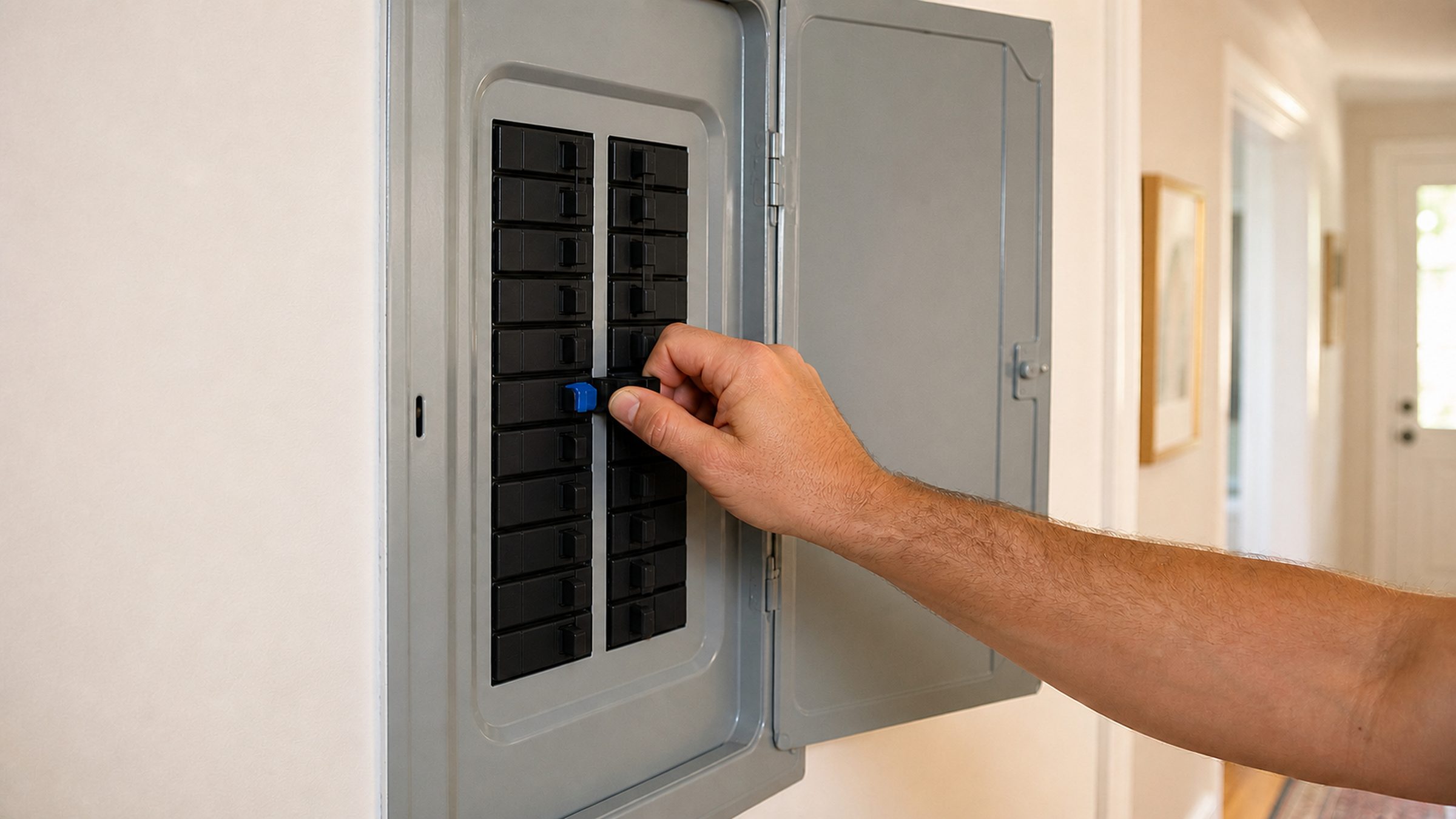
Cut power at the breaker for about thirty seconds and restore it. That is GE's own instruction on several dishwasher codes and it is the whole of what people mean by resetting a GE appliance — there is no reset button on any of them. Before you do it, photograph the display. A reset clears the code, and on ranges, microwaves and dishwashers the code is most of the diagnosis; once it is gone the appliance will tell you nothing until the problem happens again. A code that clears and stays clear was reporting a glitch. One that comes straight back is reporting a problem, and resetting it a second time only delays the answer.
The full guide
How to reset ge dryer, and every other GE in the house
There is no reset button. That is the first thing worth saying, because the question is asked constantly and the answer people find is usually somebody's guess. What GE documents is a power cycle: cut the power at the breaker for about thirty seconds, then restore it.
They name that step themselves. On the dishwasher C3 code — the machine will not drain — their instruction is to disconnect power at the circuit breaker for about thirty seconds and reset the dishwasher, then call for service if the problem persists. Same for C7, the water temperature sensing circuit.
On a dryer, an oven, a microwave or a refrigerator it is the same action. The difference is only how you get at the power.
Before you touch the breaker
Photograph the display.
This is the part that matters and the part nobody does. A reset erases the code, and on a GE the code is most of the diagnosis:
- On ranges and wall ovens, GE publishes a table of about twenty codes. Several point at the same circuit, so the code narrows the problem to the keypanel, the sensing, the control or the door lock.
- On dishwashers, the C-codes come with GE's own solution column — C1 sends you to the air gap and the disposer, C6 to the water temperature.
- On microwaves, the F-codes name a sensor.
Once it is cleared, the appliance says nothing until the condition repeats. Sometimes that is a week. A photograph costs three seconds and can save a visit.
What a reset actually tells you
Think of it as a test rather than a repair, because that is what it is.
Clears and stays clear. The control saw something transient — a brownout, a moment of noise on the supply, a sensor reading that recovered. Nothing needs fixing and you have learned that.
Comes straight back. The condition is still there. The reset told you it is real, and the second reset will tell you nothing new. This is the point at which the code and the model number are worth a phone call rather than another attempt.
Never appeared again, but the behavior did. The most common case with GE dishwashers, which report by blinking pattern as well as by code. The pattern is information and it is erased the same way.
Where the power is, appliance by appliance
Freestanding range, washer, dryer, freestanding refrigerator. The plug is behind the appliance, and on most of these you can reach it. If not, the breaker.
Built-in refrigerator, wall oven, over-the-range microwave, dishwasher. The breaker, in practice. The outlet is behind or above the appliance and reaching it means moving something that does not move easily.
Gas dryer and gas range. The breaker for the electrics. Do not touch the gas connection.
One caution: on an older panel, find the right breaker before you start. Cycling the whole board to reset a microwave is how a chest freezer in the garage gets forgotten for three days.
The three times not to reset
A leak has been detected. GE's dishwashers with leak detection stop the cycle rather than finish it. That is the appliance deciding that stopping is safer, and it is correct. Water has reached somewhere it should not, and clearing the message does not move it back.
Anything smells of burning. Switch it off and leave it off. A reset on an electrical problem is an invitation to run the appliance for another twenty minutes.
An oven that overheated. GE's F2 or F20 means the cavity exceeded a preset threshold. Resetting and running it again risks turning a sensor problem into an element and a control.
What to tell us if it comes back
The model number, the code exactly as it appeared including the case of the letters, and whether the reset cleared it at all. On this make case genuinely matters — DE is demo mode and dE is the defrost system, and they are the same two characters.
With those three things we can usually name the likely part before the visit, which is the difference between one trip and two.
Questions people ask about this
Is there a reset button on a GE appliance?
No, and that is why the searches for one are so common. What exists is a power cycle at the breaker or the plug, and on some models a control-specific sequence like holding Start for a few seconds. GE's own documented step for several dishwasher codes is thirty seconds at the breaker.
Will a reset fix a code?
It will clear one. Whether it fixes anything depends on why the code appeared. GE writes their C3 dishwasher instruction as reset first and call for service if it persists, which is the right order — but only once, and only after the code has been written down.
Does unplugging the appliance do the same thing?
On anything plugged into an accessible outlet, yes. On a built-in refrigerator, a wall oven or an over-the-range microwave the outlet is behind the appliance and the breaker is the practical answer.
Can resetting damage anything?
Repeatedly power-cycling an appliance that is reporting an overheat or a leak can. GE's leak-detection dishwashers stop the cycle on purpose, and resetting past that is the one case where the appliance has better judgment than the person.
Troubleshooting
More guides like this one
-
After the Power Comes Back: What Your GE Appliances Are Telling You
PF is a notice rather than a problem. What matters is what happened to the cabinet while the power was off, and which of the appliances quietly did not restart.
Read more -
Why the Same GE Error Code Means Two Different Things
F3 is the oven sensor on a range and a shorted touch pad on a microwave. Looking a code up against the wrong table is how people buy the wrong part.
Read more -
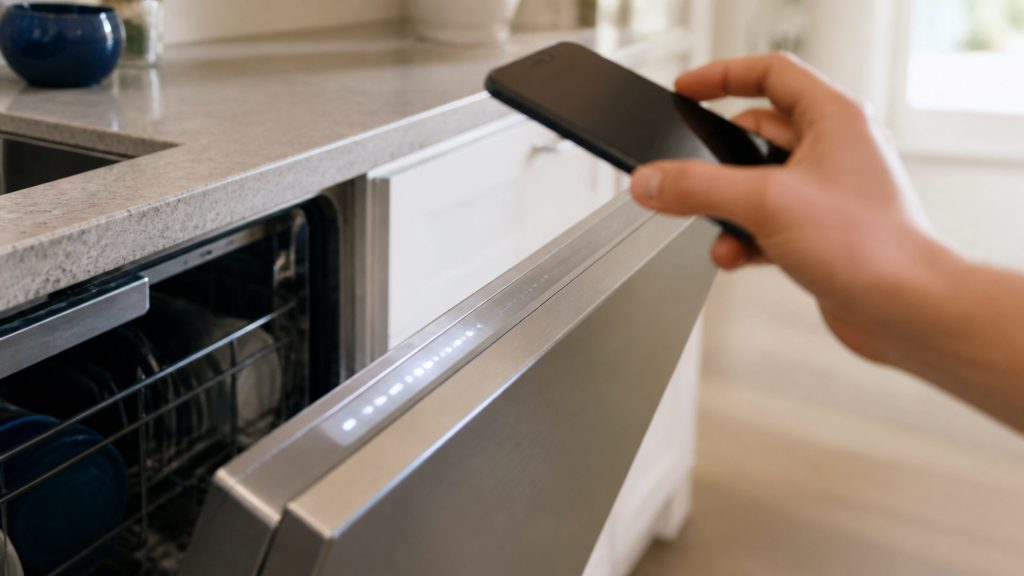
GE Dishwasher Blinking Lights and Beeps: Reading a Machine With No Screen
GE's dishwashers report by pattern as well as by code — and the reset that seems like the obvious first move erases the message.
Read more
Tell us the model number and what it is doing.
This article is based on:
- Official manufacturer documentation
- Internal repair procedures
- Technician repair history
- Company quality standards