Troubleshooting
GE Dishwasher Blinking Lights and Beeps: Reading a Machine With No Screen
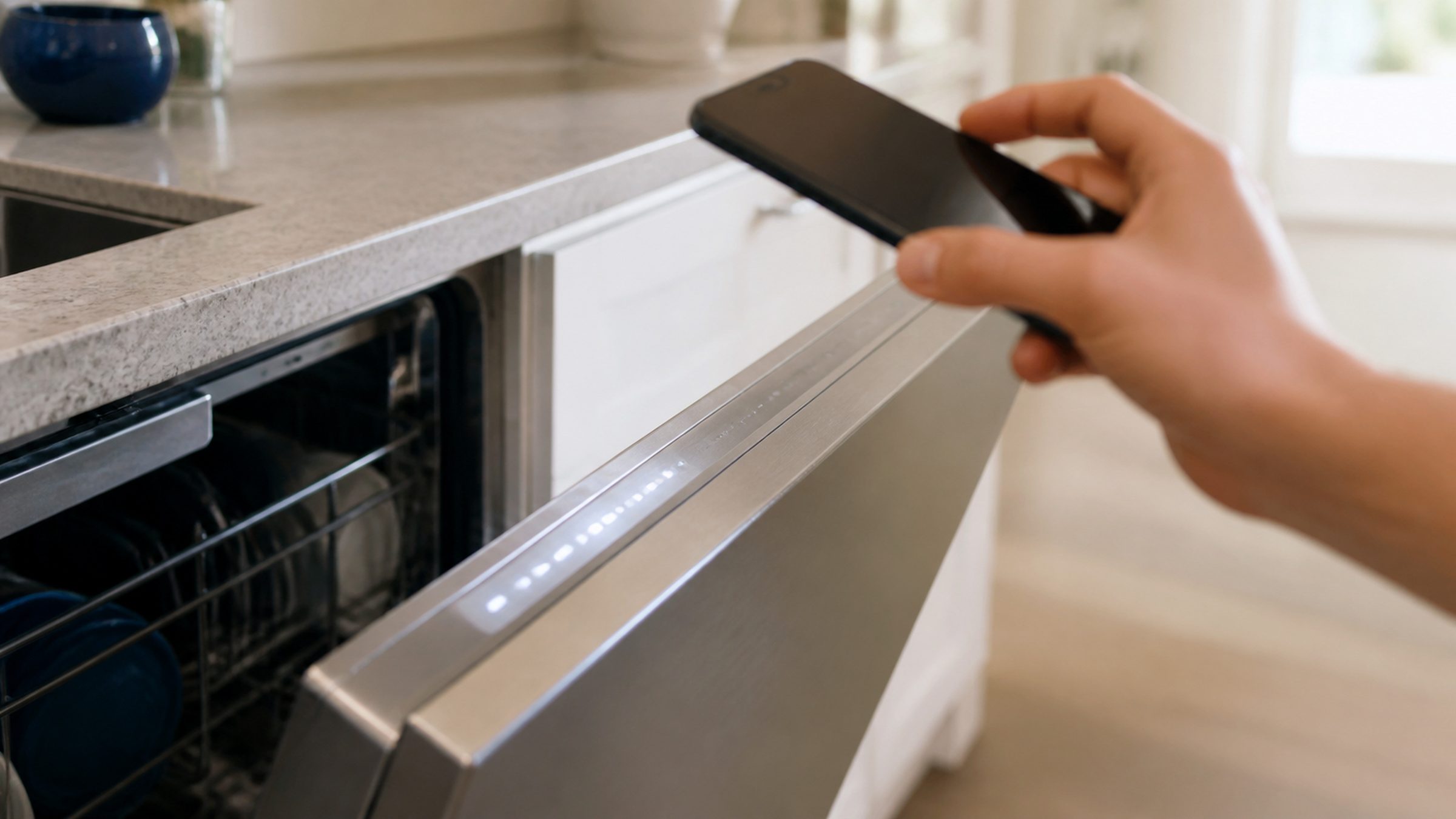
GE dishwashers report in two ways: lettered codes on models with a display, and blinking or beeping patterns on models without one. The codes worth knowing are C1, C2, C3 and FTD, all of which are the drain path rather than the pump — GE's own solution column sends you to the air gap, the drain hose and the disposer first. C6 is water arriving below 120°F. C8 is the detergent cup blocked, usually by a pan. And three messages are not problems at all: PF is a power failure notice, Cup Open is a reminder to latch the cup, and a number followed by H is the delay start counting down. Photograph the panel before cutting power, because a reset clears the pattern along with the code.
The full guide
Ge dishwasher not draining, and what the panel is telling you
Standing water in the bottom is the commonest dishwasher call there is, and on a GE the panel usually has something to say about it. Which code you have narrows the job considerably — and all four of the drain codes point outside the pump.
| Code | GE's own definition |
|---|---|
| C1 | The pump out during drain has exceeded 2 minutes |
| C2 | The total pump out cycle exceeds 7 minutes |
| C3 | The dishwasher will not drain |
| FTD / F56 | Failure to drain |
Their solution column for C1 is worth quoting almost in full, because it names the causes in the order they occur: clean the air gap, replace or reposition the hose, run the disposer.
The five-minute cause, and it is not the appliance
If a garbage disposer has been installed recently, check that its dishwasher inlet plug was knocked out.
A disposer arrives with a molded plug closing that inlet. It has to be removed during installation, and when it is missed the dishwasher has nowhere to drain to — every cycle, from the day the disposer was fitted. It is not a dishwasher problem, it is a five-minute correction, and it accounts for a genuine share of these calls in any city where kitchens get remodeled.
After that: the drain hose and its high loop. A hose that has slipped down siphons water back into the tub. Re-securing it is the repair.
Then the filter and the sump at the bottom of the tub. GE describes the sump as looking like an upside-down silverware basket, which is exactly right and exactly why people do not recognize it. Glass, seeds and labels collect there and stop a pump doing its job without breaking it.
The codes that are not about draining
C4 — filled twice after a power failure. GE attributes it to a float switch stuck or failed, or a clogged drain or sump. Their instruction is to touch START then CANCEL, and to tap the float cover — the plastic cover that looks like an upside-down cup in the front left corner of the tub floor — to un-stick it.
C5 — the pump out time is too short. The opposite complaint. Usually the water supply is not fully on, so the machine had less water in it than it expected.
C6 — water temperature too low. GE is specific: the water arriving should be at least 120°F. Their own advice is to run the faucet next to the dishwasher before starting it, to purge the cold water sitting in the line, and not to run the shower or the washing machine at the same time. In a large house that is the real cause, and no part fixes a pipe run.
C7 — the water temperature sensor circuit has become inoperative. Where C6 is about the water, C7 is about the appliance's ability to measure it. Running the faucet will not help.
C8 — the detergent cup is blocked from opening fully. GE names the usual culprits: silverware or a pan. Remove it, close and latch the door, wait thirty seconds.
The three that are not problems
This is the part that saves a call.
- PF — there has been a power failure. Select your cycle and press start; the machine runs normally.
- Cup Open — a reminder that the detergent cup is not latched. The cycle will not start, and GE documents that you can override it by pressing start again without opening the door.
- A number followed by H, like 1H or 2H — delay start, counting down that many hours. A dishwasher that "will not start" is on delay start more often than anybody admits.
And the one that means stop
LEAK DETECTED. On models with leak detection the cycle stops rather than finishing. That is the appliance deciding that stopping is safer, and it is right. Water has reached the base tray from somewhere, and clearing the message does not put it back. Look underneath and behind before restarting anything.
Before you cut the power
Photograph the panel. On a model with a display that keeps the code; on a model without one it keeps the pattern, which is the same information in a different alphabet. A reset erases both, and the machine will not repeat itself until the condition does.
Questions people ask about this
The lights blink but there is no code.
Then it is a model without a display, and the pattern is the message. Count the flashes and note which lamps are involved before cutting the power — that is the information, and it is gone after a reset.
It will not start and the lights are on.
Check for a number followed by H, which is delay start, and check whether the detergent cup is latched. Between those two and the door latch itself, most no-start calls are answered before anybody opens the machine.
Is C3 serious?
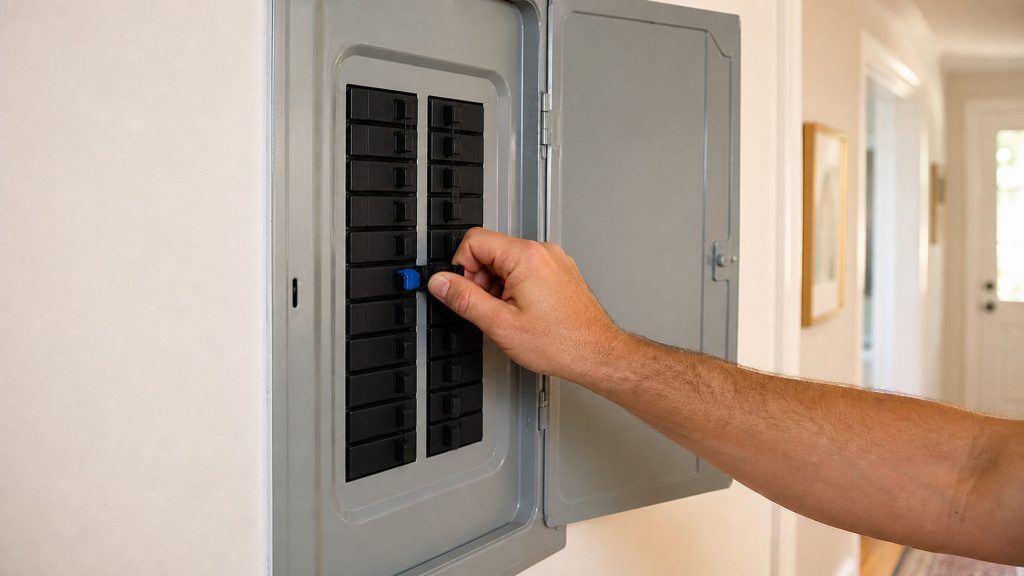
It means the dishwasher will not drain. GE asks for a thirty-second power cycle at the breaker and a service call if it persists. Before that, run the disposer — and if the disposer is new, check its dishwasher plug was knocked out.
What is FTD or F56?
Failure to drain, depending on the model. Same family as C1 to C3 and the same list of causes: hose, air gap, disposer, filter, sump.
Troubleshooting
More guides like this one
-
After the Power Comes Back: What Your GE Appliances Are Telling You
PF is a notice rather than a problem. What matters is what happened to the cabinet while the power was off, and which of the appliances quietly did not restart.
Read more -
Why the Same GE Error Code Means Two Different Things
F3 is the oven sensor on a range and a shorted touch pad on a microwave. Looking a code up against the wrong table is how people buy the wrong part.
Read more -
How to Reset a GE Appliance — and the Times a Reset Destroys the Evidence
GE asks for a thirty-second power cycle by name on several of their own codes. It is also the fastest way to erase the one piece of information a technician needed.
Read more
Tell us the model number and what it is doing.
This article is based on:
- Official manufacturer documentation
- Internal repair procedures
- Technician repair history
- Company quality standards