Common Problems
GE Dishwasher Not Draining: Start Under the Sink, Not Under the Machine
Water standing in the bottom is usually the drain path rather than the pump, and GE's own solution column says so — for C1 they name cleaning the air gap, repositioning or replacing the hose, and running the disposer, in that order. The single most common cause after a kitchen change is a garbage disposer installed with its dishwasher inlet plug still in place, which holds water in the tub every cycle from the day it was fitted and is not a dishwasher repair at all. After those come the filter and the sump, where glass, seeds and labels collect and stop a pump doing its job without breaking it. The drain pump is last, and it is tested for current and obstruction before it is replaced.
The full guide
Ge dishwasher not draining: the five-minute cause first
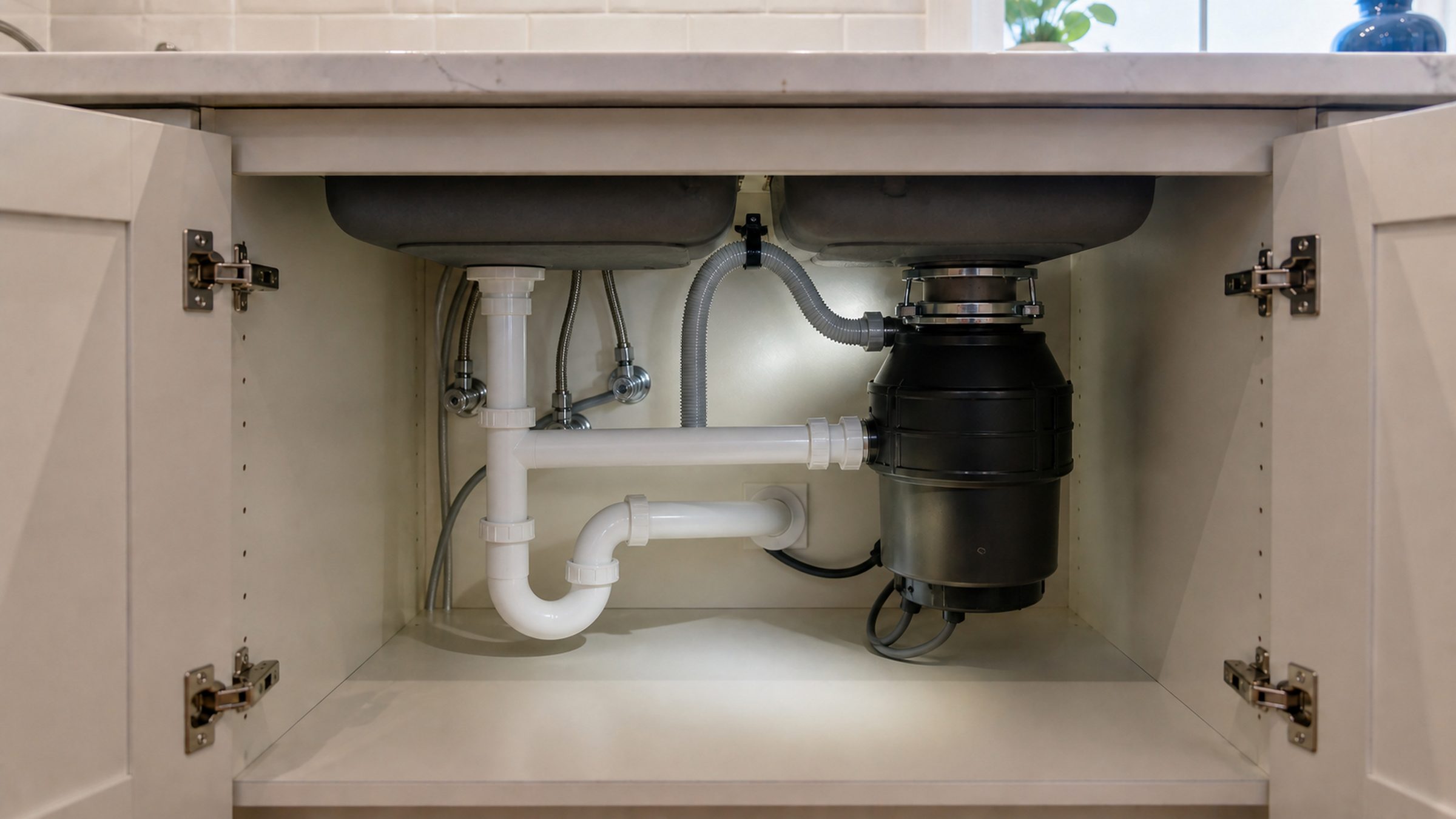
If a garbage disposer has been fitted recently, check that its dishwasher inlet plug was removed.
Disposers arrive with a molded plug closing that inlet, and it has to be knocked out during installation. When it is missed, the dishwasher cannot drain into it — every cycle, from the day the disposer went in. The machine is fine. Nothing needs repairing. It is a five-minute correction with a screwdriver and a hammer, and it accounts for a real share of these calls in any city where kitchens get remodeled.
GE names the disposer in their own solution column for the drain codes, which tells you how common it is.
Then the rest of the path, in GE's order
The air gap, on sinks that have one — the small chrome cylinder beside the faucet. GE lists cleaning it first for C1. It collects what the dishwasher sends it and eventually stops passing water.
The drain hose and its high loop. The hose should rise under the counter before it drops to the drain. A hose lying flat, or one pushed too far into a standpipe, siphons water back into the tub. Re-securing it is the repair.
Run the disposer. A disposer full of waste blocks a drain both appliances share. GE's advice, and free.
Then inside the machine
The filter, at the bottom of the tub. Most GE dishwashers have one that lifts out, and a great many owners have never been told it exists. Grit on the dishes and water in the bottom often have the same cause.
The sump, at the back bottom of the tub. GE describes it as looking like an upside-down silverware basket — which is exactly right, and exactly why nobody recognizes it. Glass, seeds, labels and the occasional olive pit collect there.
Neither of these breaks a pump. They stop it doing its job, which looks identical from the doorway and costs a fraction to fix.
What the code tells you
| Code | GE's definition | Where it points |
|---|---|---|
| C1 | Pump out during drain exceeded 2 minutes | Air gap, hose, disposer |
| C2 | Total pump out cycle exceeds 7 minutes | Same family, further along |
| C3 | The dishwasher will not drain | Power cycle 30 seconds, then service |
| FTD / F56 | Failure to drain | Hose, air gap, disposer |
| C5 | Pump out time too short | Water supply, or a stuck float |
Photograph the panel before you cut the power. The code is most of the diagnosis and a reset erases it.
Where the pump comes in
Last. And tested rather than assumed: current draw and rotation with the filter clear. A pump straining against a blockage is not a failed pump, and it measures differently.
If it genuinely is the pump, that is the point where the arithmetic starts to matter on an entry-level machine — the part and the labor against what the dishwasher is worth. GE's date code on the serial gives us the age before quoting, and we would rather raise that conversation before ordering than after fitting.
Questions people ask about this
Why does a new disposer stop the dishwasher draining?
Disposers ship with a molded plug closing the dishwasher inlet. It has to be knocked out during installation. When that is missed the dishwasher has nowhere to drain to, every cycle, and the problem looks like the dishwasher's.
What is a high loop?
The drain hose is routed up under the counter before it drops to the drain, so waste water cannot siphon back into the machine. A hose that has slipped down does exactly that.
It shows C1 — is that serious?
It means the pump-out took longer than two minutes. GE's own solutions are the air gap, the hose and the disposer, so it is usually the cheapest end of this page.
Can I clear the filter myself?
On most GE dishwashers, yes — it lifts out of the bottom of the tub. What is in it is often the whole story.
Common Problems
More guides like this one
-
Why a GE Refrigerator Stops Cooling, in the Order It Is Worth Checking
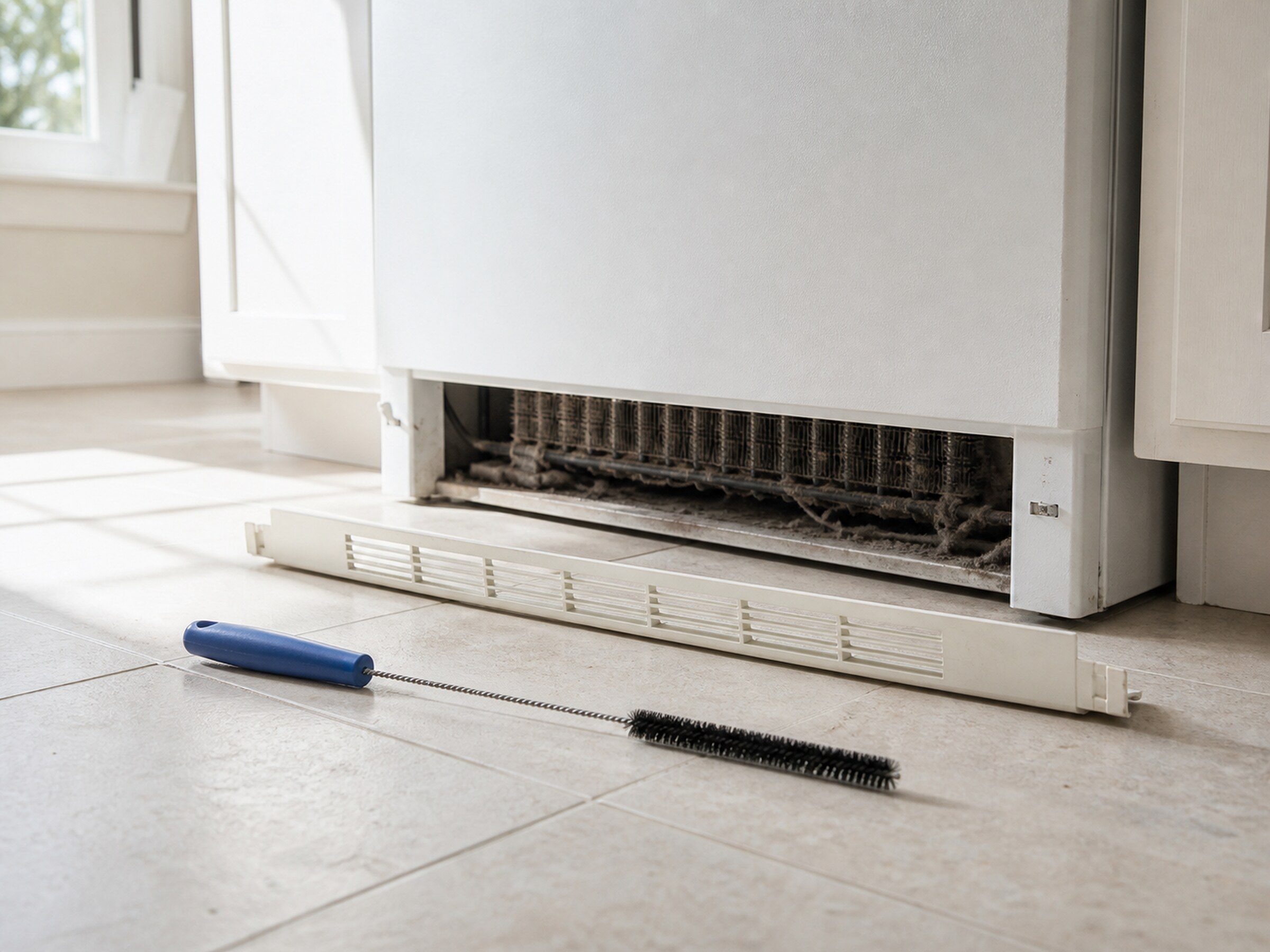
GE's own troubleshooting runs settings, then airflow, then defrost — and the sealed system everybody fears is last. In this climate the middle two do most of the work.
Read more -
Why a GE Dryer Takes Two Cycles in Florida, and What It Is Costing
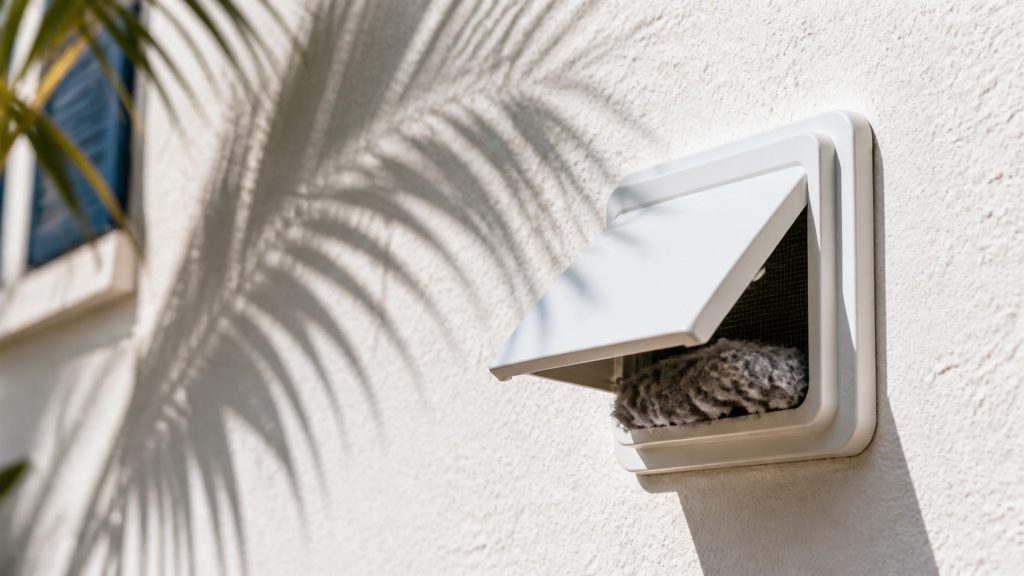
The duct, not the dryer — and in this county the duct is usually long, horizontal and carrying humid air, which is why the same machine dries fine in Ohio.
Read more -
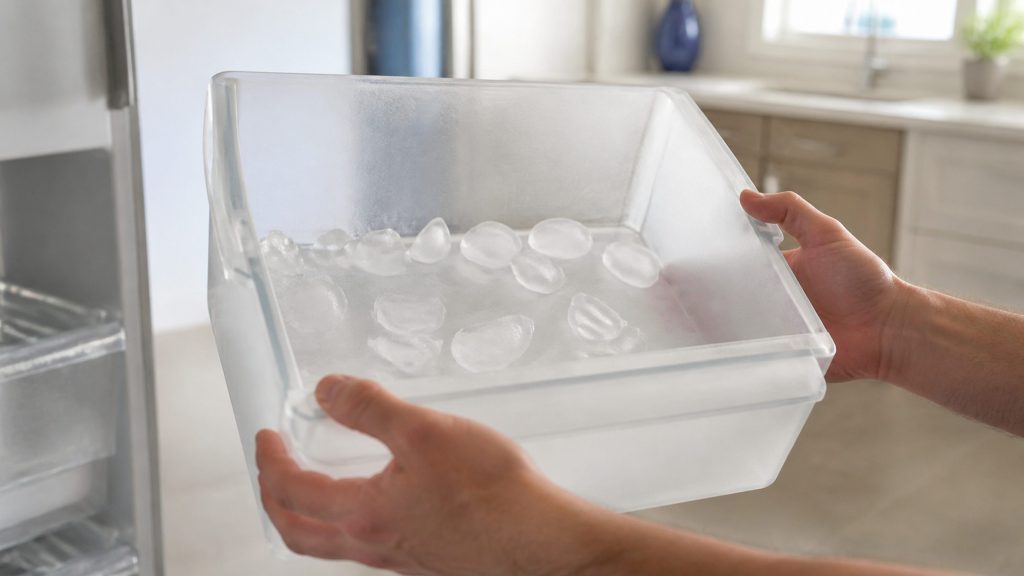
GE Ice Maker Not Making Ice: What GE Publishes About Normal, Before You Pay Anybody
GE publishes cube sizes and production rates. A good share of icemaker calls end with a machine working to specification for a household that has grown.
Read more
Tell us the model number and what it is doing.
This article is based on:
- Official manufacturer documentation
- Internal repair procedures
- Technician repair history
- Company quality standards