Common Problems
GE Ice Maker Not Making Ice: What GE Publishes About Normal, Before You Pay Anybody
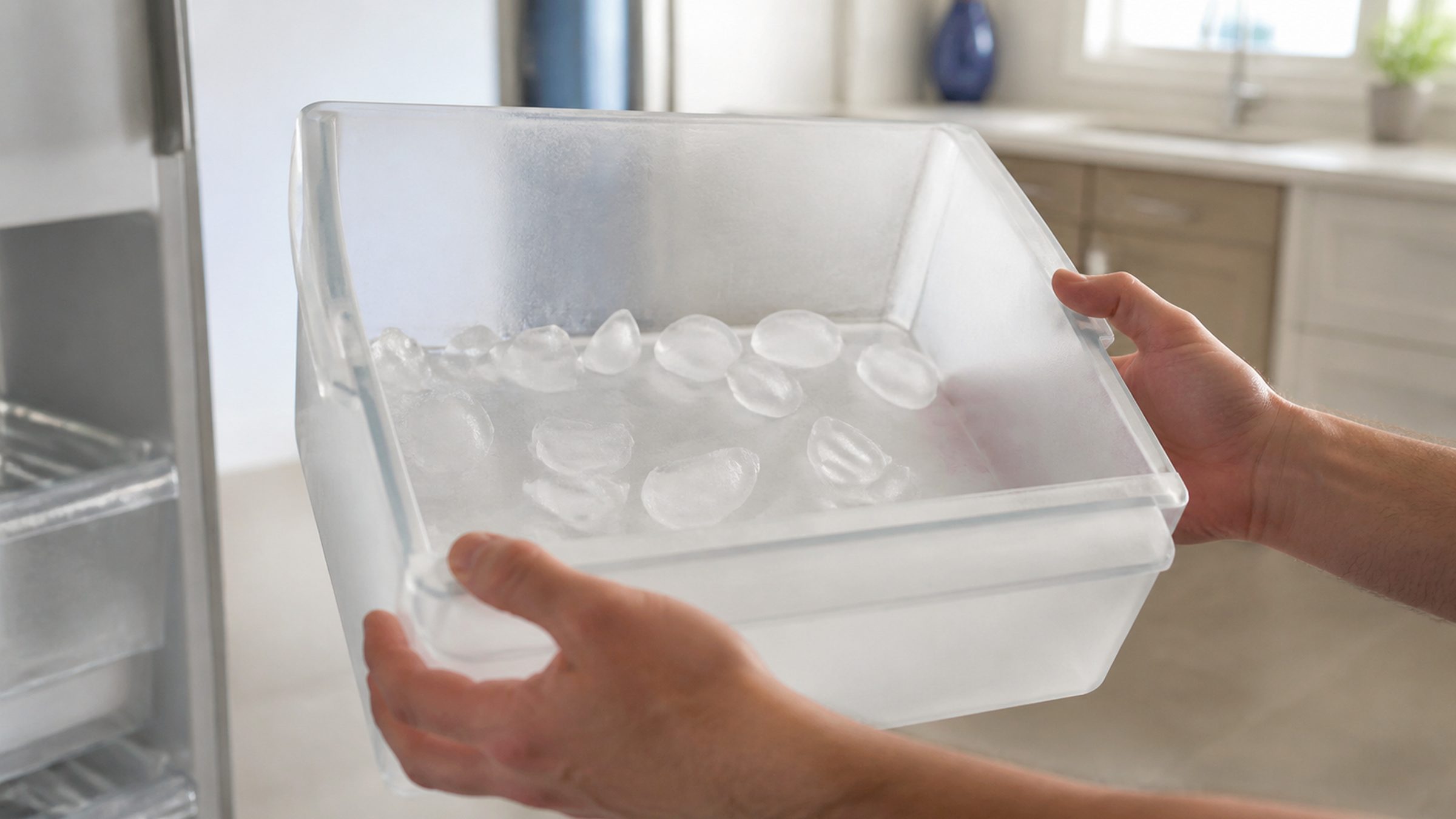
Before assuming a failure, check the appliance against GE's own published figures — their regular crescent cube is about 2½ inches long by ¾ high and ¾ thick, and production rates differ by cabinet style. Then work GE's order, which puts the icemaker module last. Freezer temperature comes first, because ice production depends on it and their recommended setting is 0°F; an icemaker that slowed down is often a freezer that drifted up. Then the water supply: a shut-off valve that has silted closed, a filter past six months, or a line kinked behind the appliance. Then the shut-off arm, which anything in the bin can hold up. The module and the fill valve are the last things to test, not the first to replace.
The full guide
Ge ice maker not making ice: start with what normal is
Ice is the largest single subject in what people ask about this brand — 141 phrases in our own search data — and a surprising share of those questions are about machines that are working.
GE publishes the numbers. Their regular crescent cube measures roughly two and a half inches long, three quarters high and three quarters thick, and production rates differ by cabinet style. Those figures are lower than most households assume, and the complaint that arrives as "it stopped making enough" is often a family that grew rather than an appliance that shrank.
That is the first thing worth establishing, because it is free.
Then the freezer, not the icemaker
Ice production depends on freezer temperature, and GE's recommended setting is 0°F.
This is the check that saves the most money on this page. At five degrees warmer the food is still frozen, nobody notices anything, and the icemaker produces a fraction of what it should. The complaint is about ice; the problem is about temperature; and replacing the icemaker changes nothing.
Read it with a thermometer rather than the display.
Then the water, which in this county is usually it
Everything upstream of the icemaker decides what it can do.
The filter. GE's interval is six months. On South Florida water that is optimistic, and a filter well past it restricts the fill enough to starve the mold. The symptom is hollow or small cubes before it is no cubes.
The shut-off valve at the supply. Old saddle valves silt closed slowly. This is a local classic and it presents as an icemaker that quietly died.
The line. Kinked behind the appliance after it was last moved, or partially frozen where it runs through the door — which gets worse in cool weather and reads exactly like a failing valve.
GE's own code for this family is CI, check the icemaker, and they list it among the codes that can usually be resolved without a service call. Their order is the same as the one above.
Then the arm, which costs nothing
The shut-off arm or sensor tells the machine the bin is full. A bag of frozen peas, a box, or a bin pushed too far in will hold it up, and the appliance stops — doing exactly what it was designed to do.
Lift it and let it drop. It should move freely.
Only then the module
The part everybody expects to buy is the last one on GE's list and the last one on ours. It is tested rather than swapped: a fill valve that is not opening, a module that is not cycling, a thermostat that is not calling for a harvest. Each is a different repair at a different price.
Standalone ice makers are a different appliance
A refrigerator's icemaker borrows the freezer's cold and makes ice slowly in the background. A dedicated ice maker has its own refrigeration, its own harvest cycle and its own water path, and it is built to produce continuously.
They fail differently, and the dedicated ones fail mostly from scale. On this water mineral builds on the evaporator, ice takes longer to form and release, and output halves over a year without the machine ever stopping. Descaling is the cheapest service on this site and it prevents the most expensive.
GE publishes no error codes for built-in ice makers. Diagnosis there is watching the cycle — fill, freeze, harvest — and noting which stage it stops in. That is why we ask how long you have watched it, and it is a real question rather than a polite one.
Questions people ask about this
How much ice should it make?
GE publishes rates by cabinet style, and they are lower than most people assume. It is worth checking before paying anybody, because a great many of these calls end with a machine performing correctly.
The cubes are hollow or small.
That is water volume — a restricted fill rather than a broken machine. Filter, then the shut-off valve, then pressure at the inlet.
It stopped after the power went out.
Give it a day. Production depends on freezer temperature, the freezer has been warm, and the machine needs a cycle or two to catch up.
Do standalone ice makers show codes?
Built-in ice makers publish none — GE does not document a table for them. Those are diagnosed by watching which stage of the cycle stops: fill, freeze, or harvest.
Common Problems
More guides like this one
-
Why a GE Refrigerator Stops Cooling, in the Order It Is Worth Checking
GE's own troubleshooting runs settings, then airflow, then defrost — and the sealed system everybody fears is last. In this climate the middle two do most of the work.
Read more -
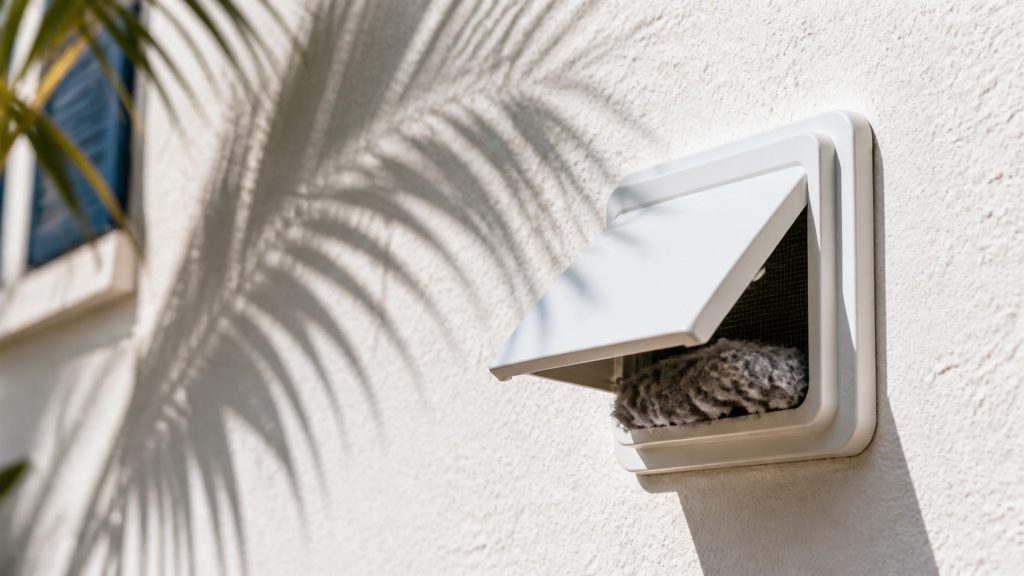
Why a GE Dryer Takes Two Cycles in Florida, and What It Is Costing
The duct, not the dryer — and in this county the duct is usually long, horizontal and carrying humid air, which is why the same machine dries fine in Ohio.
Read more -
GE Dishwasher Not Draining: Start Under the Sink, Not Under the Machine
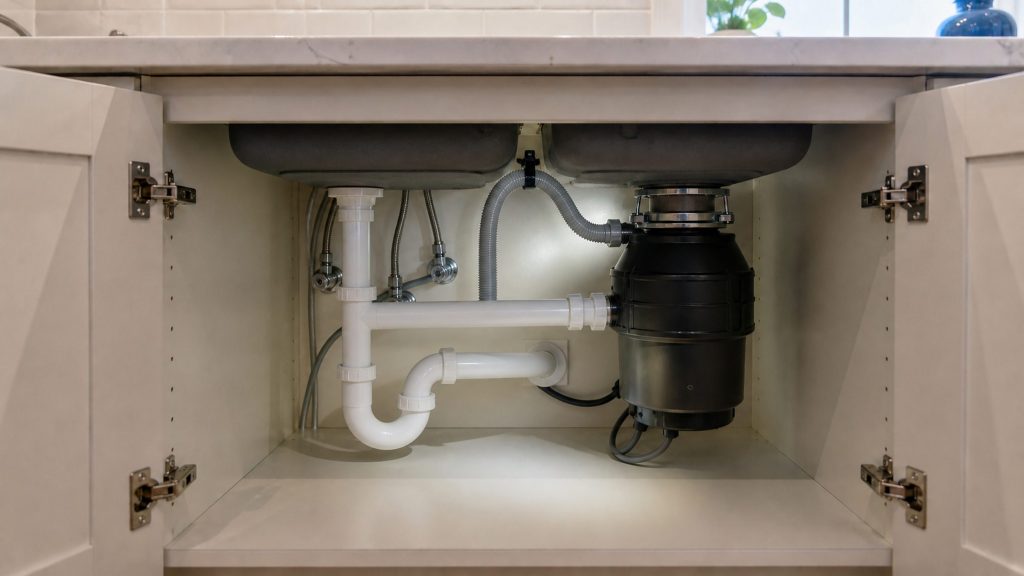
GE's own list begins with the air gap, the hose and the disposer. The commonest cause after a kitchen remodel is a plug that was never knocked out.
Read more
Tell us the model number and what it is doing.
This article is based on:
- Official manufacturer documentation
- Internal repair procedures
- Technician repair history
- Company quality standards