Service
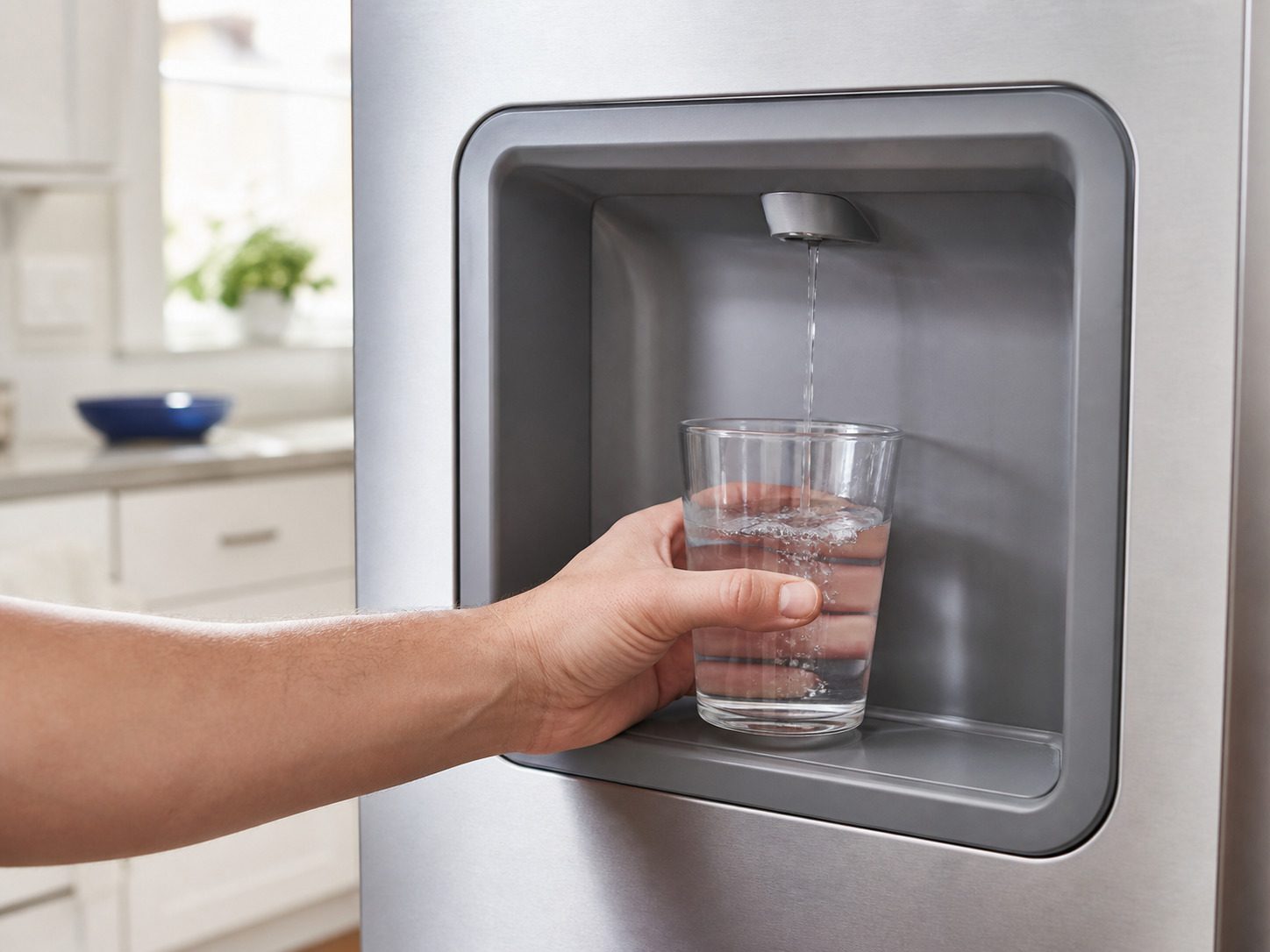
GE water and ice dispenser repair
Dribbling water, no water, crushed ice only, or a dispenser that leaks onto the floor. GE has a separate support article for each of those because they have different causes, and the one that catches people out is a partly frozen line in the door — which gets worse in cool weather and reads like a failing valve.
- From $95 diagnostic, credited to the repair
- 59 cities and neighborhoods covered
- OEM parts available on order
- In writing the price, before anything is opened
Before you read on
What this job costs and how it is agreed
A starting figure, not a quote. What moves it is the model, how the unit is built in and which part it needs — settled after the on-site diagnostic.
Starts at
from $145
After a diagnostic from $95, which comes off the bill when you go ahead.
or call (305) 306-2503
Diagnostic
From $95, credited to the repair
The price
In writing, before anything is opened
Warranty
On the labor we performed
On the visit
How this visit actually goes
The same order every time, so nothing is opened and nothing is charged before you have seen the figure and said yes.
-
01
Filter age and water pressure
The six-month interval is optimistic here. Pressure at the valve is measured rather than assumed, because a house with low pressure produces this symptom with nothing broken.
-
02
Check the door line for ice
The tube through the door is the coldest part of the path. Partial ice gives a dribble that stops, and it is not a valve.
-
03
Valve and solenoids under test
Water and ice share a path and split at solenoids; 'crushed only' usually lives there rather than in the auger.
-
04
Chute, flap and seal
A flap that no longer closes lets warm air up the chute and frosts everything above it, which is how a dispenser problem becomes an icemaker one.
-
05
The measurement that closes it
Fill time at the dispenser, before and after. A dribble that improved is not the same as a dribble that was fixed, and only a number tells them apart.
Applies to
The GE units we carry this work out on
-
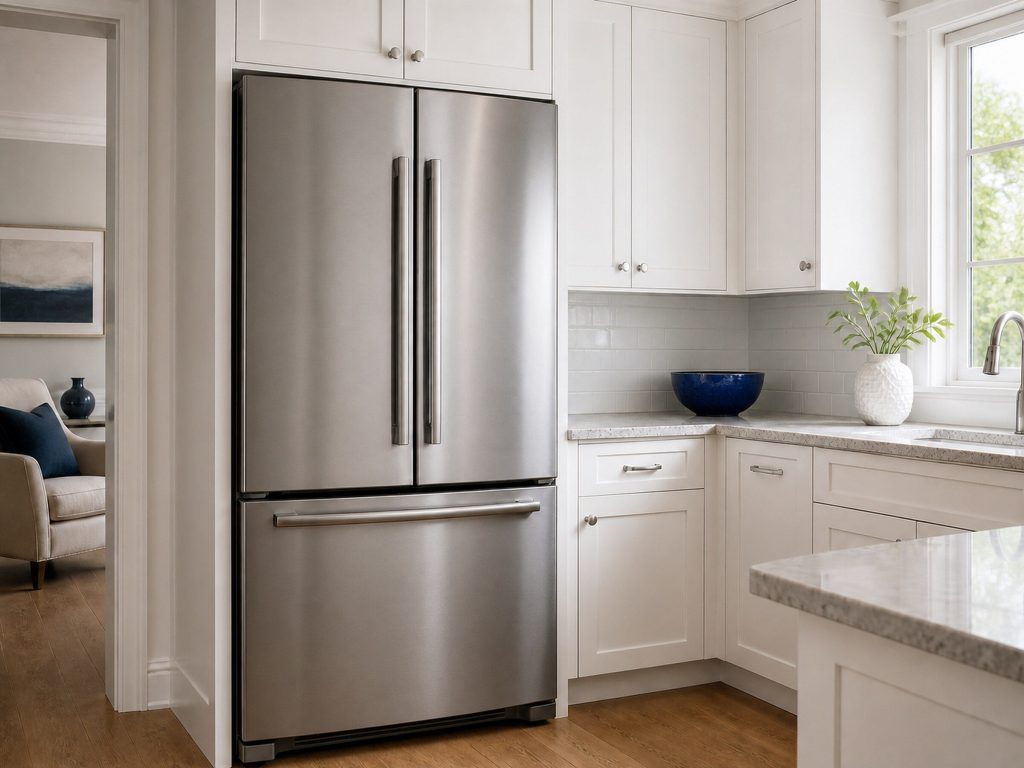
French door · side-by-side · top and bottom freezer · built-in GE refrigerator repair in Miami
The largest half of what GE builds, and the appliance most South Florida kitchens have two of. French door, side-by-side, top-freezer, bottom-freezer and the built-in columns, across GE, GE Profile, Café and Hotpoint. Most of what we are called out to here is not the sealed system: it is the dispenser, the icemaker, the defrost circuit or a door that stopped sealing in a house where the air is wet nine months of the year.
- All four door layouts, plus built-in columns
- Icemaker and dispenser work is most of the call volume
- GE, GE Profile, Café and Hotpoint share most parts
In more detail
About GE water and ice dispenser repair
Filter, line, valve — in that order
A dispenser that has slowed is a restriction somewhere along a short path, and the path has only three interesting parts. The filter is first because it is the cheapest and the most often overdue. Then the line, which on a door dispenser runs through the hinge and can freeze — and a frozen door line reads exactly like a dying valve from the outside. The valve is last. Crushed ice working while cubes do not is its own answer: that is the solenoid or the flap, not the dispenser.
This article is based on:
- Official manufacturer documentation
- Internal repair procedures
- Technician repair history
- Company quality standards
Before you book
Questions about GE water and ice dispenser repair
Water is slow but ice is fine. What does that point at?
The filter first, then the line. The two share a supply but not the same path, and that split is what makes it diagnosable.
Is it worth changing the filter before you come?
Yes, if it is due. Sometimes that is the whole visit, and it is a better outcome than us charging to find out.
Where we do it
Across Miami-Dade, Broward, and Palm Beach
Same terms everywhere we go: an on-site diagnostic first, the price agreed in writing, and the exact figure confirmed once we have seen the unit.
Neighborhoods people ask for by name