Appliance
GE freezers
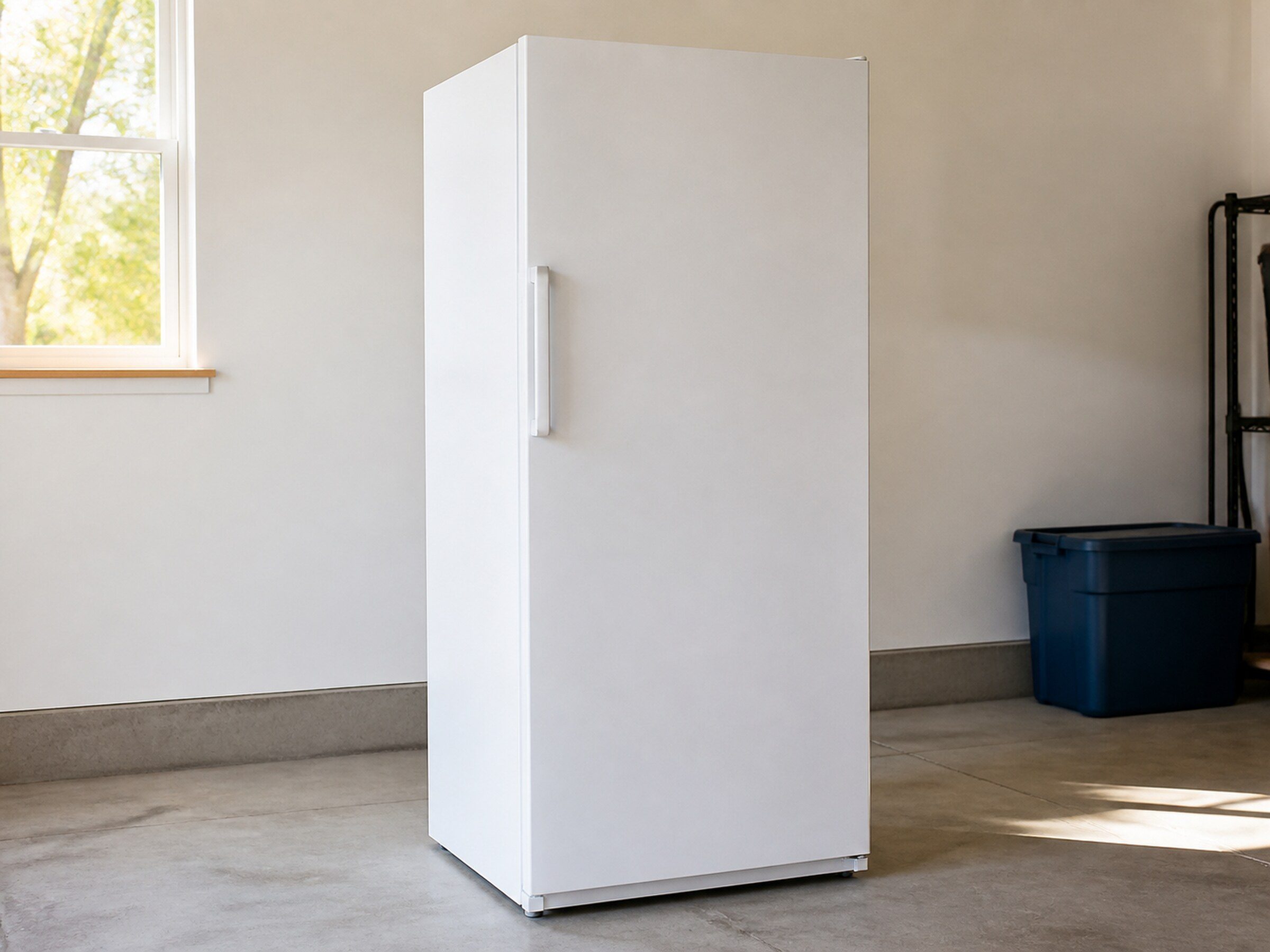
Chest and upright freezers, including the garage-ready models that matter here more than almost anywhere: a freezer in an unconditioned Florida garage is being asked to work in ambient temperatures its ordinary sibling was never designed for. Most freezer calls in this city are about where the appliance lives as much as what has broken inside it.
- 4 symptoms we are called out to
- From $95 diagnostic, credited to the repair
- 59 cities and neighborhoods covered
- OEM parts available on order
The short version
What this equipment is, for a repair
Configurations
Chest and upright · garage-ready models
Access
Planned before the visit, not discovered on arrival
Parts
OEM, available on order
Diagnostic
From $95, credited to the repair
What goes wrong with it
Symptoms we are called out to on GE freezers
Each one covers the likely causes in the order they are worth checking, and what to do in five minutes before booking anything.
-
It runs, it lights up, and the food is warm Refrigerator not cooling
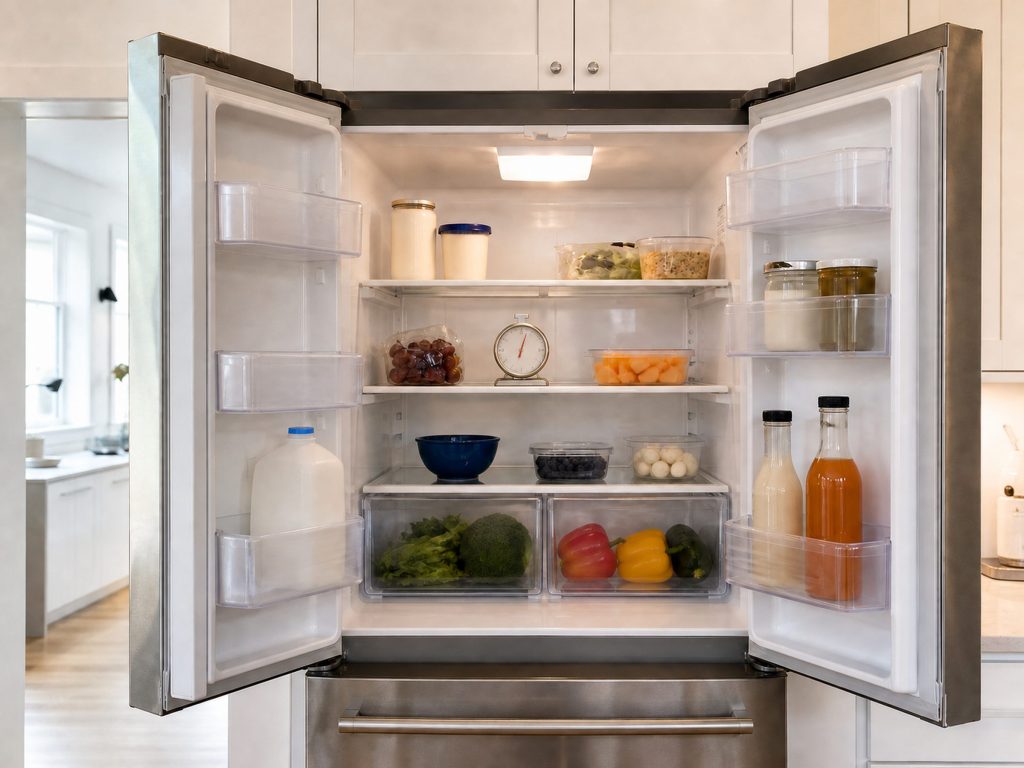
The most common call on any make, and on a GE there is a free answer to rule out first that nobody expects: demo mode runs the lights and the controls and switches the cooling off on purpose. After that, GE's own troubleshooting order is settings, then airflow, then defrost — and the sealed system everybody fears is last.
- Running and lit, and nothing is cold
- Started after a delivery, a storm or a power cut
- The freezer may still be fine while the fridge is not
-
The bin is empty and nothing is falling Icemaker not making ice
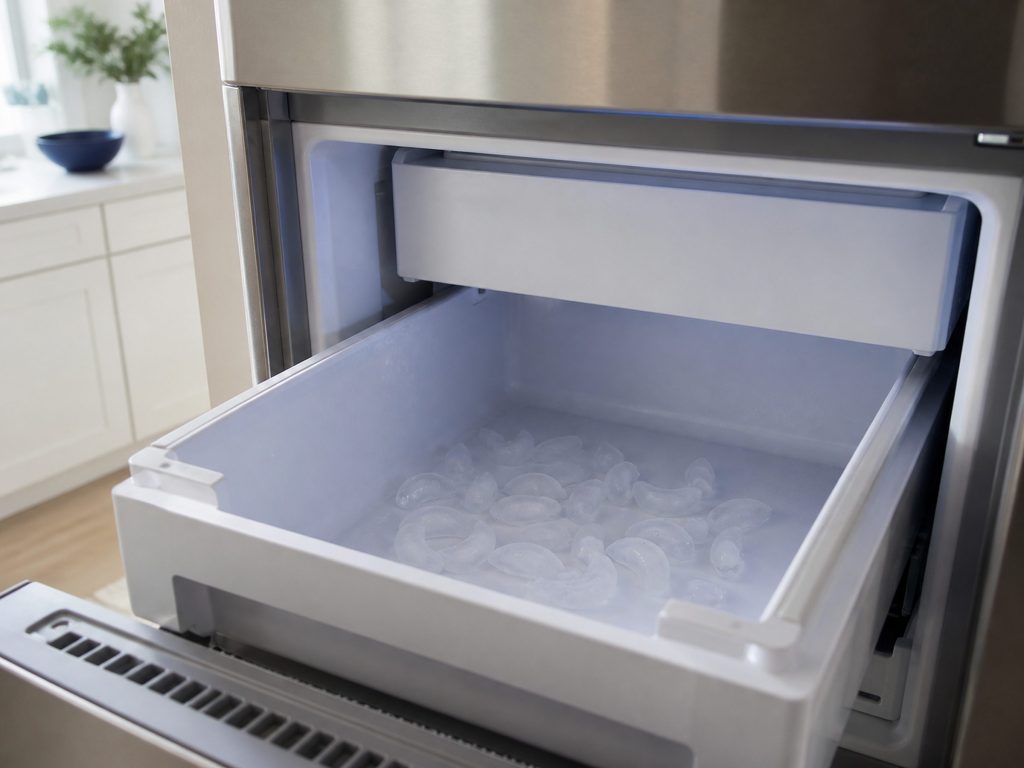
GE's own list runs temperature, then water supply, then the shut-off arm — and every one of those is cheaper than the icemaker assembly people expect to buy. Before any of it, there is a question worth asking: is the machine actually below specification, or has the household grown? GE publishes production rates, and a good share of these calls end there.
- Empty bin, or far less ice than there was
- Cubes hollow, small or misshapen
- Started after a power cut or a filter change
-
Puddles in the crisper, or on the floor Water leaking inside or underneath
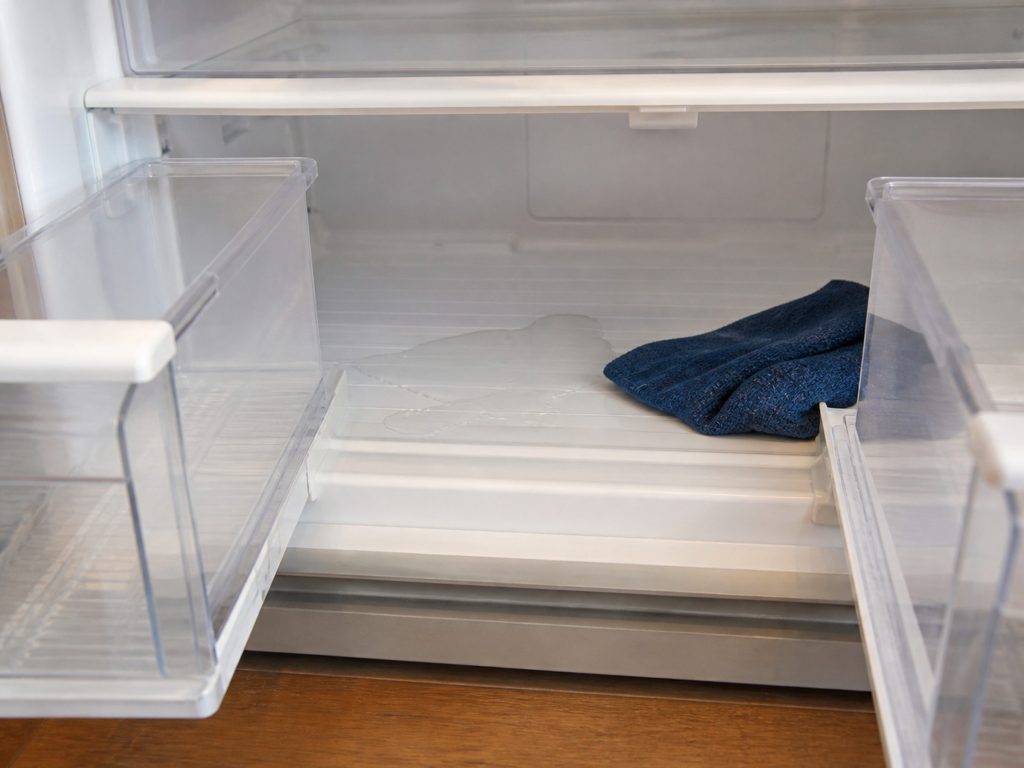
Water inside the cabinet and water on the floor are usually two different repairs, and both are cheaper than they look. Inside, it is nearly always the defrost drain iced over. Underneath, it is the drain pan, a water line connection, or ice that has been melting somewhere it should not.
- Water under the crisper drawers
- A puddle on the floor at the front or the back
- Ice building at the back of the freezer floor
-
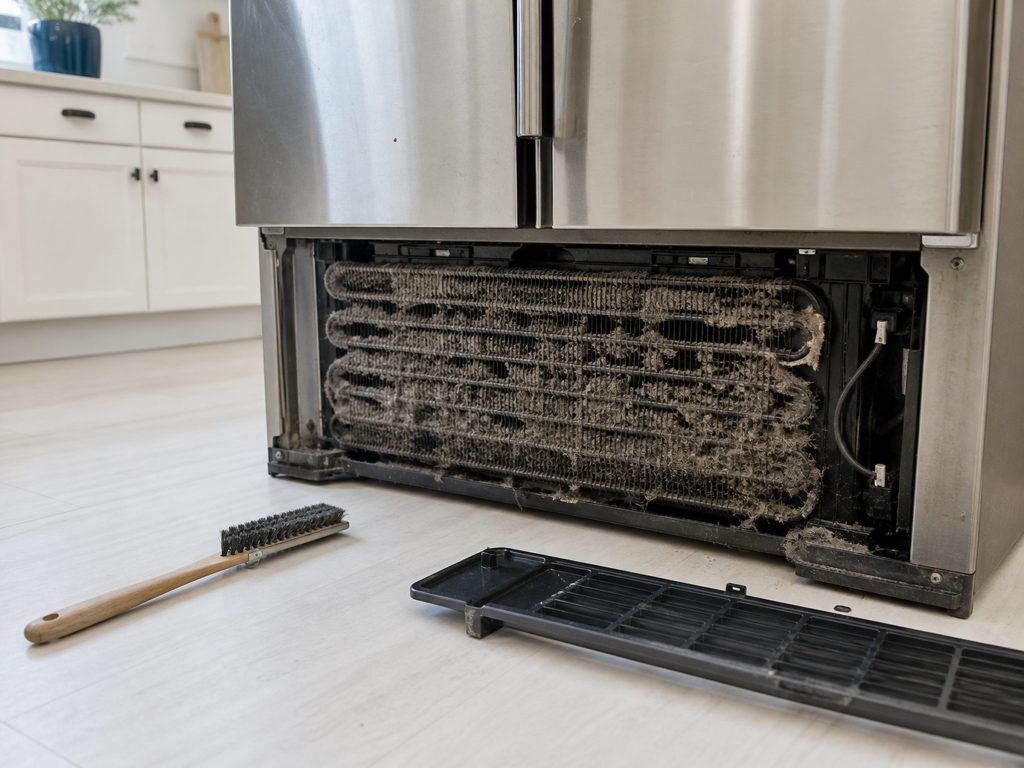
The compressor never seems to stop Running constantly
A refrigerator in South Florida runs longer than the same appliance anywhere dry, so long run times alone are not evidence of anything. What matters is whether it is holding temperature while it runs. A cabinet that is cold and running constantly is usually working hard for a reason you can fix; one that is running and warm is a different page.
- It rarely or never switches off
- The kitchen is warmer or the bill is higher
- It still holds temperature — or it does not
What we do on it
Repairs we carry out on GE freezers
Starting figures for this equipment in South Florida. The exact cost is confirmed after an on-site diagnostic — and this is not the whole list of what can go wrong, so call if your problem is not here.
-
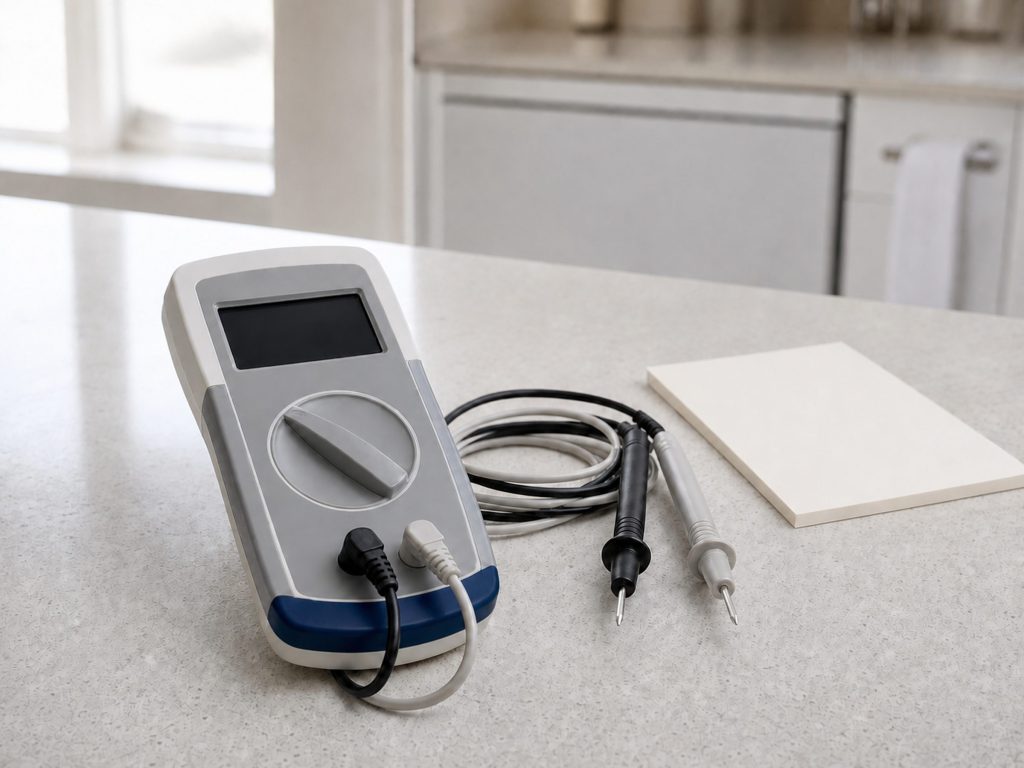
from $95 Diagnostic visit
We find out what is actually wrong before anybody quotes a part. On a GE that starts with the two things their own support pages start with — what the appliance is reporting, and whether anything outside it is the cause — because a dryer that will not dry is usually a vent and a dishwasher that will not drain is often a disposer. The fee is credited toward the work when you go ahead.
- What the appliance reports, read rather than guessed
- The causes outside the appliance ruled out first
- Credited toward the repair
-
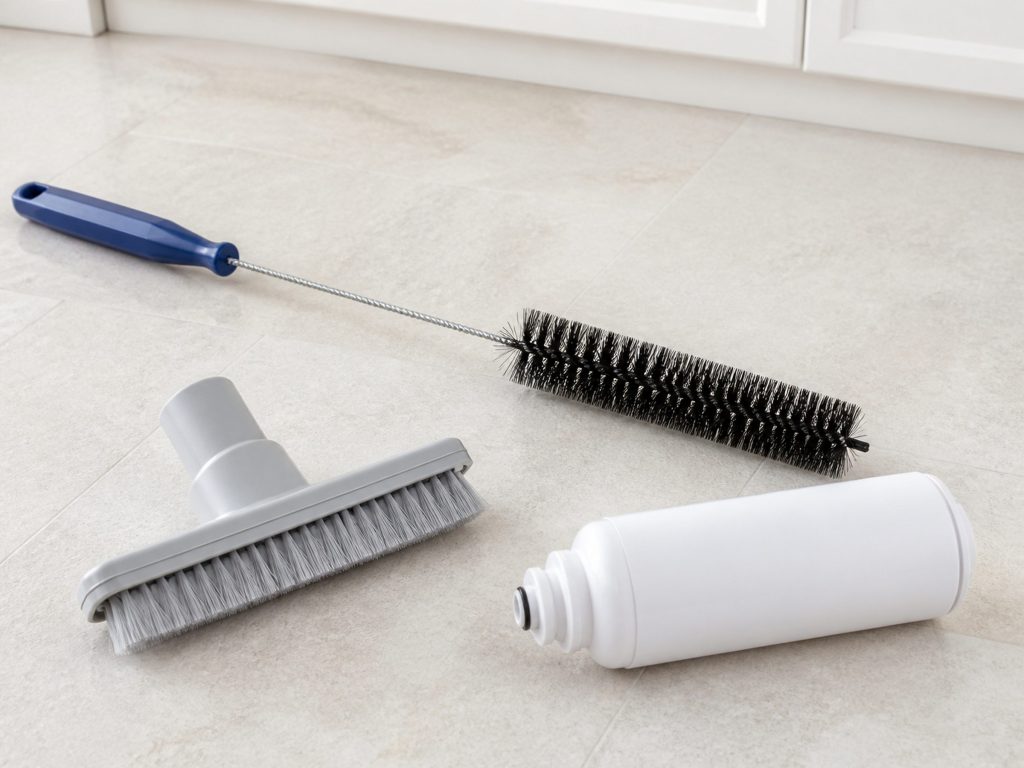
from $129 Appliance maintenance
The visit that prevents the expensive one. Condenser coils in a city where floors carry dust and hair, a dryer vent that has been quietly filling for three years, an ice machine scaling on hard water, filters that are past their interval. None of it is glamorous and all of it is cheaper than what it prevents.
- Condensers, vents, filters and seals in one visit
- Priced per appliance, cheaper together
- The findings written down, not just the work
-
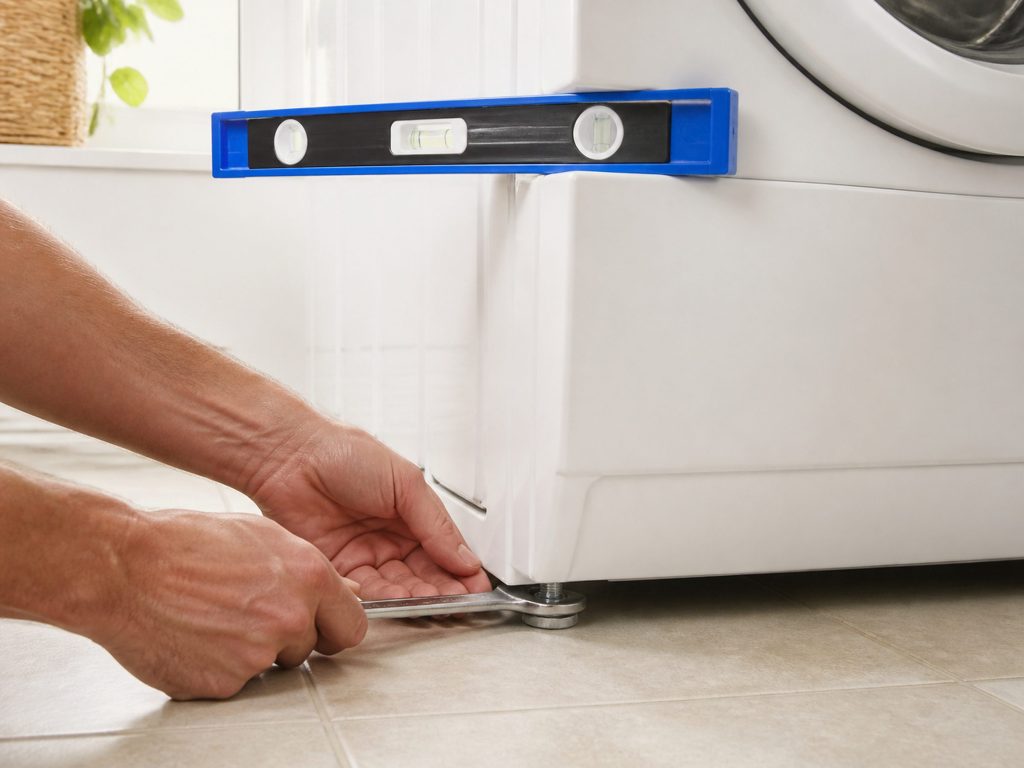
from $149 Appliance installation
Installation done so the appliance can be serviced later, and so it performs the way its specification says. A built-in that has no clearance loses cooling every August, a dryer vented into a long horizontal run never dries in one cycle, and a dishwasher connected to a new disposer with the plug still in it will hold water from the first cycle.
- Clearances the specification asks for, not the ones the cabinet allows
- The disposer plug, the high loop, the vent run
- Leveled, aligned and tested before we leave
-
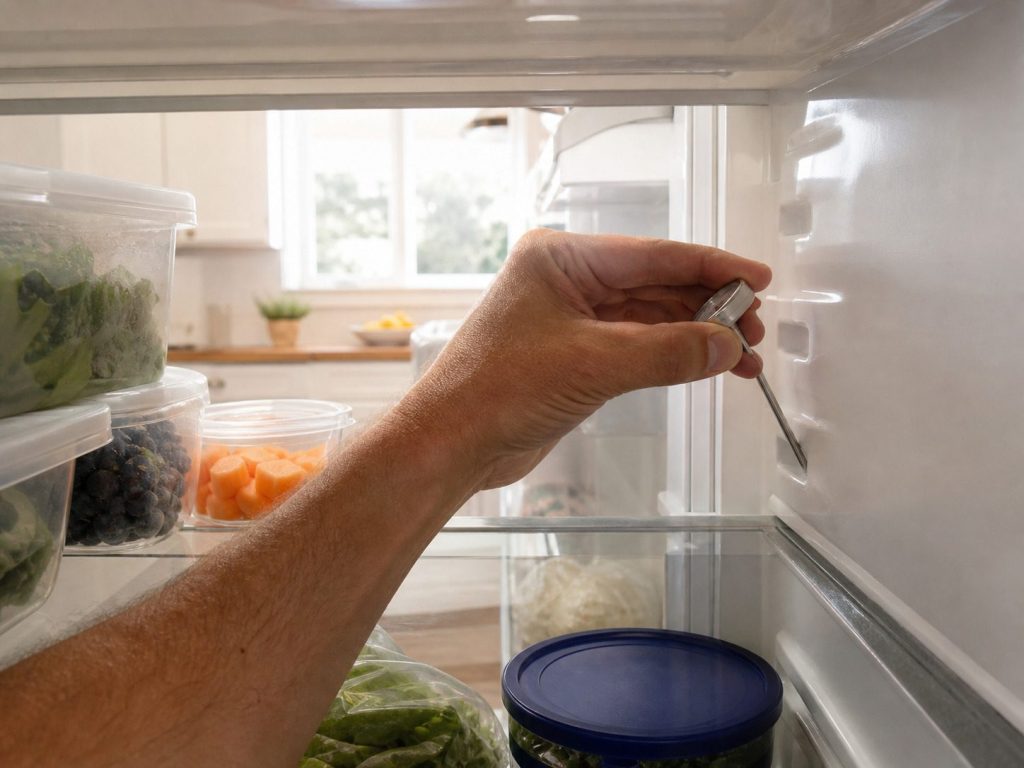
from $165 Refrigerator not cooling repair
The most common call on this make, and the one most often misdiagnosed as a sealed system. GE's own troubleshooting runs settings, then airflow, then defrost — and it is right in that order far more often than the phone call suggests. A cabinet that gets slowly warmer over days while the freezer stays fine is a defrost story, not a compressor one.
- Settings and airflow before any part is named
- Defrost circuit measured, not assumed
- Sealed system is last, not first
-
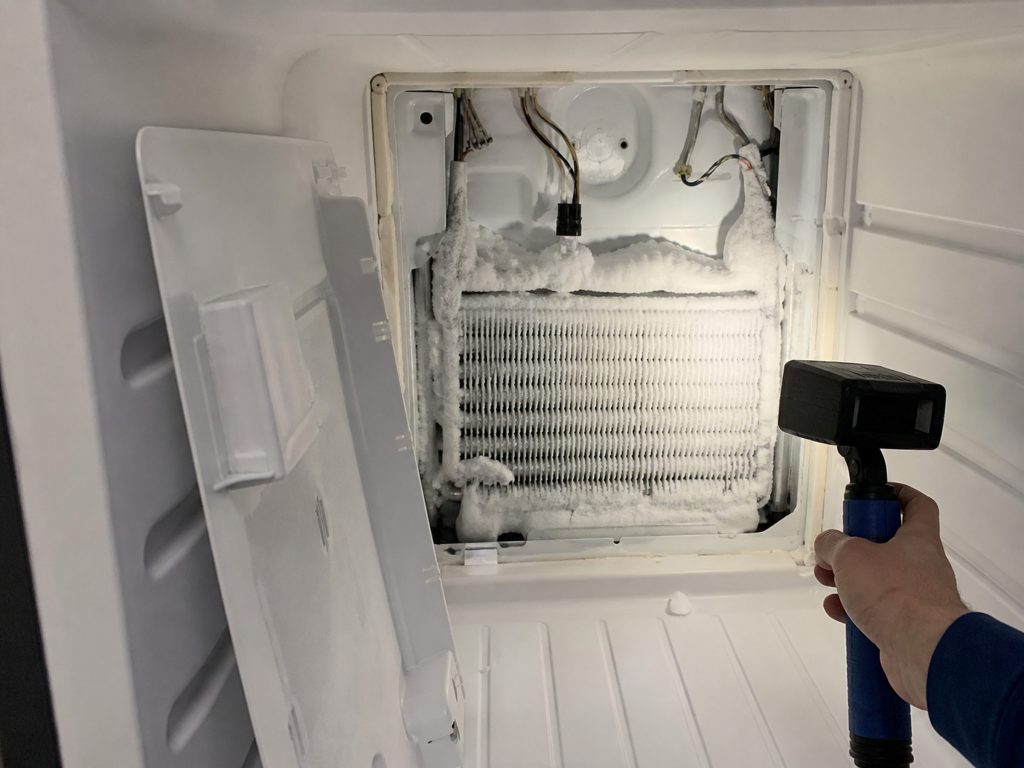
from $185 Defrost system repair
The circuit that keeps the evaporator clear, and the reason a refrigerator in this climate works harder than one anywhere dry. A heater, a thermostat or a control that has stopped cycling lets ice build where the air has to pass, and the cabinet loses its cold slowly enough that nobody catches it for a week.
- Heater, thermostat and control tested as one circuit
- Humidity makes this the local failure
- Ice that returns after a manual defrost is this
-
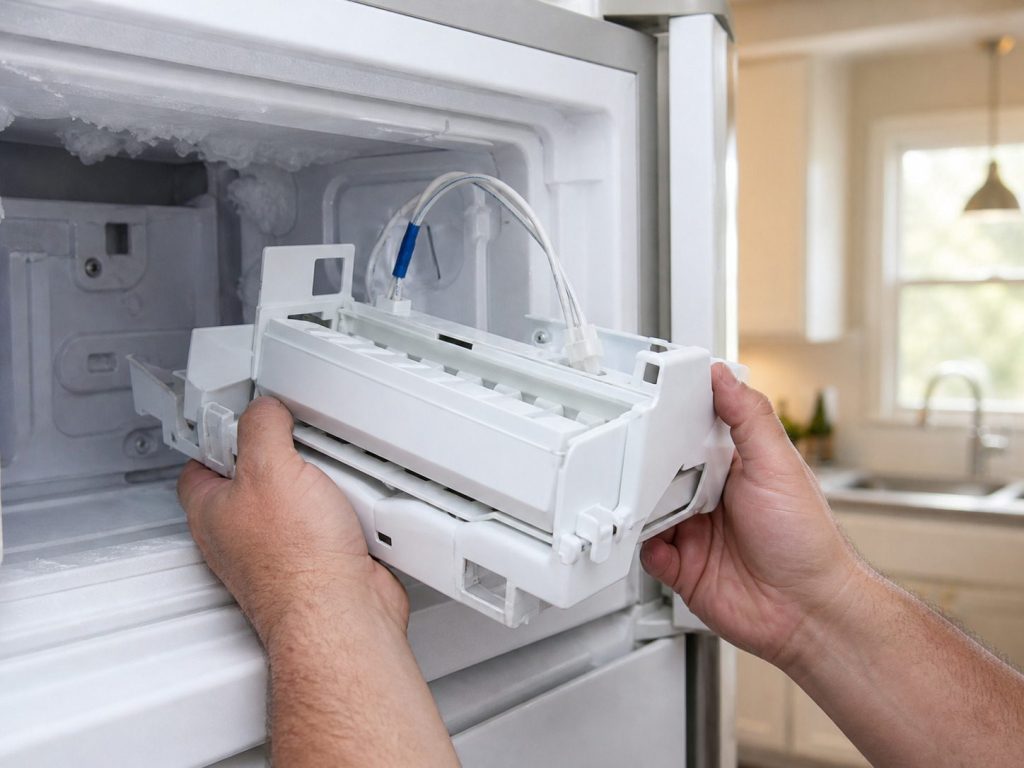
from $165 Icemaker repair
The icemaker inside a refrigerator, which is a different appliance from a standalone ice machine and a different repair. GE's own list runs temperature, water supply, then the shut-off arm before the module — and each of those is cheaper than the assembly everybody expects to buy.
- Temperature and water supply before the module
- GE publishes normal production rates — many calls end there
- The module replaced when the module is what failed
-
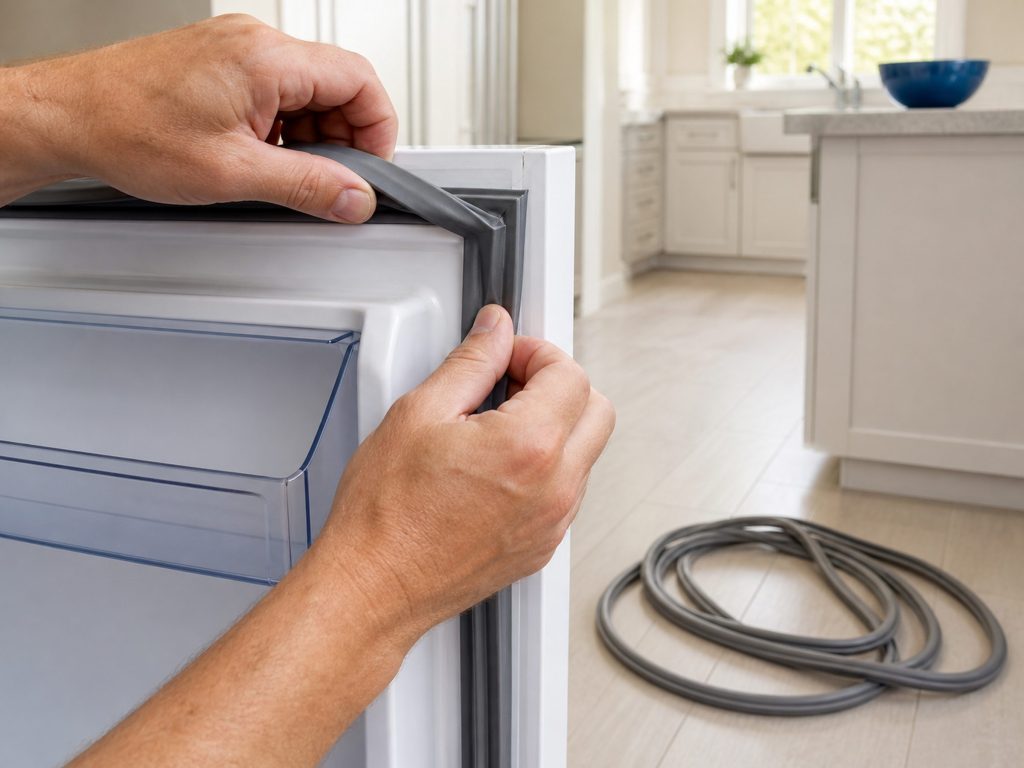
from $155 Door seal replacement
The cheapest repair on a cold appliance and the one that costs the most when it is ignored. In a climate this wet, a seal that has lost its grip lets humid air in all day; the defrost system then spends its life clearing ice it should never have had to make, and the power bill climbs before anybody looks at the door.
- Hinge-side failure first — that is where seals go
- Frost, run time and the power bill are the symptoms
- Alignment checked at the same time, always
-
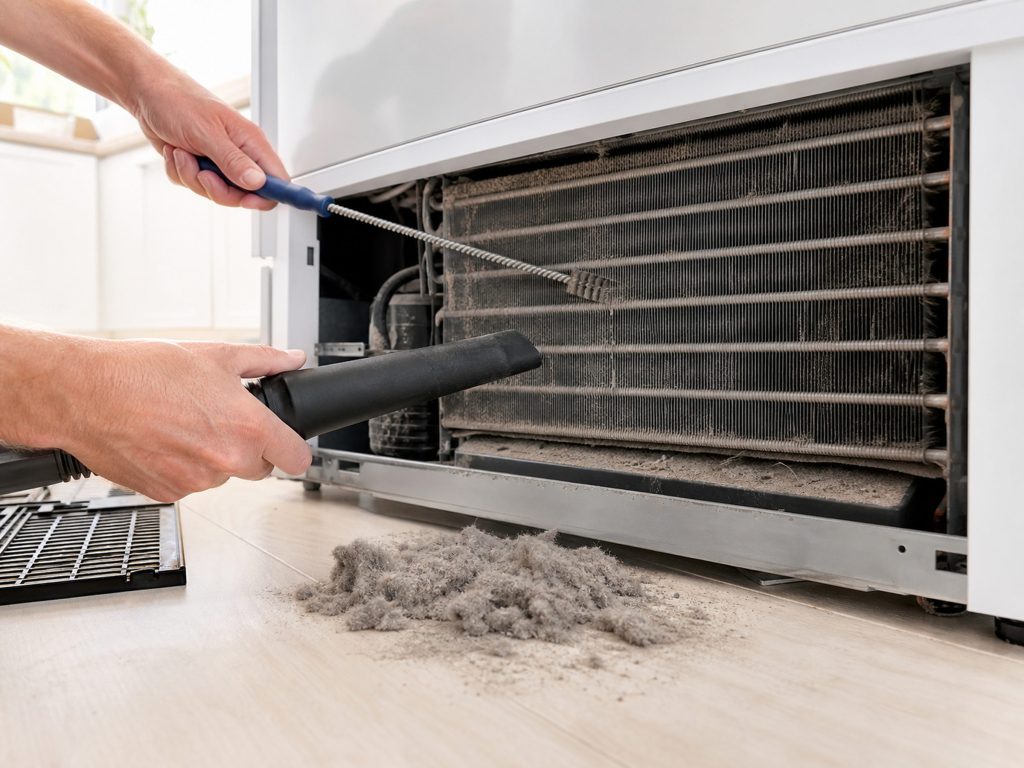
from $135 Condenser and airflow service
GE's own first answer for a unit that is not cold enough, and it is right often enough to be worth doing before anything else. A condenser at floor level in a Miami kitchen collects what floors collect, and a coil that cannot shed heat makes the compressor run longer for less cold — which reads as a failing appliance and is not one.
- The maker's own first check
- Floor-level coils fill faster here than any manual assumes
- Often restores cooling with no part at all
-
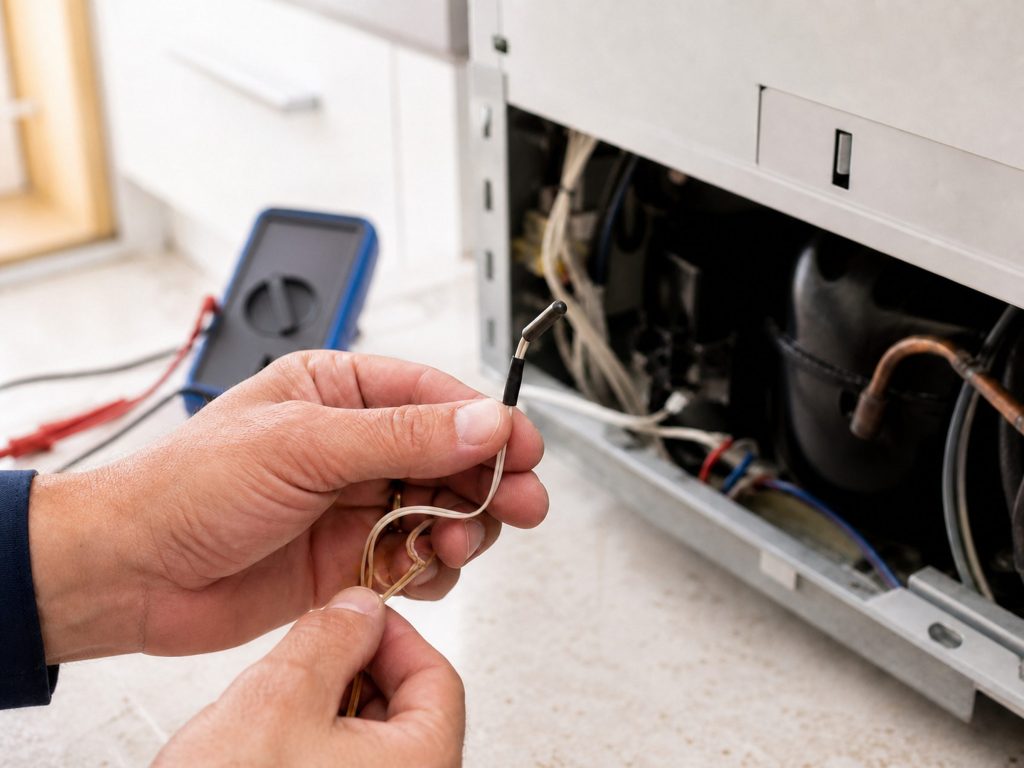
from $165 Temperature sensor replacement
A drifted sensor is the failure that makes an appliance look far sicker than it is: a cabinet that never arrives, an oven fifty degrees out, a wine center that swings. The part is inexpensive and the diagnosis is a measurement — which is why it is worth ruling in before anybody quotes a control board.
- Measured against the maker's own resistance table
- Cheap part, expensive misdiagnosis
- On ovens, calibration sometimes replaces the repair
-
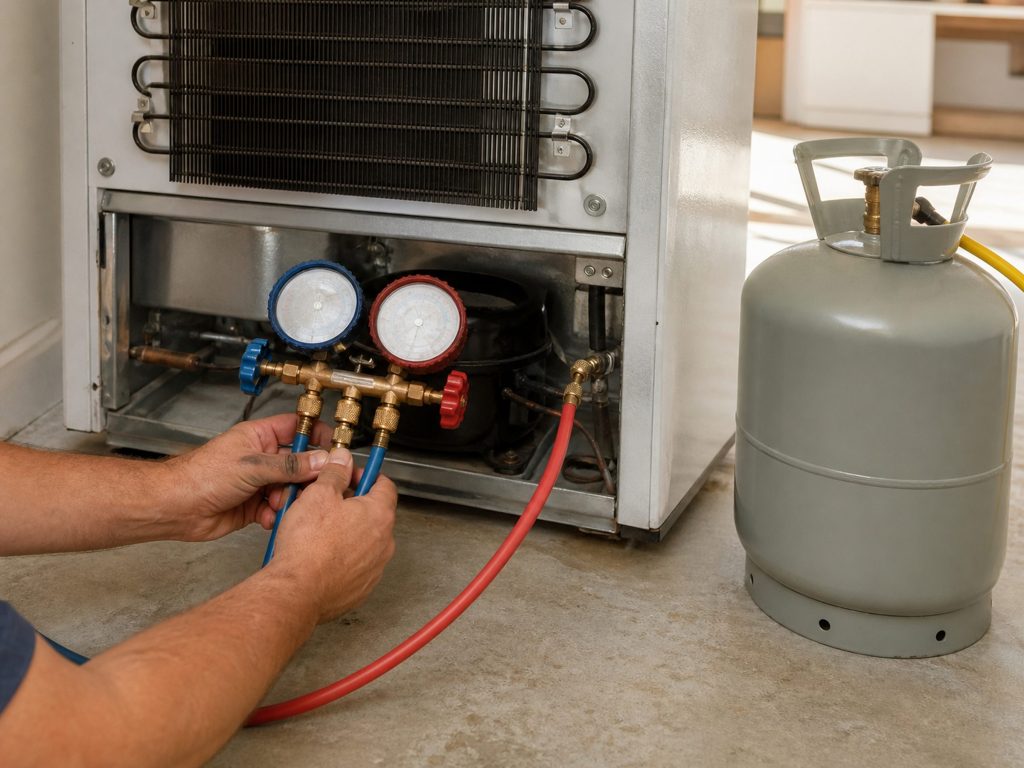
from $650 Sealed system repair
Compressor, condenser, evaporator, drier and the tubing between them — the refrigerant circuit. Licensed work with recovery equipment, and the most over-diagnosed repair on a cold appliance in this city. Everything cheaper is ruled out first, and if the arithmetic favors replacing the appliance we say so before the work rather than after it.
- Licensed work, recovery equipment, EPA rules
- Ruled in by measurement, never by symptom
- We say when it is not worth doing
In more detail
About GE freezers
Chest, upright, and where each one fails
A chest freezer is a cold box with a lid and very little to go wrong; its problems are the seal, the lid and the thermostat. An upright behaves like a refrigerator without the fresh food side: it has a fan, a defrost circuit and a door that opens sideways against gravity, so it has more to fail and it fails more often at the seal.
Garage-ready is not marketing
It is a specification about ambient temperature, and in this county it is the difference between an appliance that copes with August and one that does not. Before diagnosing a freezer that struggles seasonally, we ask where it lives.
The failure nobody sees coming
A freezer that stops does not beep, does not display anything and often does not sound different. The first symptom is the contents. Any freezer holding more than a shopping trip's worth of food should have a thermometer in it.
The date code decides this one faster than most
A freezer is a simple appliance with a small number of failures, so the question is rarely what broke — it is whether the machine is worth the part. GE's serial carries a two-letter date code, so we can tell you the age before quoting. A seal or a thermostat is worth doing at almost any age; a sealed system on a basic chest freezer usually is not.
What we bring to a freezer call
A thermometer that logs rather than reads, because a freezer that fails intermittently will not fail while we are standing there. Seals, thermostats, defrost heaters and start relays travel with us. And a straight question about where the appliance lives, because in this county that is half the diagnosis.
This article is based on:
- Official manufacturer documentation
- Internal repair procedures
- Technician repair history
- Company quality standards
Before you book
Questions about GE freezers
Everything in it thawed and it never made a sound.
That is the expensive one, and it is why a freezer deserves attention the moment it behaves oddly rather than after. The usual causes are a defrost circuit that has stopped, a door left ajar by a full basket, or a seal that no longer seals. A thermometer in the appliance is the cheapest insurance available: freezers rarely announce anything.
It is in the garage and it struggles every summer.
Then the question is whether it is a garage-ready model. An ordinary freezer relies on the room around it, and in a Miami garage in August that room is over a hundred degrees. Garage-ready models are built for exactly that. If yours is not one, the appliance may be working correctly and still losing, and no repair changes that.
There is frost building up on the walls.
Frost is air getting in, and air gets in past a seal or an unlatched door. On a chest freezer, check whether the lid is closing on a bag. On an upright, look at the seal along the hinge side, where it fails first. Persistent frost with a good seal is the defrost circuit.
Is a freezer worth repairing at all?
Often yes, because the common failures are the cheap ones — seal, thermostat, defrost heater, start relay. What decides it is the sealed system: if the refrigerant circuit has gone on a basic chest freezer, the arithmetic usually favors replacement, and we will say so rather than sell you the work.
Where we do it
Across Miami-Dade, Broward, and Palm Beach
Same terms everywhere we go: an on-site diagnostic first, the price agreed in writing, and the exact figure confirmed once we have seen the unit.
Neighborhoods people ask for by name